

Anterior Hip Replacement
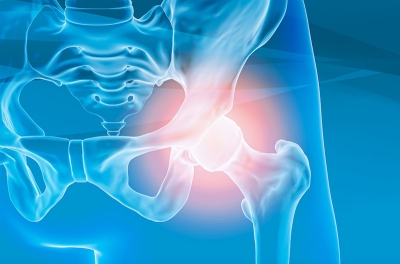
In this episode of IBJI’s OrthoInform, host Cory Leman sits down with Dr. Jeffrey Ackerman to break down everything you need to know about hip pain, arthritis, and modern hip replacement—especially the anterior approach. Dr. Ackerman explains what’s really happening inside the hip joint as cartilage wears down, why stiffness and pain develop over time, and how to recognize when it’s more than just minor discomfort. Using simple, relatable analogies, he helps listeners understand when hip pain becomes a serious issue and what warning signs signal it’s time to seek help.
Hosted by Cory L., MS, CSCS

Episode Transcript
Episode 40 - Anterior Hip Replacement
Cory Leman: [00:00:00] Welcome to IBJI's OrthoInform, where we talk all things orthopedics that help you move better and live better. I'm your host Cory Leman with Ortho Inform. Our goal is to provide you with an in-depth resource about common orthopedic procedures that we perform every day, and it's my pleasure now to welcome Dr.
Jeff Ackerman We will be speaking about the hip today, specifically the anterior approach to hip replacement. So Dr. Ackerman, thank you so much for being here and welcome to Ortho Inform.
Jeffrey Ackerman, MD: Thank you for having me.
Cory Leman: Yeah, so hip pain is something that can be truly debilitating, and I'm curious what first drew you to orthopedic surgery and the hip specifically?
Jeffrey Ackerman, MD: Orthopedic surgery is unique to me. I think if I look back growing up, a lot of what we do is building, working with our hands. I mean, growing up I was into building models, all kinds of model cars, airplanes. My room was filled with Legos, so that was [00:01:00] natural. And med school, I went to med school down in Florida at University of Miami.
They had the number one ophthalmology program in the country. I spent three and a half years doing ophthalmology research. I, but to be honest, a lot of ophthalmology, you're looking through the microscope, you're looking through the lens, and you have to recognize patterns and things, and I had a hard time recognizing that stuff.
And then in the summer, right before you had to apply to residency, I did a rotation in surgery. I walked in the OR, and I saw orthopedic procedures. I saw trauma, procedures. I saw hip and knee procedures working with their hands, working with. Power tools. I saw the patients back in the clinic that were better and I did a 360 and I shredded all my applications for ophthalmology.
And at the last minute I scrambled, I put it together and I, and I went into orthopedics and here I am today.
Cory Leman: The power. The power tools. They sold you
Jeffrey Ackerman, MD: sold me,
Cory Leman: your eyes got big and you got excited. So when we think about hip pain, when. Should someone [00:02:00] in their head be thinking, okay, this is problematic.
I've got pain, I've got pinching. Like when does hip pain become arthritis?
Jeffrey Ackerman, MD: The analogy, I love to use analogies in my practice, arthritis is a description of the wear of the cartilage. The best analogy I can think of is this kind of like the tread of your car tire. If you go into the tire store, your tire could be, have a little bit of wear.
You could have a Goodyear tire that's supposed to last 75,000 miles. You might have a little bit of wear, it might be 30, 40,000 miles in. It's still a good tire for a while. You might have knocked a little chunk off of it and you can fix it. Or it could be a really bad tire. I mean, it could be 70,000 miles.
I mean, I have some people that come in and their hip is so bad and they've been living with it limping around, and they're kind of in denial and their tire is blown out. They're riding on the metal rim and there are sparks coming off of it and people are taking pictures of it and they're still driving limping around trying to live with it, and it's unbelievable what you see on x-rays.
Cory Leman: So talk to me a little bit like what is happening inside [00:03:00] that joint that's really making it feel stiff and painful?
Jeffrey Ackerman, MD: With the arthritic process, there's wear of the actual cartilage that lines to the joint. There's a cartilage rim called the labrum. It's acts as a suction cup seal on the rim of the hip socket.
Over time, you can get wear and tear of that. Through this process as it occurs, the capsule that surrounds the hip starts to tighten up. And there's, uh, a process where it gets tighter and that restricts your motion of the hip. People often lose rotational limitations in the rotation. Common questions I ask patients is you have, do you have difficulty putting on your shoes and socks?
Do you have difficulty getting in and outta your car? Those. Simple activities become harder and females, uh, shaving their legs becomes more difficult and painful.
Cory Leman: In your experience, how long? Does it typically take to get to that point where you have serious degeneration in the hip?
Jeffrey Ackerman, MD: Everybody's different.
[00:04:00] Everybody's pain tolerance is different. Uh, I typically, when I talk to patients, I treat the x-ray, I treat the patient and not necessarily the x-rays. Going back to my tire analogy, sometimes we're replacing the tire or replacing the hip at 60,000 miles 'cause the patient's miserable and they've tried everything.
Other patients, again, it's like. If they're a hundred thousand of miles, they've driven on that tire and that rim that's been bent and flattened for a while. So a lot of it is based on the patient factors, uh, why some people are able to go longer than others. We don't fully understand. Uh, but patients, I often see patients, I talk to 'em, some patients are ready to go, they're miserable and they want to have surgery right away.
Other patients are like, I can live with this for a while. Eventually, I realize it's a structural problem, it's gonna get worse, but it's not that bad and I can live with it for. Sometimes months, sometimes a couple years, and then they come back.
Cory Leman: Okay, so I have a personal question, and this is a bit anecdotal, but I've noticed like in my hip, for example, when I sit [00:05:00] for extended periods of time, I get some pain and pinching in the front side of my hip.
Obviously you don't have imaging in front of you, but again, in your experience, what is probably going on there?
Jeffrey Ackerman, MD: With a hip, uh, there's a, again, I alluded to before, there's the cartilage rim for the labrum. Over time, we can get, it's normal to get wear and tear of that labrum, and what happens is. Often, especially in males, the hip should look like a round ball.
And I describe it again, my analogies like a light bulb. It should have a concavity in the front of the hip. So some people born and developed, they have an abnormally shaped hip. That's instead of being a light bulb, has all this extra bone. So when you go into a deep hip, flex. A maneuver such as sit, sitting, squatting, that extra bone starts to pinch that cartilage rim or the labrum, and that causes pain over time.
You can get aware of the labrum and then eventually you get aware of the underlying cartilage as it [00:06:00] continues to wear. Again, sticking with my analogies in the tire, it's like a tire that's not aligned properly on the car. All these years you've been driving around and it's. It's causing abnormal premature wear.
Cory Leman: So with that said, is there a sweet spot when it comes to timing and intervention? Like for example, if somebody's riding the rim of that tire and you're getting those sparks, could they theoretically be creating more damage?
Jeffrey Ackerman, MD: Yeah, so, uh, there is a sweet spot. There's been some recent literature that has shown that if you really have a terrible hip and you're really limping around for a long time, that causes the muscles around the hip.
To start to atrophy because you're not engaging them and loading them properly. With those strong physical therapy background. You recognize this, that some people that if you live so long and limping in so long, you get atrophy of those muscles. Even if you have it fixed, you may never get back to where you once were because there's chronic changes, some of which are irreversible.
So there is a sweet spot there. [00:07:00] There's a rare phenomenon called rapidly progressive hip arthritis where the ball just des. Totally degenerates pretty quickly, and that somebody may come in with hip pain , and some signs of arthritis and three, six months later the hip is just totally destroyed. Or you get so much wear that uh, you can actually start to wear away the bony rim of the hip socket, which we can do a lot, and technically we're very good at reconstructing stuff.
It just makes things a little bit more difficult.
Cory Leman: So that rapid degeneration is that. Genetic is that activity based? A combination?
Jeffrey Ackerman, MD: We think it's genetic. I mean, there's rare things like some metabolic issues we worry about in underlying infection and things that we have to rule out. Uh, again, this is rare couple percent of people, but uh, these people come in and then you see 'em back and family members recognize they're really limping around really fast.
They come back on a walk or crutches a couple months later and the hip just looks totally different. But the vast majority of people. It's a slow phenomenon. Sometimes they may not recognize the initial [00:08:00] signs and symptoms. Often the family members or friends start to point out that they're limping, uh, that they're not walking normally.
They can't walk as far as they used to. Sometimes even a f some simple activity like you fall, you slip and kind of put you over the edge and set things off and create this inflammatory cascade that we can't settle down. Uh, often with hip arthritis, I describe to people, and you already alluded to that, once this inflammatory cascade kicks in and the hip becomes symptomatic, sometimes it's very hard to settle down.
I mean, we try non-surgical options of oral anti-inflammatories physical therapy, even injections. But once it's, once it gets bad, it gets bad with a vengeance unlike other joints, sometimes people live with arthritic knees and go on. On with arthritic knees, with injections for years before they, you end up having surgery.
Unfortunately, with the hip it, with a little ball, with a small ball, it loads all your weight and it become, it can become miserable quite quickly.
Cory Leman: So [00:09:00] what are some simple quality of life red flags that you indicate so people sort of know? 'cause in my experience, again, I find people, they get used to managing pain.
They deal with it. You know, they sort of, it becomes their new normal. But what have you seen where it's like, hey, if you can't do this thing or this thing, it's time.
Jeffrey Ackerman, MD: Yeah. So red flags I people like if you have trouble sleeping at night, keeping you up, that's a problem. If you are avoiding activities, like normal activities that you like to do, even like simple activities going on, walks with your dog, walks with the family. You, some people like start to say, I can't even go on this vacation anymore because it involves a lot of walking and I'm not gonna be able to do it. Other activities, uh, sometimes it's higher level of activities that people are quite active, they enjoy running, cycling, and they have difficulty doing that and they can't do the things they like to enjoy doing, so they start to get depressed.[00:10:00]
Cory Leman: You alluded to this just a little bit, but what are the non-surgical options that people should exhaust in your opinion, prior to engaging in a hip replacement?
Jeffrey Ackerman, MD: Yeah, so as I alluded to already, I mean, it's a structural problem. There's wear of the cartilage of the joint there. There is kind of like a tire.
So at some point these non-surgical options are not, not viable, but there's a big gray area. Of early to moderate arthritis that the non-surgical options can be quite helpful. Oral anti-inflammatories and or Tylenol can be helpful in short spurts. Uh, it's not great to take anti-inflammatories every day.
They have side effects. They can affect your kidney function. So I usually tell people if you need a two to three days a week, that's certainly reasonable. , Therapy can often be quite helpful. Usually in mild to moderate arthritis literature shows about 60, 70% of people can see significant improvement with physical therapy and, uh, physical therapy At IBI and your folks are amazing at kidney [00:11:00] patients moving, uh, faster and I'm always amazed at patient how well patients feel after going to therapy.
I routinely give injections in the hip for injections in the hip. There's really threefold. The main one I do is cortisone injections. They're usually, they calm down the inflammation, they help with the pain. They're the most reliable, I would say 95% reliable. How, well, how long they last is the unpredictable part.
Cory Leman: Any downsides to a cortisone shot?
Jeffrey Ackerman, MD: If you get too much or if you get 'em too frequent they can have downsides. There's rare. Case reports of the cortisone causing a rapid progression of arthritis, but again, quite rare. Um. And to be honest, I don't think I've ever seen a case of that. Other injections, there's a gel called Visco Supplementation.
It's FDA approved for the knee. I used at off-label in the hip. If we look at the knee literature, it works in about 60% of people in the hip. I would say about the same. When it works, it's amazing. I've had people go one to two years with it. [00:12:00] It's absolutely amazing. And then we get the even more off-label use of other things.
There's. PRP or platelet rich plasma, some people have induced go beyond that induced stem cells. Unfortunately there's no way to regrow the cartilage that's worn down. Uh. What we're doing is taking growth factors from your own body, spinning it down into a centrifuge. So in a special machine that concentrates those growth factors, injecting the hip, trying to elicit an inflammatory response to use your own body cells to calm things down.
Unfortunately I get patients about 50 50 chance of getting relief from it.
Cory Leman: I know there's a lot of common beliefs out there about. How old is too old to have a hip replacement and how young is too young. But just in some of our previous conversations, you enlightened me you know, and even dispelled some myth that I, I believed that, you've gotta be probably 50 or 60, but maybe not older than that.
Can you talk a little bit about. Age as it relates to a replacement?
Jeffrey Ackerman, MD: Yeah, so I think my practice is [00:13:00] unique. Uh, I think of myself as a comprehensive hip surgeon, so I do a lot of hip surgery such as hip arthroscopy treatment of indi young active individuals that don't necessarily need hip replacement, that you can go in and fix the cartilage rim or the labrum.
And other congenital abnormalities, uh, that tends to draw younger patients in my practice. But the success of these hip preserving measures are dependent on, on the underlying health and morphology of the hip, that there's some people that. Only their practice only focused on hip arthroscopy. Other people only focus on hip replacement.
And I found that there's really a sweet spot of selecting the right operation for the right patient. And I look at it, you have one great shot at having a successful surgery. There's a ceiling effect that if you have a less, uh, surgery to try, try it. Maybe you don't do well and you can always have a hip replacement.
In my experience, and if you look at the literature, those patients don't. Don't do as well as if you were just to have the hip replacement right off the bat. So [00:14:00] that being said, that's alluded. That's, uh, trended to my practice having an overall younger age of patients that, uh, have hip replacement. The average age of patients in my practice is in the young fifties.
Often young, active patients that want to get back to high levels activity. I do hip replacements all the way down to 20 and 30 year olds, uh, for other congenital underlying issues. I mean, this week I did two hip replacements and patients in their thirties, and I'm confident that they'll return to full activity full sport and have a, a hip that lasts 'em the wrong rest of their life.
Cory Leman: That's incredible. Okay, so you engage in. A lot of the anterior approach to hip replacement. And can you tell us what that means, first of all, in layman's terms, and also what makes that different as it relates to other approaches?
Jeffrey Ackerman, MD: Sure. So there's a lot of controversies in orthopedics. If you're get a surgeons that, uh, a lot of hip surgeons together in the room, there's several different approaches.
First off, for [00:15:00] hip replacement,, there's anterior approach. There's anterior, lateral, posterior, uh. Another, uh, deviation of posterior or mentally invasive, uh, super path approach. So there's different ways basically to get down to the hip joint, different muscular intervals. Once you get down to the hip, what we're doing is the same, just a matter of how you get there.
So with the anterior approach, which I've really gravitated my practice to is I go through the front of the hip, I utilize it inner nervous plane, which means. Split the muscles or peel the muscles off their insertion so I don't have to cut any of the muscles. So it's a lot less invasive, a lot less bleeding.
During the surgery. I mean, we joke with my staff in doing it that during the approach that you use a lap and a lap is like a sponge that soaks up the blood. So initially some people use five 10 laps during the surgery because of bleeding, they ju and to keep a nice clean field. I was working with one of the [00:16:00] scrub techs once and he's like, this is enough.
I'm giving you one lap. Figure out how to do it. So we've now as superstition and has grown to routine. We do the one lap, total hip. We use one lap for the case, and then once we're done, we have to clean. When before we put the final head on, we use a second lap. But the approach has become, uh, so clean the.
The dissection in which you don't harm the muscles and that and translates to a faster pa more less painful recovery.
Cory Leman: And that's what I was gonna ask you next. Is that what you're seeing mostly as it relates to your patients, the impact on recovery?
Jeffrey Ackerman, MD: Yeah, so I tell patients, I tell people we get there to do a hip replacement.
The billing code is 2 7 1 3 0. That's how all the insurance companies Medicare pay for a hip. You get paid the same amount no matter what approach you do. Technically the anterior approach is more difficult. I've gotten very good and efficient at doing it, but still harder even in my hands. It still takes [00:17:00] me a little bit longer than if I were to do a posterior approach, which I sometimes still do for certain people and certain deformities, but I hands down believe that it's superior.
Patients do better patients. Progress faster. They have, um, less long-term pain better range of motion of the hip, better stability of the hip.
Cory Leman: So let's say I get to the point where I'm ready for hip surgery. Walk me through what it actually looks like from start to finish when I come in. How long is it gonna take from the procedure to recovery?
Take me through that process.
Jeffrey Ackerman, MD: Sure. So a lot of what we've done, and I would say a lot of the major accomplishments over the last. 10 to 15 years since I've been in practice is how we do things. And we really focused on patient optimization and the process, and evolve the process and optimize the process.
'cause if you do, the more you do on the front end, the less problems you have [00:18:00] and the better patients do. So first off, if you're, some patients are really debilitated, just simple things like getting you moving a little bit. Sometimes a couple sessions of physical therapy, a little bit more time on a stationary bike can help you and get you moving a little bit faster.
After the surgery, we have to make sure that you're medically stable and optimized for surgery. You have to see your regular medical doctor. Make sure you're, if you have diabetes, make sure that's well controlled. There's no underlying chronic medical conditions or issues that can be. That can be optimized.
We've learned a lot. That problems and patient, that patients encounter problems that can be correctable. We call modifiable risk factors, and those are, if you smoke, that increases your risk of infection and problems tenfold after surgery. So we gotta stop smoking at least four to six weeks before and same amount afterwards.
Uh, obesity is a huge factor, um, in that patients just aren't safe. The risk of [00:19:00] surgery normal risk of hip replacement is like. Point two to 0.3%. If you're overweight with A BMI over 40, that risk can go to 10 to 20% of a major problem. I mean, before even like five, six years ago, we didn't have a great solution for that.
Patients were sent to bariatric surgery. You told 'em to diet and eat, but the problem is you can't move, you can't exercise to get the weight off. Fortunately, I'm a strong believer in the new GLP one medications. Those have been a huge game changer. Patients that in combination with a diet and sometimes seeing a dietician and realizing what you're eating and what to cut out, it's made tremendous difference.
I've had countless patients over the last couple years. Come in 80, a hundred pounds overweight and they've lost the weight and then su successfully able to do the surgery without any complications. So I think that's a huge, huge game changer. Even if you're a little overweight, maybe 15 to 20 pounds can make a huge difference.
And we know that the [00:20:00] hip bears all the weight through your body. So if you have a big gut and you're 30 to 40 pounds overweight, that puts three to four. Acts stress through your hips and your knees. So I tell patients, okay, so if you're 30 pounds overweight, up top, go to Home Depot, go to the paint aisle, pick up a five gallon paint can and walk around.
Walk up and down the aisle. That's what your hip, that's the additional stress your hip is experiencing. So even a little bit of weight loss, uh, in addition of these medications can make a tremendous difference. We talked about non-surgical options that sometimes makes you feel much better. So once you get medically clear cleared and you're optimized for surgery, we continue to set up everything on the front end.
Usually patients we set up the therapy afterwards, the home therapy, so everything's streamlined the day of the surgery to do the surgery, I work closely with the anesthesiologist. Uh, I am a strong believer in a regional anesthetic in which they do a spinal or epidural anesthesia. That way they numb you up from the [00:21:00] waist down.
It's safer. You don't need a general anesthetic, so you're not inhaling all the breathing anesthetic gases, less nausea, less confusion afterwards. It's less risk of blood clots and you sleep through the operation. You don't feel or remember anything. At the surgery itself takes about an hour and 15 minutes.
You're up and walking the same day. The best thing about hip replacement is that patients with hip arthritis, you have so much pain that the way we do the surgery, patients often have less pain than they afterwards. Than they did before, and they leave the hospital, leave the surgery center feeling better.
You're a little sore from the surgery, but it's a miraculous improvement and difference in pain and that we talk about pain medicines and. A afterwards, and a lot of people are able to take just Tylenol and or anti-inflammatories. You don't need strong narcotics. And if you do just a very short period of time because the pain is less than you were dealing with before after the surgery or up and walking the same day, a lot of young active patients are able to go home the same day versus [00:22:00] one night in the hospital.
Uh, when you go home, uh, you're on a walker, crutches initially. Usually you transition to cane within a couple weeks. Patients are able to drive within a couple weeks. I tell patients, you're probably better off than you are now by about three weeks out from surgery back to most day-to-day activities within three to four weeks.
So there's some restrictions you can't run or jump for three, at least three months. With the an, there's typically precautions with, uh, every approach. With my approach, we, you can't basically do a lunge or extend your leg out behind you for the first six weeks. You don't need an elevated toilet seat.
You can sit on a regular toilet, regular chair.
Cory Leman: That's crazy to me because I informally asked about 15 different individuals ranging different ages, different fitness levels, and I said, how long do you think you would have to be stationary or bedridden after hip replacement? And the average answer I got was around seven to 10 [00:23:00] days.
And you're telling me. The reality is you can be up and moving the same day.
Jeffrey Ackerman, MD: Yeah. I mean, patients our practices have, it's just amazed and COVID really accelerated things that we've learned that patients don't need to go to rehab. Rehab is a dangerous place with a lot of sick patients, with rehab facilities, a dangerous place with patients, uh, sick patients with infections.
The best, safest, most comfortable place is home and patients do well, I mean. Protocols we have in place, the anesthesia we use, you're able to safely get up and moving. Walk in the same day, home the same day with appropriate support. Pa I see patients back in the office two to three weeks later. I've tell 'em, you still probably need the cane because it's icy outside.
We don't want you slipping and falling. But patients are walking independently. They're often driving to their first postoperative appointment.
Cory Leman: In your experience, what separates the superior recovery from maybe just an average recovery? What is the difference [00:24:00] between those two?
Jeffrey Ackerman, MD: From a patient factor, , the stronger you are going in, the better you do.
I can't take somebody that's in a wheelchair and have them sprinting down the hall within three weeks. It's just not, I mean, they're walking. It's amazing. They come in my office, they're in a wheelchair. They can't walk five feet across the exam room. They've been in it for months. And they're walking, but there's only so much you can do.
But for the most individuals appropriate mindset is really key going into it. Patients that want to do well, do well. Uh, I think the surgical technique I is hands down a huge factor in how we do things.
Cory Leman: What's your thoughts on physical therapy post hip replacement? How important is that to the success of the surgical work?
Jeffrey Ackerman, MD: So I think that therapy is really important. I think the therapists help guide, help push the patient and really. Help move them along, especially in the early postoperative period. There's some patients that are really diligent. [00:25:00] There's a lot of apps now that can supplement therapy. Uh, once you're up and moving and moving along.
Everybody's a little bit different. Some people can do trend, can gravitate, gravitate to doing the exercise on their own, going back to the gym doing stationary, bike elliptical, strength training. Other patients like the support and structure of therapy and go a little bit longer.
Cory Leman: Once the hip is healed and a patient is cleared for all activity, is there anything that's off limits from then on out?
Jeffrey Ackerman, MD: I really don't think so. I think with the modern technology, the modern technology I'm talking about, and how hip replacement technology has evolved over the last 30 years is first off, the components we use have a microscopic surface that resembles bone. There's a cup or acetabular component that's implanted in the pelvis bone or the hip socket in a stem that goes down the hollow portion of the thigh bone.
Both of those components have a microscopic surface that resembles bone. The bone actually [00:26:00] grows onto the components that takes about three months to occur. And once that occurs, those components are rock solid, fixed in the body the rest of the life. Rarely do we see the components loosening. Anymore with modern technology.
I mean, the cup component nowadays that we use is really cool in that, uh, it's actually 3D printed on a machine. So if you look at the tech technology and the microstructure, it actually resembles bone. And the biggest change is there's a plastic liner that snaps into the titanium cup. That plastic liner technology and how they make it has changed dramatically since the 1990s.
In the 1990s, the plastic liner would wear, uh, and that would give off little plastic particles that would then the body cells would eat, and it create holes around the hip called osteolysis. And that would cau cause loosening. And around the late nineties, early two thousands, they changed the manufacturing process of the plastic liner.
And nowadays we have highly cross-linked polyethylene. [00:27:00] So on a simulator in a lab of somebody running all day, every day, it takes 20 years to wear one millimeter, a thickness, a piece of paper. If you're out there running all day every day, the minimum thickness we use is six millimeters. It would take you over a hundred years of running constantly like Forrest Gump to wear out a hip.
So I just don't think that's happening. And with modern implants, we've tracked patients there's been extensive studies and young active individuals. That we just don't see the wear that we previously did. So on that basis, I'm confident that patients can go back to their activities and have a successful hip that should last 'em hopefully the rest of their life.
Uh, going back to activities, once you're all said and healed, the bone grows onto the hip. I don't pose any restrictions. I tell 'em, do what you want. People that run play volleyball. Mixed martial arts, ski snowboard. Uh, I have one guy that came back to me a couple years out that he was doing mixed martial arts and wanted to do circus Olay [00:28:00] in Vegas as an acrobat.
I signed the paperwork and he's there,
Cory Leman: which I assume a person like that, like your hip is, it's flexing. It's extending. It's rotating, it's moving to the side, right. That's really doing everything.
Jeffrey Ackerman, MD: Yeah.
I mean, I think the patient's expectations to go back to doing what they want is key. I mean, there's, we're dealing with young active individuals even that people want to go back to their high levels activity.
People like to exercise, people like to move.
Cory Leman: Have you seen any studies or just anecdotal experience about the improvement of quality of life? With your patients?
Jeffrey Ackerman, MD: Yeah, I mean, that's probably one of the biggest satisfiers of coming to work every day. I mean, people are like, there's a job and there's a profession.
And what really puts a huge smile on my face is seeing these patients back in the office. Some surgeons have their PAs or nurse practitioners see the postoperative patients. I make it a point to [00:29:00] see every one of my postoperative patients that every time they come back, uh, I wanna make sure, see how they're doing, but more importantly, it just.
Puts a smile on my face that these patients are so grateful that they're doing great and they're back to their activities, their pain is gone. So that's the biggest satisfier to me.
Cory Leman: Any weird sensations or feelings or symptoms that patients have after surgery?
Jeffrey Ackerman, MD: So there's what's called the forgotten hip score.
So if you were to ask patients a year out from surgery, do you realize you have a hip replacement and the, it's just on a scale of, I think it's zero to a hundred. I think the overall rating is in the high nineties, that it feels like a normal hip for the most part. They don't realize it's there. With the placement incision, I tell patients you get a little numbness adjacent to the incision.
Most people, it doesn't bother. They don't even recognize it. But the biggest score, I mean, we have all these different rating scores about your improvement and your function and every and your pain scales. I think the biggest one is, [00:30:00] I mean, do you realize you even have a hip? You're out.
Cory Leman: Any other favorite return to sport or return to activity stories that just pop in your head?
Jeffrey Ackerman, MD: Yeah. Some patients come back and they're like, a month, six weeks out. They're like, I'm feeling great. I went skiing and, and I'm like, what? I'm like, you can't do that. I'm, they're like, no, I'm doing great. I'm like, I feel great. I went on my ski trip. I'm like, oh my goodness. I'm like,
Cory Leman: that's awesome.
So if someone is terrified of the idea of a joint replacement, but they're in constant pain. What would you want them to know?
Jeffrey Ackerman, MD: I think do your research. I mean, PE people are so tech savvy, so savvy. Ask around, search on the internet, find the surgeon that you connect with. I see people all the time for second and third opinions, and I think you have to connect with the surgeon.
There's a lot of talented surgeons in the Chicago land area and across the country. You have one good shot at this. You [00:31:00] have to be confident, uh, with the surgeon that's taking care of you, and I think you'll do well.
Cory Leman: Yeah, and, and I like how you shared about that perspective of, you know, sometimes people think, well, I might go in and just do a little bit, but there's also a cost to having to do another surgery.
And so you've made that point about like, Hey, if you can knock this thing out in one false swoop, it can really end up being beneficial for your long-term.
Jeffrey Ackerman, MD: Yeah, I mean if you're trying to do, I mean, I do a lot of hip preservation, hip arthroscopy, but if you're, sometimes, I'll tell you, the hardest candidate, the hardest patient that comes to my office is probably, uh, a female in their mid to late forties, early fifties, very active, goes to the gym every day of the week, and they come in with lab pathology and some early hip arthritis.
And that's a long conversation to ha pick the right operation because unfortunately that patient is [00:32:00] often does not do well with the hip scope. Uh, we're trying to, because of the early arthritis, early degenerative changes, they do great with the hip replacement, but getting them there and realizing that they're not too young, their activity level is gonna ch stay the same, is really important.
Cory Leman: I'm curious with my background in. Physical therapy, fitness and sports performance, how does a new hip change the way the rest of the body functions? Like the impact on your spine or the impact on your knees?
Jeffrey Ackerman, MD: Yeah, so we know that I mean, everything's connected as you're aware. If you start, if you have a bad hip, you're limping around.
It puts more stress on your back. I see a lot of patients with the concomitant back issues, hip arthro, back arthritis, hip arthritis. Uh, patients see the back, doctors see the hip doctors the spine surgeons that I work with, I think the unanimous decision is fix the hip first. 'cause if you fix the hip, it improves the no mobility of the pelvis.
[00:33:00] It improves the mobility of the back. Probably eight outta 10 times can help tremendously with patient's back pain.
Cory Leman: So it was true back in the day when they said, Hey, it's all in the hips. It really is. I mean, there's a lot that is tied to your hips. It's the center of your mass, your center of gravity, and there's so many other things that are impacted by it.
Jeffrey Ackerman, MD: Yes. Unless you talk to the foot surgeon.
Cory Leman: Yeah. And then, then they'll tell you, Hey, everything start, start at the bottom Right. It
Jeffrey Ackerman, MD: starts at the bottom.
Cory Leman: Hey, well, we all have our specialties. Anything else, Dr. Ackerman, that people should know or that you wanna share?
Jeffrey Ackerman, MD: Yeah, I think the biggest thing that people come to my office and dispel the myths that you're not too young, you can return to a full activity after hip replacement.
I mean, if you look at the surgeries that are done, it's in the top three most successful surgeries that are done. Top three surgeries. I don't know what order they are anymore, but number top three are hip replacement. Cataract surgery, cardiovascular stent at restoring function and the [00:34:00] minimal complications that occur.
I mean, if similar things, if you have a cataract you can't see, you go in, you have the surgery, 20 minutes later, you can suddenly see again, cardiovascular stent, you're on your near deathbed. If you don't have it done, you're gonna be dead. The blood flow is literally blocked. They go in, they open up the artery.
You got a whole new outlook lease on life. Hip replacement, you can't walk, you have it replaced. You're back functioning, you're back doing what you want to do.
Cory Leman: Well, and the fact that it sits alongside those other two bodes pretty well statistically that hey, this is something that can dramatically change your life.
Jeffrey Ackerman, MD: Correct.
Cory Leman: Well, Dr. Ackerman, thank you so much. Appreciate you being on the podcast. Where can patients find out more about how to work with you?
Jeffrey Ackerman, MD: Sure. My practice is in Chicago. Illinois Bone and Joint in the Chicago office at diversity, uh, in California just off the expressway. I'm on our website, Illinois boning joint.com, dr jeffrey [00:35:00] ackerman.com.
Happy to see you in the office. Thank you for having me.
Cory Leman: Alright, thank you.
Don't Miss an Episode
Subscribe to our monthly patient newsletter to get notification of new podcast episodes.