

Physical Therapy and Back Pain
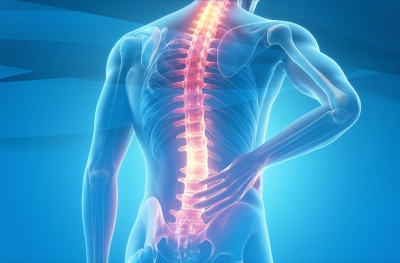
Host Cory Leman and physical therapist Julia Thompson discuss the complexities, causes, and treatments of back pain on the IBJI OrthoInform podcast. Thompson explains that while an estimated 80% of individuals will experience back pain in their lifetime, the common belief that patients should avoid movement is a harmful myth, asserting instead that movement acts as medicine. She identifies modern inactivity and prolonged desk work as major contributors to spinal discomfort, and she advocates for early physical therapy intervention alongside regular posture changes. By utilizing hands-on treatments, modalities like trigger point dry needling, and individualized strength training that safely loads the spine, Thompson emphasizes that patients can successfully overcome fear-avoidant behaviors and restore their quality of life without surgery.
Episode Transcript
Episode 45 - Physical Therapy and Back Pain
Cory Leman: [00:00:00] Welcome to IBJI's OrthoInform, where we talk all things orthopedics that help you move better and live better. I'm your host, Cory Lehman, with OrthoInform. Our goal is to provide you with an in-depth resource about common orthopedic procedures that we perform every day. It's my pleasure today to welcome Julia Thompson, one of our physical therapists.
We'll be speaking about back pain and physical therapy. So Julia, welcome, and thank you so much for being here.
Julia Thompson, DPT: Thank you, Cory, for having me. It's a pleasure.
Cory Leman: So tell me a little bit, how did you get involved in the world of physical therapy, or what drew you to the profession?
Julia Thompson, DPT: So I've been an athlete my entire life.
I played beach volleyball through middle school, high school, and even into college. Um, I experienced my own injuries and physical therapy through the years with ankle injuries, hand surgeries, you name it. Uh, I just really love the exercise component of it and being able to be with people all day and help them be their best,
Cory Leman: so I know that back pain [00:01:00] is something that impacts so many of us, and I'm sure you see a ton of this in the clinic. And what drew you, in particular, to wanting to work with patients that experience back pain?
Julia Thompson, DPT: I'll be honest, when I first graduated from PT school, I hated treating backs. It seemed- Really?
Yeah, it seemed so complicated. I mean, you think the spine's... Like, I always think there's so many nerves involved, muscles involved, it's a little scary. Everyone experiences back pain. But as I've gotten more mature and into my career, and more knowledge, I've really found a passion because it's so integral to our day-to-day life.
It's with every movement we do, we use our back. Like 80% of people have back pain at some point in their life. I've experienced it. I've had family members experience it with surgeries and everything, so kinda drew me to it.
Cory Leman: Now, when we talk about back pain, primarily what are you seeing? Are you seeing low back, mid backs, neck?
Julia Thompson, DPT: I'd say mainly low back followed by neck. [00:02:00] Mid back kinda we treat with both, but mainly low back.
Cory Leman: You mentioned 80% of people, and I've heard that stat as well. Mm-hmm. But just in your experience in the clinic, how common is it with the patients that you see?
Julia Thompson, DPT: I'd say it's very common. I mean, we see a lot of postoperative patients in our clinic, but I'd say at least 50% of the non-operative cases that come through are kinda chronic back pain, acute back pain, those sort of cases.
Cory Leman: So what's going on with it? Obviously, you're an expert in movement analysis, biomechanics. Why do people have back pain?
Julia Thompson, DPT: So people have back pain for various reasons. A lot of it, I'd say, is just they're unaccustomed to those activities that they're doing in their daily life. But back pain itself is very complicated.
The pain neuroscience behind it all is very complex. We've had multiple classes in grad school about it, and pain's very poorly understood. I think there's more and more research [00:03:00] coming out on it, and so we don't always have an explanation of why people have back pain, but we see it a lot.
Cory Leman: Yeah, and I think you make a really good point there about pain not being that well understood.
Mm-hmm. Which sort of leads me to this question of, like, why is it that it can feel so debilitating? What do we know about it?
Julia Thompson, DPT: I think the debilitating factor of it is it's so central to our being, and it's so close to the nervous system. I said earlier, we move our back every single movement that we do. So if muscles are tight, there's ligamentous issues, there's something not right with the system, it can throw everything off, and then we start moving poorly around our spine, and those pathologic movements, and start developing fear avoidant patterns, and it just creates this whole cycle.
And with pain, it's complex. I mean, we can heighten our nervous system to the point where [00:04:00] non-painful stimulus become painful. Our brain is unfortunately not that smart in that way.
Cory Leman: What are some of the habits every day that you see that contribute to back pain?
Julia Thompson, DPT: I think we see a lot more recently with a lot of people working from home with the desk work.
They're sitting all day. They're not getting up and moving nearly as much as we used to, um, having to, like, walk around an office. Um, I know when we- I came in, I heard you talking about a standup desk. So I think those are great.
Cory Leman: Yeah, I love mine. Yeah. I'm, I'm always going up and down.
Julia Thompson, DPT: Mm-hmm.
Cory Leman: Moving around.
I'm probably a little over the top with it. Yeah. I'm like, "Oh, no, I've been in a position too long." But what's happening when somebody's seated for too long? Like, why is that problematic?
Julia Thompson, DPT: You're just not adapting those tissues. I mean, I guess you're not moving those tissues around, so some things might become tight, some might become weaker in those positions.
We're not getting [00:05:00] variety within our movement, and our body needs variety. An example is a lot of people wake up, and they're like, "Why am I stiff in the morning?" It's 'cause you're in one position all night. Our bodies crave movement and when we're just stuck all day, we're not getting that movement,
Cory Leman: at what point should someone consider seeing a physical therapist?
Julia Thompson, DPT: I'd say pretty early if you're having back pain. We see people that wait 30 years, which I don't love that, but we also see people that they come after, like, a week or two, and I think those are the easiest ones to handle because they're acting on it quicker.
They usually seem a little more mo- motivated too, so.
Cory Leman: I know a lot of people ignore pain in their life. Are there certain quality of life red flags, for lack of a better term- ... that you notice with people where you're like, "Hey, if it's gotten to this point-
...
Cory Leman: We absolutely need to get you into therapy"?
Julia Thompson, DPT: Yeah, I mean, I'd say if you're completely changing your lifestyle, you're [00:06:00] avoiding certain activities, you're scared to bend over to, like, put your socks and shoes on. You're waking up at night consistently because of pain. Um, we don't want that quality of life to be impacted, so I'd say definitely at that point, get to therapy.
Cory Leman: What's the downside or detrimental effect of people pushing off physical therapy? Like, do you think they can do more damage?
Julia Thompson, DPT: I don't think they can necessarily do more damage, 'cause a lot of our pain isn't structural. Like, it's not like there's a physical damage to the spine itself. It's just more we, like I said, we've developed these fear avoidant behaviors, um, and we start moving poorly around that pain.
You know what I'm saying?
Cory Leman: Oh, yeah.
Julia Thompson, DPT: So I think we just develop bad habits if we don't get into therapy or into a trainer soon enough.
Cory Leman: What are some of the biggest myths that you see people believe about back pain?
Julia Thompson, DPT: Oh, gosh. This is something I- we hear about all the [00:07:00] time in therapy. Um, I have patients come in, they're like, "Oh, my back is out of place.
Um, I'm out of alignment," all these things, and which isn't true. The spine is inherently very stable. So if you're actually structurally out of alignment, you probably should go to the hospital. Something's probably broken, but more often than not, that is not the case. We're not seeing people out of alignment.
Usually, it's muscle tightness, something within the joints just tightened. Um, so that's a myth we hate to hear, and we always have to debunk it on a daily basis.
Cory Leman: A lot of people think that when they experience back pain, they should be avoiding movement. What's your opinion?
Julia Thompson, DPT: I hate that opinion.
Cory Leman: Really?
Julia Thompson, DPT: Yeah. I think movement is medicine. We have to move. Um, the first exercise we usually teach people in p- therapy are moving, like different spinal movements, rotational movements, flexion extension movements, just getting [00:08:00] their body moving better and more efficiently.
Cory Leman: Where do you see typically that people are maybe lacking range of motion or movement in their spine?
Julia Thompson, DPT: I'd say we tend to avoid flexing forward, and we avoid rotating movements. Um, I think those are what people are afraid to do. I actually recently had a patient who came in and was told by his doctor that he should never bend forward ever again, and he's in his 50s. He likes to do yoga, he liked to run, he liked to weightlift, and it wasn't one of our doctors, but he, uh, was told, yeah, never to bend forward again.
So he stopped doing that for months and did... Yeah.
Cory Leman: So in a case like that, h- where do you even start? Is it a re-education? W- how would you respond or how did you respond in that event?
Julia Thompson, DPT: So I obviously'd want, try to, like, train his system to, like, decrease the pain, but a lot of it was si- like, education on pain science, education on that, [00:09:00] how resilient the spine is, and we can load it.
We're allowed to flex our spine. We're allowed to bend. We're allowed to squat. We're allowed to run. We're allowed to do all these things. We just have to build the tolerance to it. So that's what we spent a lot of time educating on
Cory Leman: So when someone comes to you in physical therapy, walk me through that process.
Mm-hmm. What does the first visit look like?
Julia Thompson, DPT: So first visit, we'll do all your intake, medical history, have you fill out questionnaires to kinda really get to the bottom of your pain. But we'll sit, take a thorough history with you, kinda figure out what your goals are, what the history of your pain is, and put a plan together.
I always like to assess spinal mobility, hip mobility, your general strength. Sometimes we'll even talk about sleep and diet. But then we try to get our hands on you. I'm one, and everyone in my clinic is very hands-on, at least on that first visit, 'cause I wanna get you feeling at least 10% better when you leave the clinic.
And then we'll send you home with some exercises to help [00:10:00] build on everything we did in the clinic, and have you do a home program.
Cory Leman: In your experience, and even if it's just anecdotally-
Julia Thompson, DPT: Mm-hmm ...
Cory Leman: do you find that patients are experiencing 10% improvement after that first visit?
Julia Thompson, DPT: I would say so, yeah. I think there is, if you educate a patient well enough, and you can get that buy-in, I think people usually walk out feeling better.
One, just knowing that their pain is fixable, that they're not gonna be stuck in pain forever, but two, knowing that they have a solution to improve it. Um, yeah.
Cory Leman: How as the PT are you determining sort of the root cause of pain?
Julia Thompson, DPT: The root cause is almost impossible s- for us to truly figure out because there's so many structures in the spine, and like I said, pain is very complicated.
Um, we usually try to see what physical deficits are. So if there's hip tightness, if there's some [00:11:00] core hip weakness, if there's a mobility deficit that we need to improve, or if those muscles around the spine or within the whole, like, pelvic region are just really tight, sometimes we just gotta get our hands on things and loosen it up.
Cory Leman: You've mentioned the hips, the pelvis- ... inflexibility, tightness, uh, muscle strength. Uh, what's the relationship between hip health and spinal health?
Julia Thompson, DPT: So if your hips aren't moving well, you're gonna have to find that motion from somewhere else, and we usually tend to find it from our back, or if, There's muscle weakness.
We're gonna try to use and load our back a little bit more when we should be using our legs a little bit more. Our glutes and thighs are really meant to be strong. Or the spine is strong too, but those muscles are a little bit smaller, so we wanna train those bigger muscles to take a little bit more load and help stabilize the pelvis.
Cory Leman: So you walked us through the first visit. What does weeks two, three, four, and beyond look like for someone going through some type of physical therapy program for their [00:12:00] back?
Julia Thompson, DPT: So I would say it's very patient dependent, kinda where you're at in your pain cycle on your low back journey. Um, we obviously love to transition people to that home program and get you more independent with it, but we gra- gradually increase your activity levels as pain levels go down.
We have to start challenging you more to really get into those functional activities that you came here for. So if you're having difficulty carrying your laundry basket, we'll practice lifting. If you're having trouble twisting to get something in the car, we're gonna practice twisting. So getting you doing those painful or fearful activities, but doing them well.
Cory Leman: In your experience, what separates those people who recover quickly and efficiently versus those who tend to struggle?
Julia Thompson, DPT: I think the biggest thing is just the positive outlook on it. I think people that are gonna be more hopeful and put the effort in and kinda know that it will get [00:13:00] better will see better outcomes.
I... When people come in and they say, "My doc says I need surgery, it's not gonna help," those are the ones I, I don't think we can fix because it's a mindset. Most back pain we can fix without surgery necessarily. I mean, at least your generic back pain. There's more complicated cases where, yeah, surgery may be required.
But a lot of things do get better with therapy and with exercise. And I think if they have that positive mindset around it, it will help immensely.
Cory Leman: Can you share with us a time or a memorable experience of a patient that came in with back pain and you helped them make a marked improvement?
Julia Thompson, DPT: Yeah. I would say that one I mentioned earlier.
He said he couldn't bend over ever again, and wasn't doing yoga, wasn't running anymore. I think day one we did some hands-on treatment. I personally, I do trigger point dry needling, which he found helped incredibly. Um, it took his pain away immediately. But then we were building on those fear [00:14:00] avoidant behaviors.
I actually s- forced him to start bending his spine, and he didn't like it at first, but I think within five visits he walked out of there saying, "I just ran the furthest I've run in years. I got back to yoga without pain." And he had done therapy elsewhere that he didn't find that.
Cory Leman: That's incredible.
What is trigger point dry needling?
Julia Thompson, DPT: So it's a modality we use in therapy. Not everyone can do it, but you have to be trained in it. But we take an acupuncture needle and go into the muscle. Our goal is to help relieve pain. The needle itself stimulates this reflex and helps get blood flow to the tissue, helps decrease acidity get oxygen to the tissue so those muscles can relax a little bit, and usually becomes less painful.
Cory Leman: Does it hurt?
Julia Thompson, DPT: It's uncomfortable.
Cory Leman: Yeah?
Julia Thompson, DPT: It can be. I've had some patients that don't like it at all, but I have people that come, when they're done with therapy they pay out of pocket for it, so it, it does something for us.
Cory Leman: What are other modalities that you tend [00:15:00] to use when treating back pain?
Julia Thompson, DPT: I tend to not use many just other than my hands and the needling.
Um, some patients, if pain is so severe, we can use, like, a TENS unit, the electrical stimulation, but that's rare that I use that 'cause it's usually just more of a temporary fix. But if someone likes it, I have them use it at home. I tell people to use maybe a hot pack or something at home to get those muscles loosened up or calm down a little.
But-
Cory Leman: I was gonna ask you, what's your thoughts on heating pads and/or icing?
Julia Thompson, DPT: I prefer heating more than anything just 'cause you're helping get blood flow to that area. It doesn't really reach too deep into the tissues, but it can be calming, and who doesn't like a nice hot pack on their back?
Cory Leman: What role do you see strength training playing in the long-term health and prevention of back pain?
Julia Thompson, DPT: I think it's huge, um, especially as our population keeps getting older, and I think strength is great for bone density. It's great for maintaining our function. I think if we stop using our [00:16:00] muscles, we stop using them.
Cory Leman: Are there certain movements or exercises that you find especially helpful for helping create a healthy back?
Julia Thompson, DPT: I find that loading the spine in different positions, so we like, in our clinic, like to do a lot of resisted rotational movements like articulating rotations. So, um, 'cause we don't usually get a ton of isolated rotation during our day unless it's when we're twisting to pick something up, but
Cory Leman: really- what does that look like for, like, somebody who's listening and they wanna- Mm-hmm
do that at home? What do you mean?
Julia Thompson, DPT: So our first option is we call it, um, like, a low trunk rotation laying on their back. So you'll be on your back with your knees bent, feet on the table, and you just rock your knees side to side. Really just nice and simple, usually feels like a good stretch. In our clinic, we have these mobile pulley machines.
They have weights on them, so we'll actually attach weight to it so you get resisted rotation. Then we transition people in the seated position, where they're just sitting with their feet flat on the ground. You're [00:17:00] rotating your upper body just to get some movement in.
Cory Leman: I love that. Yeah. So you find that rotation tends to provide some type of benefit to your patients?
Julia Thompson, DPT: I think so, yeah, and we, we can't neglect the other motions, too. I mean, the flexion extension, like, your... I know you were talking cat cows when I came in, too.
Cory Leman: Yep.
Julia Thompson, DPT: Cat cow, like being on all fours, kinda extending and flexing the spine are great.
Cory Leman: Are there particular exercises that you think people should be avoiding or would be detrimental to their back pain?
Julia Thompson, DPT: I will not put a blanket statement out and say you avoid any exercise. I think it's really patient dependent. Like I've said multiple times, our spine is resilient. I think it should be able to handle most loads and most movements. Obviously, if there's something going on with the nervous, like with the nerves, like you've got a, your leg is numb or something like that, and we're pushing into a movement that's gonna make that worse, we're gonna avoid those movements.
But for someone who's got general back pain, I wouldn't say avoid anything. We might just have to [00:18:00] slowly increase loading into those movements.
Cory Leman: Now, I like that response 'cause I feel like for a long time in the general health and wellness arena, exercises would be demonized.
And I often like to say there's no good or bad exercises, only unprepared bodies.
Julia Thompson, DPT: That's perfect.
Cory Leman: And I think it hits home really well with the point you're making that everybody's unique. If you can tolerate something relatively pain-free- Mm-hmm ... and you can go through that motion safely, then it's probably good.
Julia Thompson, DPT: Yeah. I would agree. I think we often just lack the capacity for movements, and that's where we get ourselves into a little bit more trouble in that pain response.
So yeah.
Cory Leman: Now, we hear a lot of blanket statements about core training and the core protecting the spine, and we hear a lot about core training and the importance of core [00:19:00] training as it relates to spinal health. But I know a lot of times when people think core, they just think the muscles they see in the mirror.
How do you think about it?
Julia Thompson, DPT: Yeah, like you said, I think a lot of people think core is like you gotta get a six-pack. That's not the case. I mean, our six-pack muscles are not actually our biggest spine stabilizers. I would think of core as, yes, your abdominal muscles, but your obliques, the deeper core or abdominal muscles, um, spinal musculature, your pelvis, pelvic floor, your glutes, your diaphragm even.
So, like breathing is very important. I think all of those muscles, pretty much anything in your trunk from like ribcage down to your pelvis, I would consider core.
Cory Leman: What do you think is the biggest contributor to back pain in our modern life?
Julia Thompson, DPT: I would say inactivity. We talked about, like, the sedentary desk work, but also just doing too much too soon.
We're not prepping [00:20:00] our body for activities. Um, I've seen it a lot even this week with the nicer weather, with people going out and guarding- gardening or putting mulch in, and they're, they're not doing that stuff all year round, so they're stuck in these positions for hours at a time, and their spine's not used to doing that.
So things tighten up, and they start developing these painful patterns, and they come to us and say, "My back hurts really bad." I'm like, "What'd you do?" "Oh, I was squatting down, bending over for two hours." I'm like, "Okay, that makes sense."
So just the capacity's not there
Cory Leman: Most people are pretty aware of the concept of good posture.
But I don't think many of us understand how to effectively influence it or maintain it or improve it. How would you advise us?
Julia Thompson, DPT: So I wouldn't say there's perfect posture. Um, research shows that posture doesn't actually affect our pain levels, but I would say it's more of the being able to move between postures.
Gravity's gonna pull us forward. We're all gonna ... When we're comfortable, we kinda [00:21:00] tend to slouch. It's not gonna be comfortable to stand like this all day, like perfectly straight and upright. You're gonna have some discomfort with it. Um, so I would just say strengthening everything kinda upper back, lower back, core, glutes, whatever you wanna strengthen, but being able to improve that muscle to be able to get you in and out of those positions a little bit better.
Cory Leman: I love the fact that you said being able to move in and out of positions 'cause one take I heard was sort of like the best posture for you is the one that you're not in. Mm-hmm. And I had to think about that for a second. I was like, wait a second. The best posture is the one that you're not in. And basically the person, the point they were trying to drive home was just keep changing positions.
Keep moving. Mm-hmm. Yeah. Sometimes it's okay to slouch. Mm-hmm. Then sit up and change your position, and it seems like that's really what you're articulating as well.
Julia Thompson, DPT: Yeah, definitely. In our clinic, we like to say, yeah, your best posture is your next posture. So another way to
Cory Leman: look at it. I like that. Yep.
Best posture is your next posture. Yep. Okay. Most [00:22:00] underrated exercise for back health that people might not know.
Julia Thompson, DPT: I love a Jefferson curl. I don't know if you're familiar with it.
Cory Leman: I am, but I don't think many people are. Yeah. Maybe you can describe it for us.
Julia Thompson, DPT: Yeah, not many people are familiar with it, and I honestly don't load, or like incorporate into my therapy as much as I should early on because it kinda scares people.
The exercise is essentially a loaded flexion of the spine, so loaded bending. You just gradually bend forward, kinda starting neck and rolling down, and oftentimes you'll add weight to it, but you're trying to articulate each vertebrae as you forward fold and then kinda roll it back up,
Cory Leman: when you say articulate-
Julia Thompson, DPT: Mm-hmm
Cory Leman: each vertebrae, what does that mean in layman's terms?
Julia Thompson, DPT: So just kind of move like one level at a time within the spine. So like one vertebrae will kinda move forward while the other one stays, and you just keep kinda rolling forward.
Cory Leman: How difficult is that?
Julia Thompson, DPT: It's very difficult. It takes practice, which is why I don't often [00:23:00] add it early on.
Cory Leman: Yeah. We-- I've talked with people about articulation and- Mm-hmm ... and said, you have What is it? Seven vertebrae in your cervical spine- Mm-hmm ... 12 in your thoracic- Mm-hmm ... and five in your lumbar.
Julia Thompson, DPT: Mm-hmm.
Cory Leman: W- what's the addition on that? 24, something like that? Something like that, yeah. Okay. Don't count my math here.
Okay. You know, we're exercise specialists. But in theory, if you were articulating at each vertebrae-
Julia Thompson, DPT: Mm-hmm ...
Cory Leman: doing an exercise like you're suggesting with the Jefferson curl, it probably shouldn't be done in three seconds, right? No. It should probably take some time, right? If you're really thinking about bending and forward folding and articulating at each vertebrae- Mm
then it's gonna probably take 15, 20, 25 seconds.
Julia Thompson, DPT: Yeah. So you're s- very slowly loading that spine into flexion, which I think is very healthy for us. It's just, like I said, people are a little scared to do it [00:24:00] sometimes.
Cory Leman: What's the best thing somebody can do if they are sitting all day? We've talked about the fact that many people are desk-bound or, they have long commutes.
What do you recommend?
Julia Thompson, DPT: Yeah, take, I mean, getting up when you can. I personally love that walking desks, or like the walking pads, are becoming more of a thing, because a lot of studies show that just general walking can help decrease risk of back pain. So I love that. Even just sitting at your desk, just doing kinda like squeezes, just change your posture.
Sit at your desk and kinda slide forward, stretch. Do what you need to do. Just get some movement.
Cory Leman: If someone's listening right now, and they're living with back pain, what would you want them to know?
Julia Thompson, DPT: I'd want them to know that it's not forever. Back pain will come and go, and most people, like we said, 80% of people will experience it in their lifetime, but it doesn't have to be something that changes the course of your life or your daily activities, and [00:25:00] we can certainly help as PTs, trainers.
Everybody can help get you back to moving.
Cory Leman: What's the most important thing people should understand about keeping their back healthy long term?
Julia Thompson, DPT: I think it takes work. It takes time and effort towards it. I mean, just like we eat a healthy diet, we drink our water, we've gotta exercise and we've gotta move.
And even knowing that sometimes when we exercise we might get back pain, but knowing that it's, it's temporary. So just making it a daily habit more than anything.
Cory Leman: What did we miss? Anything else people should really know about back pain?
Julia Thompson, DPT: I'd say we touched on a lot of the major points. I know it's, we've been kind of, I don't wanna say vague with exercise necessarily, but, um, exercise is gonna be different for every single person that comes through.
Every back pain patient is different. So your exercise that you need for your back may be very different than the exercise that I [00:26:00] need. So I think seeing somebody for it, like a physical therapist, trainers, anybody, seeing your physicians even, can help us figure out the plan for you, 'cause not everybody's the same.
Cory Leman: No, I, I appreciate that. I had made a, a post the other day about how you'll find these viral social media videos on what's the one best exercise for your back, or what's the, you know, one best exercise for developing this quality. And I s- shared how I have a disdain for- ... those types of posts because people see that.
Julia Thompson, DPT: Mm-hmm.
Cory Leman: And then they think, "Well, I should do this." But just even based off our conversation, it's like it really depends what causes pain.
Right? It depends what type of movements cause an individual pain, and that's where I think your advice is so beneficial about connecting with a physical therapist and getting some [00:27:00] exercises that uniquely will be beneficial to that individual.
Julia Thompson, DPT: Yeah. I agree. I hate seeing those posts on social media saying, like, "Bulletproof your spine, bulletproof your hips", something like that. You can't make anything bulletproof. And like I said, it's, it's different for every single person, so, like you said, come see us, and we'll help figure out what you need specifically.
Cory Leman: Absolutely. Julia, this was really enlightening. I really enjoyed hearing a lot of your expertise. If somebody wants to work with you, or if they are personally experiencing back pain, how can they get in touch with you?
Julia Thompson, DPT: Yeah. So I, um, currently work at the Lake Barrington facility, which I know is a little bit further out, but we accept patients of all ages, all insurances, different doctors too.
So, um, you can reach out to our clinic, the IBJI Lake Barrington. Uh, we also have so many other great clinicians nearby at all of our clinics. I think we've got 48 therapy clinics now. So wherever you go, you'll get your hands... or someone [00:28:00] great will get their hands on you,
Cory Leman: that's awesome. Mm-hmm. Thank you so much for your time.
Of
Julia Thompson, DPT: course. Thank you.
Don't Miss an Episode
Subscribe to our monthly patient newsletter to get notification of new podcast episodes.