

Massage Therapy
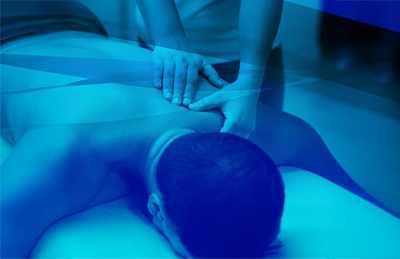
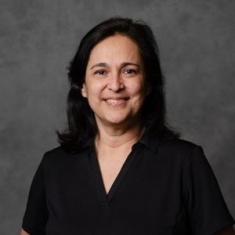
In this episode of IBJI’s OrthoInform, Dr. Eric Chehab is joined by licensed massage therapist and acupuncturist Yvonne Gonzalez to discuss the role of therapeutic massage in orthopedic care. They explore how massage therapy supports pain relief, injury prevention, recovery, and performance, and how it integrates with physical therapy and medical treatment. Learn how hands-on care can help patients move better, feel better, and live better.
Hosted by Eric Chehab, MD
Episode Transcript
Episode 36 - Massage Therapy
Dr. Chehab: Welcome to IBJI's OrthoInform where we talk all things orthopedics that help you move better, live better. I'm your host, Dr. Eric Chehab with OrthoInform. Our goal is to provide you with an in-depth resource about common orthopedic procedures that we perform every day. Today, it's my pleasure to welcome Yvonne Gonzalez, who will be speaking about the benefits of massage therapy.
So it's a little bit of a topic that we haven't covered in the past. And Yvonne, thank you for being here on OrthoInform. And if you don't mind I'd like you to share some of your background with us. Tell us about your educational background and then what led you into massage therapy.
Yvonne Gonzalez: Thank you, Dr.
Chehab. It's really a pleasure to be here to discuss this. Topic along with the IBJI medical community. It is an area that we have and we've been working with a Health Performance Institute for a number of years now. And every day we still discover that many people are learning about what we have and what we offer.
And so my first [00:01:00] experience was at a school out in Lombard which is the the national university for health sciences, which is primarily a chiropractic school, but it's health sciences, which features naturopathic, acupuncture, massage therapy and other sciences that.
All natural. And so I ended up completing a program there. Once I started things changed along my, my path and so I decided to pursue that in more of a full-time opportunity
so when I first completed my it's a certification you receive and then you go on to there's a certain requirement that every state has.
And for Illinois it is a minimum at this point, 600 hours, which sounds extensive, but. It is because it is a foundational aspect of learning massage therapy
Dr. Chehab: And 600 hours of clinical work, or 600 hours of study or combination. Combination. Combination, yes.
Yvonne Gonzalez: And so we we have to go through a pretty [00:02:00] regimented foundation of anatomy, physiology, kinesiology neurology.
That's the certification or licensure, or that is. That's to complete the program. So that is for certification. Yep. Once you complete that, and then your training hours that include your internships because you have to have certain hours that are hands-on clinical you then sit for the board exam and it's upon passing that that's required by the state of Illinois.
Dr. Chehab: For licensure? For
Yvonne Gonzalez: licensure because you cannot practice until you are licensed.
Dr. Chehab: Okay. And then you did your internship at Stroger, is that correct?
Yvonne Gonzalez: Yes. Stroger was part of my acupuncture aspect. I know we're talking massage therapy, but that was a continuing as I continued growing within the healthcare field, eventually I decided to expand my experience and went into the more Eastern aspect of healthcare.
Dr. Chehab: So you are a licensed massage therapist and a licensed acupuncture? Yes. Treist in the state of Illinois. In
Yvonne Gonzalez: the [00:03:00] state of Illinois. Wow,
Dr. Chehab: great. And and then you have certificates of orthopedic massage therapy and advanced orthopedic and sports medicine acupuncture. Yes. Is that correct? So explain what goes entails.
What does it entail to get certified in certification in orthopedic massage therapy and in sports medicine, acupuncture?
Yvonne Gonzalez: So once you are licensed and begin your practice every two years, the state of Illinois, which is common in other states, require your relicensed. Thing requirements certain a number of hours.
And so as you continue to grow and expand on your experience it's then within your career if you choose to stay in for a while that you start targeting a specific direction. And so many of us will start getting involved in more specialty. So as we are in an orthopedic environment. And if you choose to direct your future credentials in that, you start pursuing the areas of expertise [00:04:00] from those who teach in that area.
Dr. Chehab: And so what are some of the other choices beyond orthopedics?
Yvonne Gonzalez: So if not within that, you could get into more like gastrointestinal like, um, yeah, I would say that. , And I'm gonna combine a little bit of massage and acupuncture. Sure. But um, you can get into. Well, Some choose the spa environment , as part of their career.
There's benefits to that. But if you wanna stay within the clinical setting, you can work within many other medical offices. In my case, I choose orthopedics because of the variety of cases that come through. And I tend to appreciate a more analytical aspect of the science of massage therapy.
Dr. Chehab: And then for instance, is there lymphedema massage is that a certification of its own or,
Yvonne Gonzalez: yes, it can be. We learn some basics around that, but there are areas of massage therapy that require additional training and certification in order for you to practice that more specifically as a [00:05:00] specialty.
Dr. Chehab: And now you've spent. This is now your eighth season with the WNBA Yes. With the Chicago Ski, is that correct?
Yvonne Gonzalez: Yes.
Dr. Chehab: And you provide some of the wellness and I assume massage therapy and acupuncture for the athletes? Yes. I wouldn't be surprised if the front office gets involved a little bit with your treatments.
Is that correct? Or maybe. And then just to move on with regard to. Highland Park with our Yes. Health Performance Institute. How long have you been at the Highland Park facility. And what team of massage therapists have you assembled there?
Yvonne Gonzalez: So I started my path with IBGI in Highland Park.
And so I'm familiar with our Morton Grove location and we had a little bit in Mound Prospect. But majority of my work has been out of Highland Park and since that I started in 2018 massage therapy, and we had a few of us on board, and we are continuing to [00:06:00] grow as we specialize within the orthopedic area.
I would say that in general, our full group is, has the skillset to be able to handle most cases that come through which in. As a specialty, we are orthopedic. And so any case that comes through any one of us can handle that. For the most part what differentiates us is our personal direction.
Say for example myself as I went into Eastern. Eastern practice. I look at the body a little differently as I incorporate some eastern philosophy along with the western side of evidence-based practice. Some of our other therapists we have we have some that have chosen a little different direction in terms of I'll say use of tools or modalities like percussion therapy and others.
I would say that, as an example, we had one, client that feedback had given to us, had the opportunity of [00:07:00] working with , I'll say three of us in, in terms of, of uh, care. Mm-hmm. And we found a real interesting, and I have to say an ultimate . I will just say uh, a positive aspect of the experience is that they presented with the same situation to all of us and came back and said, wow, , that they, did receive uh, benefits from our sessions, but did comment that each one of us approached it in a different way.
And so in spite of having that foundation of everything that is orthopedic. Directed we tend to gravitate towards other things that are of our interest, and so we come to the same, I'll say, conclusion in terms of the benefits that this person received. And I felt that was such a strong compliment to the group that we have together.
Dr. Chehab: Sure. Obviously the same occurs with among orthopedic surgeons, where you may have one surgeon electing to treat a certain problem one way and a another surgeon. Treating the same [00:08:00] problem differently. Sure. And there should be no different within massage therapy or any therapeutic modality.
Sure. I, and you printed for me not too long ago from the American massage Therapy Association. Yep. The American Massage Therapy Association. First of all, that's an organization that oversees. Massage therapy. I would imagine continuing medical education probably organizes seminars and conferences for massage therapists.
Is that correct? Yes. That is our national board, and once you are boarded, you are a member. Once you pass your boards, you can get your license and. The state of Illinois and you can also Yes. Elect to join the American Yes. Massage Therapy Association. Is that correct?
Yvonne Gonzalez: Yes.
Dr. Chehab: Okay. And you printed for me 25 reasons to get a massage and a therapeutic massage.
And the list is really interesting. I'd love you to just go down the list a little bit and obviously the ones that pertain to orthopedics might be a particular interest, but and then I think if there's a such thing as a list of reasons why you would not get a massage that would have to be a very short [00:09:00] list.
It
Yvonne Gonzalez: is a very short list and I would preface to say that. While these are specific to reasons to get a massage Yeah. Very much. They're a crossover to a lot of conditions. Sure. As general as the first one, and that is to relieve stress. Yeah. And I have to be specific around orthopedic conditions because we get asked a lot.
Does massage help that in terms of orthopedic joint concerns and. We have to say the simple answer to that question is yes. Period. Yeah. I and the reason that being is because a primary concern is pain and dysfunction. And if we look at both of those and see review what the benefits of massage in that manual process that we work with someone, those are the things that help with.
Reducing pain. Managing pain. Yeah. Dysfunction. We want to bring back function to the joint jointed [00:10:00] areas and the air and the, I'll say the structures most impacted are muscles and tissue. And so through the use of manual work, some, we say body work, but manual therapeutic work is to literally take hands on the body and stretch.
The structures. I'm visualizing myofascia connective tissue release, and that literally is about taking your hands. And we have different techniques and everyone I'll say it's a comfort level with each person as you practice and develop your own skill. I think of it a little bit as choreography, the flow of the maneuvering of tissue and.
You are stretching things out to release contracted contracted web. We think of connective tissue as the web in the body. And so when that's entangled and caught up around other structures, that's part of what's preventing movement. And [00:11:00] so with orthopedic conditions, a lot of that has to do with dysfunction.
Yeah. So our mission is to bring back function, to reduce and manage. Manage pain. And once we start releasing that increasing circulation those conditions change. They alter, they start, we start creating a healthy field for the tissue. And so that promotes healing.
Dr. Chehab: What are some of the top three conditions that are referred your way?
Yvonne Gonzalez: In terms of orthopedic, I would say we see a lot of low back. Yeah. I'll just say spinal from cervical, thoracic low back. Yeah. And that leading into hip, hip and glutes, but generally speaking thus spine because of our repetitive motion and improper postural positioning.
Dr. Chehab: And then what's maybe second place on the list after spine?
Yvonne Gonzalez: Knee and shoulder.
Dr. Chehab: Yeah.
Yvonne Gonzalez: I would say yeah, knee and shoulder. We get enough of [00:12:00] that and I would say together with ankle, but knee a lot. Shoulder a lot.
Dr. Chehab: And then are these. Postoperative knees are these patients who have arthritic conditions or injuries or you see it? Probably all of it. All of the,
Yvonne Gonzalez: all of the above, in fact, we do see from the basis of how massage can help in terms of preventive, we do see a fair share of people who want to avoid procedure, and so they'll come to us with. All, whatever symptoms they're having, we do a full intake, health history. We wanna get a full story of what has happened, not only currently what their chief concern is, but what has happened historically.
Is it trauma, is it repetitive motion? Whatever it is.
Dr. Chehab: And then likewise, on the opposite end, patients coming to you to prevent. Having a procedure and then patients postoperatively who've had procedures I imagine would also seek out care with you and your group of massage therapists because of the benefits of massage therapy for postoperative [00:13:00] pain or postoperative stiffness or some of the things that can happen with surgery that some of the unintended consequences of surgery.
Yvonne Gonzalez: Absolutely. Yeah, so we see a wide gamut of. Of all of it, yeah. And so we think of massage as it's all good, right? In fact one of AMTs lines is massage is good medicine. Because we see people for purposes of general maintenance. We recommend body work once a month to every 45 days or so.
And so keeping with that, we're trying to educate the importance of doing that as a preventive measure. So general maintenance. Then we have our orthopedic concerns where it's pre and post procedure. It can be injury related, it can be just repetitive motion related. Recovery, if we're talking about more sports directed it, it could be a combination of injury.
So rehab, we're talking rehab and recovery. [00:14:00] So there's a little bit of all of it. That's key.
Dr. Chehab: So prevention, maintenance, recovery those seem to be some key indications Yes. For massage therapy. And then what about some of the rheumatologic conditions? Do you see patients seeking care for?
Rheumatologic conditions.
Yvonne Gonzalez: Yes. We do offer massage therapy. Again, that's either through specialty certification or just basic foundation that we know that we can use to treat these systemic, more systemic conditions. Much of that has to do with controlling inflammation, and so with increasing circulation and promoting a healthy field of tissue.
We are actually having a hand, no pun intended, in delivering that, helpful advantage to promoting health to structures. Sure, sure.
Dr. Chehab: And then in terms of the length of time when someone comes in for a treatment session, I would imagine the [00:15:00] times vary based on their condition or their goals of treatment.
But if there's a such thing as an average. A massage therapy session about what's the length of time that people typically spend receiving treatment from you or your colleagues.
Yvonne Gonzalez: So our sessions run as, as we calculators we promote a, I'll say a menu option. We offer a.
Sessions from 30 minute sessions, 60 minute sessions, 90 minute sometimes people will take on a two hour session. That's a little more unusual. And as therapists, we have to feel comfortable that warrants the reason behind a two hour session. Sure. But sometimes, we have, we have clients that have multi-layered conditions, so that does seem appropriate at the time.
Dr. Chehab: And then what's the frequency? You mentioned once a month for some maintenance conditions. Yes. But is it usually several times a week or once a week? Once a month. What's the most common frequency and what's, why is there some variability there?
Yvonne Gonzalez: Yeah [00:16:00] that's a tough question. Mainly because it depends on the person themselves as we say.
Every body is different. And so depending on what their main concerns are coming in, we can talk about averages. But ultimately it depends on what the needs are. And as we as we are able to determine the impact of an initial session followed up by close to an immediate session, like for example when we receive, leads from our physical therapist. Most of the time it's because they are in physical therapy, and so if they're seeing their physical therapist twice a week, three times a week or leveling it out to once a week, we like to coordinate that with because. Physical therapy that is physical can also bring discomfort.
Yeah. And so we want to integrate our massage therapy with that.
Dr. Chehab: So do you work commonly with our physical therapists? Yes. You do. That's great. Absolutely. So that's nice integration. Yes. Of, of [00:17:00] treatment. So it's terrific that you and your colleagues work in conjunction with our physical therapists. Do you find that adding massage therapy to a recovery protocol helps speed recovery or change the recovery?
Yvonne Gonzalez: Studies show absolutely. In fact integrating any body work whatever modality that is, whatever techniques they are help promote the healing of tissue. And when we're talking about. Anyone dealing with physical therapy, that's what they're concentrating on. Yeah. Is managing pain.
Managing dysfunction. And so if we can add therapeutic value to that, not only helping that person feel better, but literally move better. And thus our line, this is what we do. It definitely helps to integrate this this is part of what we. We promote and educate for anyone who, who pass, who crosses our path as we continue to grow our group.
Dr. Chehab: And along those lines, who do you find to be your [00:18:00] most common? Referral. Is it from the physical therapist? Is it from physicians? Is it from patients and relatives? How do people get involved with massage therapy, learn about it and get to your doorstep?
Yvonne Gonzalez: So we actually have encountered all of that.
I would say a majority, and it could very well be because of where we're at uh, and the focus of our work as orthopedic. But most of our clients are from. The medical side of IBJI. So we do work a lot with our physical therapists. We encourage inviting guests or, and clients from our HPI side uh, to engage in our, our, our massage therapy as well.
Uh, But to your question, we do get a majority of leads on the medical side, and , in addition to the physical therapy the, the more engaging we become with our physician side uh, we are seeing more referrals come through. And I think the key to that. [00:19:00] Primarily is results. Yeah. Um, Evidence-based activity that we perform as part of our sessions, but when our client, our clients go back to our physicians as their patients and can.
Experience firsthand as well as be our testimonial. That's proof in what we do. Yeah. And so in, in how we deliver our work and following up, , just sort of the protocols of how we engage our relationship, build, relationship building this is how we receive additional. Leads then. Sure. So those will, we have some examples where some persons have come to us for a first time and will tell their friends, neighbors, family, and so we do receive leads that way.
And so it's about. As I always say, we need to get someone on our table to experience what we do firsthand in order to physically experience those differences. That [00:20:00] might be what someone is not used to and what they consider a massage. Yeah. And so we refer to what we do as therapeutic because.
Because of what we do and the benefits that you receive from that work.
Dr. Chehab: Yeah. And when you were talking, it makes me I mentioned the three reasons for massage of, of prevention. Mm-hmm. And maintenance and recovery. And a big one with the Health Performance Institute is performance the fact that athletes do turn to massage therapy to improve performance.
Yvonne Gonzalez: Absolutely.
Dr. Chehab: Yeah. And then, returning this 25 reasons to get a massage from the American Massage Therapy Association. That's a long list, but what are some of the reasons that jump out at you that you think are, are important for patients to know?
Yvonne Gonzalez: I'm gonna say starting out with relieving stress, the nature of what any of us.
Does as a lifestyle can be very stressful. Repetitive motion from the physical aspect to all [00:21:00] responsibilities. Our relationships, anything to do that is work related, personal related allows a certain level of stress and if we can use body work. As a way to reduce that helps us physically in a positive way.
So that would be, not necessarily first and foremost, but generally speaking, if you felt you were not dealing with anything that is of orthopedic conditions, because we do have many people who. Because they don't feel like they have a quote problem. They don't feel they need massage. And so it's not until they have that quote problem, a stiffness, a restriction is range of motion or, or the other, then they will pursue what they have heard about orthopedic massage. I would say relieving stress in general reducing anxiety, reducing muscle tension, that's all part of orthopedic as well. We. The way we carry ourselves repetitive motion, say [00:22:00] even just forward flexion has its physi or its physical negative sides of just postural balance.
And by relieving tension in the muscles that brings just a greater balance in our bodies.
Dr. Chehab: So when I look at the 25 reasons to get a massage, I, it feels like there's a lot. To do with muscle pain and muscle tension. Pain in general. Whether it's post-op pain fibromyalgia pain, post-injury pain there's a lot of mental health benefits.
For relieving stress, as you mentioned, anxiety sleeping better, which I think falls on a bit of the mental health tension, headaches promoting relaxation. There's so many good reasons to get. Massage therapy. I get this question often about when patients have an injury or recovery from a condition and they'll ask, can I still get a massage?
And my pat answer is, there's no reason not to get a massage. Why wouldn't you get a massage? You'll feel better with a massage. And it's almost like a [00:23:00] baseline acceptance that yes, you will feel better with a massage probably because it's so obvious and true.
Yvonne Gonzalez: Yes. It really does seem that way to me.
Dr. Chehab: So what are some of the special, differences that, that you can offer in an orthopedic practice that, let's say if you're a standalone massage program, is it the integration with a physical therapist? Is it the athletic focus? What is it that draws you to that line of work?
Yvonne Gonzalez: So for me personally, just being in a more clinical setting allows me integrating with other practitioners so that.
We can work together to not only review the chief concerns or whatever it is in each person's specialty, but working together as a team that allows a culmination of all that information as well as coming up with the best treatment protocols for the client. Every time I meet someone new after discussing what their main concerns are, and I [00:24:00] know that they're coming from.
Particularly physical therapy, I will let them know. I will work with your physical therapist to find out, all what you're doing and we can work together for them to inform me then what some, what are some areas that. They may feel to work on. And so that is a real big I'll say that. So huge advantage.
It's just, it's a great way to treat
Dr. Chehab: patients.
Yvonne Gonzalez: It's it's a level of trust that builds when you carry on these conversations and knowing that, wow, I'm actually going to have 18 working together for me, for my benefit for, everything that's going to make me feel better. And I just find that.
Putting myself, and I know others feel this way in an environment that gives you integrated options is really the direction we, I find to be most beneficial for treating. A patient, a client.
Dr. Chehab: Now, are there tips on how to maximize the benefits of [00:25:00] massage therapeutic massage treatment, hydration, nutrition?
What are some things that can help maximize the benefit of the body work that you do?
Yvonne Gonzalez: So part of working with the new client after we assess we gather our information about their chief concerns, we assess a lot can be told. Once you work with them on the table, I inform as well as the rest of my team your body speaks to us.
Yeah. And when you place your hands on someone, you are beginning to read what story they have behind. Why their condition is what it is. And so taking that into account once we assess that and determine a treatment plan and all the other things that set up for repetitive repetitive VI visits we then can talk about nutrition.
We are. We are trained in other areas to be able to integrate that information that is part of the treatment plan. And the longer we are trained [00:26:00] within our areas I would say for those of us who've been in, within that 20 year range, these are some of the areas that we add to education of our clients.
So yes, nutritional aspects, additional information about stretching, which is all part of your treatment plan. Hydration for sure and other things with my background in, in, oriental medicine. There's other things that I tend to include with that. Sometimes I work with someone where I'm integrating both massage and acupuncture, and so that allows me across con conversation along those lines of the, what I consider an ultimate treatment.
Dr. Chehab: So ivonne, if a patient or a care team wants to seek. Massage therapy for treatment. How do they line that up with you?
Yvonne Gonzalez: So when we receive leads, I usually am the first contact, and those leads can come from a phone call [00:27:00] directly to Health Performance Institute. Those calls will be generated directly to me and mainly because I want to be able to.
Discuss the main concerns and properly seek the information necessary in order to find out exactly what they need and be able to refer to what, who I feel is the most appropriate therapist. Sometimes we do get requests for male versus female, and that's a thing for some people. Sure. I need to take that into account as well.
But for the most part a first contact comes through me and then we take it from there. Yeah, I just, I try to give as much information as possible. There can be many questions and depending on how layered the concerns are that can end up in quite a. Quite a conversation.
Dr. Chehab: And so through calling you through visiting the website, is there a way to access appointments or and contact for licensed massage therapy
Yvonne Gonzalez: health?
I would [00:28:00] just like everyone to know that the significance of body work. If you've never experienced that know that there are so many benefits just to maintenance and that can prevent you from getting, to points where. When you feel that things aren't working properly, it's not that it's too late, but you could prevent a lot by having this work done regularly.
I don't know if that's just gets too wordy or so, but maybe just to say massage. All massages good. Contact a contact a therapist to get more information, that sort of thing.
Dr. Chehab: So for our listeners who are interested in pursuing massage therapy, I would encourage them to visit ibj.com and click on the Health Performance Institute tab that's on the homepage of the website.
And now they'll find information about licensed massage therapy and our practitioners in the group. Is that correct? Yes. Okay. And then again, this notion of. Prevention [00:29:00] of maintenance, of recovery of performance. I don't think we publicize the benefits of massage therapy adequately because I think these are real things.
I don't think there's a single professional team that doesn't have some sort of massage therapy or treatment that that they hire, including the Chicago guy and the WNBA. So I really would. Request that patients consider this as an another line of treatment for whatever orthopedic ailment they have, and that we have this terrific resource available through the Health Performance Institute.
Yvonne, any parting words? Before we before we conclude
Yvonne Gonzalez: Dr. Shaab, I would just like to thank you so much for inviting. Me to the conversation, inviting our team to the conversation of wellness. It's such an integral part to everything that we are, and to our line of moving better and living better.
This is about feeling better. And pain management [00:30:00] is just, it's a difficult route to experience. And as it leads even into the psycho-emotional aspects which is yet another area of conversation. I would like to invite everyone who's listening to give us a call, come talk to us. We would be happy to spend time just reviewing your concerns and sharing specifically how we can assist with your goals and just moving forward in your lifestyle.
Dr. Chehab: I wanna thank you for all the great work you do for our patients. Again, this is incredibly important work. I don't think it gets nearly enough exposure that it deserves. The impact that you have on patients is profound and incredibly helpful, and I wanna encourage people who have even thinking about it to pursue it.
Because there's very little downside of any and a huge potential upside. And again, I can't thank you enough for the work that you do on behalf of of our patients. If you as a patient are interested [00:31:00] in prevention of injuries, maintenance of health, recovery from injuries, or just recovery from the day and performance, then I would encourage you to seriously consider massage therapy as a treatment modality.
My guest today is Yvonne Gonzalez, our licensed massage therapist and licensed acupuncturist with IB J'S Health Performance Institute. Yvonne, thank you so much for being here today.
Yvonne Gonzalez: Thank you so much Dr. Chehab. I appreciate your time.
Dr. Chehab: Thank you for listening to IBJI's OrthoInform, brought to you by the Illinois Bone and Joint Institute, where our goal is to always help you move better, live better.
If you would like to learn more about IBJI and our comprehensive musculoskeletal services, please visit our website@ibj.com. The discussion in this podcast is for general information and entertainment purposes only. Regarding musculoskeletal conditions, the information provided does not constitute the practice of medicine or other healthcare professional services, [00:32:00] including the giving of medical advice and no doctor-patient relationship is formed.
Listeners with musculoskeletal conditions should seek the advice of their healthcare professionals without delay for any condition they have. The use of the information in this podcast is that the listener's own risk. The content is not intended to replace diagnosis, treatment, or medical advice from your treating healthcare professional.
Don't Miss an Episode
Subscribe to our monthly patient newsletter to get notification of new podcast episodes.