

Minimally Invasive Knee Replacement
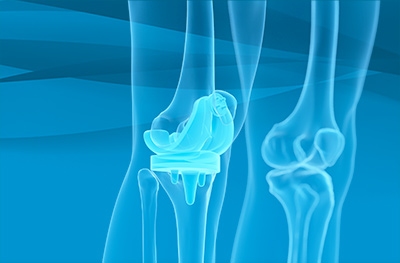
In this episode of IBJI’s OrthoInform podcast, host Cory Leman and orthopedic surgeon Dr. Michael Murphy discuss the broad spectrum of knee care, from initial joint pain to surgical interventions. The conversation focuses on clearing up common misconceptions about seeing an orthopedic specialist, emphasizing that surgery is a final resort rather than the default starting point. They explore how physicians evaluate a patient's functional mobility, prioritize conservative non-surgical treatments, and determine when a patient is a suitable candidate for a partial or total knee procedure.

Episode Transcript
Episode 43 - Minimally Invasive Knee Replacement
Cory Leman: [00:00:00] Welcome to IBJI's OrthoInform, where we talk all things orthopedics that help you move better and live better. I'm your host, Cory Leman, with OrthoInform. Our goal is to provide you with an in-depth resource about common orthopedic procedures that we perform every day. Today, it's my pleasure to welcome Dr.
Michael Murphy, one of our orthopedic surgeons with fellowship training in hip and knee replacement. We'll be speaking about the knee today, and specifically minimally invasive knee surgery. So Dr. Murphy, thank you so much for being here, and welcome to OrthoInform.
Dr. Murphy: Thanks, Cory. It's an honor to be here.
Cory Leman: So many people hear the words knee surgery or knee replacement, and they dread a massive, painful surgery. And I'm curious, what are maybe some of the misconceptions you hear just initially that you could share with us from patients?
Dr. Murphy: Yeah. I would say one of the more common misconceptions that patients [00:01:00] have when I see them in clinic is when they see a surgeon, a lot of them immediately think that they're gonna be signed up for surgery.
That is not our goal. One of the greatest values in seeing a surgeon is you're being seen by a physician who sees all facets of the treatment algorithm, okay? So we start off, and one of our last goals is to proceed with surgery We only proceed with surgery when it's appropriately indicated. We start with the less invasive techniques.
That's kind of the whole concept of today's talk, minimally invasive. We start with things like pain medication, okay, so Tylenol, ibuprofen. That's something that we're all pretty familiar with. Physical therapy, activity modification, bracing. Those are the things that we can start off with. [00:02:00] The value in seeing a surgeon is being able to talk to someone who also understands and is familiar with the outcomes with surgery, and how that looks, and what that might look like for you.
Cory Leman: Can you talk a little bit more about this? 'Cause I, I talk with patients, clients, people all the time on the street who are like, "Oh, this doctor just wants to do surgery on me," or, "They just wanna push me to that." Can you maybe dispel this myth a little bit? I think for those of us who work in healthcare and work firsthand with doctors, we know, like, they really truly want people to get better, and like you said, they want to try to avoid surgery if possible.
But can you just speak to that a little bit?
Dr. Murphy: Yeah, absolutely. I often tell my patients that, you know, I want to do surgery-- or I, I don't wanna do surgery until they're ready, until they're telling me that this is what I need. So when a [00:03:00] patient comes to see me in clinic, we're immediately trying to figure out what they've tried, where they're at with their activity and function, and what we can do to avoid the more invasive things like surgery.
So we always start with pain medication, physical therapy, bracing, those sorts of things, and if they haven't done that, then that's immediately where we're going. When they've tried those things and they're no longer working, when they've tried those things and their function is getting worse, that's when we begin to take the next step, such as injections, such as, uh, weight loss, or the last step would be surgery.
Cory Leman: When a patient comes to you, walk me through the typical timeline In other words, how long is it taking a patient from the time they see you to the time where you would actually do surgery? And I know everybody's different, but is [00:04:00] that usually three months, three years? How long on the conservative approach are you tending to see for people before surgery actually takes place?
Dr. Murphy: So I'm in a unique role where a lot of the patients that I see have already been seeing other physicians, and they've been going through those non-surgical treatment options. I would say a majority of the time when patients see me, it's several months or even a year or couple years before they are going to surgery.
A lot of it depends on where they're at in their Anatomic state, meaning do they have severe arthritis? Where they're at functionally. Are they getting weaker? Are they losing range of motion? There's a whole array of patients that will come to clinic. Sometimes [00:05:00] you don't wanna wait because the longer you wait in someone who is having worse function and they're declining from a strength standpoint or a health standpoint, sometimes you need to act on that sooner.
That's one of the greatest values that you can have in getting a surgeon's opinion, because they've seen patients who have waited too long, and they've seen patients who decided to proceed with surgery too soon.
Cory Leman: I definitely wanna come back to more of that because I think timing is a big issue and a big question a lot of people have, especially with aches and pains, knowing like, "Can I tough this out?
Can I, Do I need to make a move now? Am I making things worse?" So I wanna put a pin in that, but, you know, before we do that, I know a lot has changed over the last couple decades in this space, and I'm curious to hear more from you really what keeps you excited about the [00:06:00] advancements today, and maybe you could even speak specifically to those advancements.
Dr. Murphy: Absolutely. One of the things that I have gotten most excited about is really not only what has changed so much in the operating room, but also what has changed so much outside the operating room. We hear all the time about how much artificial intelligence is changing our life. That's also impacting healthcare.
We're seeing really incredible things inside the operating room, such as robotic surgery, things like navigation, which is very similar. We've seen things where the implants have changed. They're becoming longer-lasting. Their function is getting better. Now, you add in things outside the operating room.
Physical therapy techniques are always changing. Recovery, pain medication, and how we're handling the [00:07:00] post-op pain protocol, all these things have really transformed total knee arthroplasty and knee surgery. It's been absolutely incredible
Cory Leman: Now, when you say arthroplasty, what do you mean?
Dr. Murphy: Yeah, that's a really good question.
So a lot of people think when they're going to see a adult reconstruction surgeon or someone who does hip and knee replacements, that the options are, do I need an arthroscopic surgery or do I need a total knee? Maybe they have some friends who have gotten a total knee, but there's more to that. You could do a partial knee as well, and that is a whole separate gamut of options there.
Cory Leman: I mean, that opens up so many questions, but let's just-- let's keep pulling this thread a little bit. Partial knee, total knee, why would somebody do a partial knee? What is the benefit of that?
Dr. Murphy: Partial knee is really unique. It's something where you need [00:08:00] to be appropriately indicated, someone who is very comfortable with that type of surgery.
The indications are unique, like I said. You wanna have arthritis in one area of the knee, and then you might be eligible for a partial knee. You don't decide to do a partial knee solely based on imaging. You wanna be talking to the patient. Goals after surgery is really critical for deciding whether or not a patient would be appropriate for a partial knee versus a total knee, and then also where they're at when they come to see you in clinic.
So if someone has a really stiff knee, you shouldn't be doing a partial knee. You should be doing a total knee. If they can't come to full extension, then you lean toward doing a total knee as opposed to a partial knee. But a partial knee is really great in the appropriate patient, because oftentimes, a partial knee can lead to better pain, better [00:09:00] function, better range of motion.
A lot of studies have shown that it has a, a lower risk of complication compared to a total knee. So there really is-- if you are indicated
Cory Leman: for it, the research would suggest that you can potentially have better outcomes.
Dr. Murphy: Absolutely.
Cory Leman: Is what I'm hearing.
Dr. Murphy: Absolutely.
Cory Leman: What, what percent of people, just off the top of your head, would you say would actually be indicated for a partial knee?
Dr. Murphy: On average, it's far fewer because you have to have arthritis only in the, the one compartment of the knee. Typically, for a knee, we think about it as having three compartments. So the inside of the knee or the medial compartment, the outside of the knee or the lateral compartment, and the last compartment is the patellofemoral joint, so the kneecap, between the kneecap and the femur.
If your arthritis [00:10:00] is in one of those joints or one of those compartments, then you might be appropriate to have a partial knee as opposed to a total knee.
Cory Leman: So I know you're probably gonna come back and say, "Cory, you need imaging. You need all these different things." But I'm walking along and I see this individual, and, you know, I kind of, uh, I snoop on people from an orthopedic perspective.
You know, I'm, I'm looking at their movement patterns. I'm an exercise professional, so I'm always it's k- I guess it's, it's, uh, not in a weird way, but I say like, "Hey, my job is to sort of assess posture and function." And I saw this individual walking the other day, and their knee is completely collapsed into a valgus position or an inward position.
And I think to myself like Again, impossible probably to know without imaging, but is that a case where maybe that, the inside compartment or that medial compartment is [00:11:00] completely shot, and the outside maybe is still okay?
Dr. Murphy: Yeah, that's a really good question. A lot of times, like you highlighted, it depends on the severity of the deformity.
Traditionally, a partial knee is not considered a deformity correction surgery. For someone who has a small amount of knock-kneed or bow-legged deformity, then certainly a partial knee would be an option for them. But traditionally, you need to have a larger implant, like a total knee, or even a more constrained implant, where the implants are going into the femur and the tibia to help control that deformity.
Cory Leman: If somebody has a partial knee, would they ever eventually go to a total knee, or am I off in my thinking there?
Dr. Murphy: No. That's very common. That-- You're exactly correct. So, a partial knee can [00:12:00] absolutely be converted to a total knee in the future.
Cory Leman: Now, we, we hear this term minimally invasive a lot, and I'm wondering if you can unpack it a little bit and what it means in the context of the knee.
Dr. Murphy: Absolutely. Minimally invasive, it's a commonly used term, and it is different for a lot of different surgeons. Really, what we've seen over the years through the literature is that the smaller incision that you make for that patient, the less disruption that you can have to the surrounding tissues, the less damage that you can make to the muscles, to the soft tissue, then you'll see a better outcome.
Patients are recovering faster with these different approaches. So, there's been a lot of talk on that and how you make your incision and how you expose the knee to see what you need to see. [00:13:00] With that being said, minimally invasive does not mean that you need to make a smaller incision to have a better outcome.
Certain patients, certain anatomy dictates the amount that you have to see during surgery to have a more effective, to have a better outcome, and to see that better range of motion, that better quality of life that we're all striving for with knee surgery.
Cory Leman: That leads me to the question, is minimally invasive knee surgery an option for every patient or just a select few?
Dr. Murphy: I would say minimally invasive is a strategy that can be had with every patient. Certainly, as a surgeon, at the forefront of our mind is to minimize the amount of damage. When a patient compares themself to another patient, I would try my hardest not to [00:14:00] say they had a smaller incision, and therefore theirs was minimally invasive and mine wasn't."
For example, a revision surgery. That will require a larger incision because there's more things that need to be seen to do the surgery safer. So I would say that certain patients can be allotted a smaller incision to more effectively get the surgery that they need.
Cory Leman: Okay, so let's go back to the patient journey for a second, and let's say I'm someone who has started to experience knee pain.
When is it time to see a physician?
Dr. Murphy: That's a really common question. The time to see a physician is a few scenarios. Specifically, you need to see someone [00:15:00] if you can't walk, if you can't put weight on it, if there's redness or swelling, if there's shooting pain. Those things, you need to see someone sooner rather than later, because this could be an emergency.
You don't wanna ignore those things. A lot of times, the patients that I see in clinic are people who maybe decided to wait a little bit longer, and they're starting to decline in their function. So I often tell patients, I often speak to physical therapists, because they see a lot of patients as well, about the time when these patients should be seeing physicians, and maybe they're not quite there emotionally or philosophically yet to see a surgeon, is when you're beginning to decline in function.
Those things are the times when you wanna go see a physician sooner rather than later, because that's often the hardest time-- the hardest thing to get back is the function. So you wanna have some sort of intervention, and again, it [00:16:00] doesn't have to be surgery. It could be an injection or bracing, or maybe you haven't started physical therapy and you're gonna start getting it.
That's the time to see a physician. And if you see a surgeon, the value is that they can assess you on whether or not you need that surgical component in your treatment
Cory Leman: What are you seeing as the main cause or reason underlying knee pain for patients coming to you?
Dr. Murphy: Certainly one of the more common reasons is osteoarthritis, primary arthritis of the knee.
Cory Leman: When do you see that start typically for people?
Dr. Murphy: Like the age?
The most common age group today getting total knee arthroplasty is probably around 60 to 80 years old. It can happen younger, though. It can happen at an older age as well. We will get patients who come [00:17:00] in with different scenarios too, such as rheumatoid arthritis.
You can have post-traumatic arthritis, so maybe someone has gotten in a car accident or they've been injured as an athlete. Those scenarios certainly do come into clinic as well.
Cory Leman: What do you say to the individual maybe who's in that 60 to 80-year-old age bracket, and they're concerned about surgery at that stage in their life?
Dr. Murphy: That's actually one of the things that I really love about today's medicine, is one of the advancements that we're seeing is personalized care. So whenever I see a patient in clinic, the first thing I'm talking to them about is what are the goals? Where are we trying to get back to? Is this something where we're trying to get back to golfing, get back to playing tennis, getting back to playing with our grandkids?
Those types of [00:18:00] discussions are important to have early on, and with that, that helps guide the treatment from there
Cory Leman: Can you speak a little bit to the outcomes of a knee replacement? 'Cause I personally have talked to so many individuals who cannot believe how their life has changed for the better after a knee replacement.
And I go back to, again, a lot of conversations with people considering, or they have what they call, quote-unquote, "bad knees." And I'm like , "If you knew how much your life would change with a knee replacement, you probably would not even hesitate." But can you speak to that and what you've seen a little bit with your patients?
Dr. Murphy: One of the greatest satisfactions I have had, and one of the driving reasons that I decided to go into orthopedics and into adult reconstruction as a subspecialty, or doing hip and knee replacements, is that [00:19:00] this has been some of the greatest advancements in medicine to improve quality of life, and to do it in such a great consistency.
There are times where it doesn't work out as well as we wanted, but one of the really satisfying things with hip and knee replacements is how frequent it is to improve the quality of life I started at a young age. I was a runner. I was a triathlete. So when I was in high school, I started running marathons.
And when I was younger, I always focused on form and function, and that carried through to college, where I studied biomechanical engineering. So I'm bringing that form and function, that kinematics, that biomechanics, how joints are moving, with me as I studied engineering [00:20:00] and as I studied implant design, trying to bring this to patients.
Eventually, having worked with a lot of surgeons as an engineer, I thought I could have a break-- a greater impact as a surgeon, having that understanding both as an athlete, as an engineer, and today as a surgeon. And that's really what I am most proud of, bringing that to my patients.
Cory Leman: You mentioned your background in biomechanics, and I'm curious, how does that knee replacement impact the biomechanics and movement and function of your body and the other joints adjacent to the knee?
Dr. Murphy: When we walk with pain, our gait, our movement changes. When I was in college, I worked in what's called a gait lab. So we are studying the [00:21:00] motion of how the ankle moves, how the knee moves, how the hip moves, how the spine moves when we're in pain. And there is a physical difference in motion When we walk with pain.
When you walk with- without pain, when you walk with less pain, the motion becomes more natural. You improve your speed. There's a lot of tangible improvements that you can see with things like a knee replacement and reducing your pain.
Cory Leman: The image I almost have in my head is or the word that keeps popping up is, like, a buoyancy.
You know, that you talk about the increase of speed in your gait, and who wouldn't want that? Whether you're a, an athlete or whether you're an active ager, right? To be able to move more quickly, efficiently, I think we're all striving for something like that.
Dr. Murphy: That's one of the greatest benefits that we've [00:22:00] seen with total knee arthroplasty, partial knee arthroplasty, total hip arthroplasty, is the improvement in the quality of life.
That is one of the greatest impacts that this surgery has had with people. Certainly pain and function. With that comes getting back to the things that we love to do, getting back to golfing, tennis, playing with our grandkids, like I said before. All those options can be an option for the patient. It doesn't necessarily have to be something that we give up on.
Cory Leman: So what restrictions would a patient have after a total knee replacement?
Dr. Murphy: Today, with modernization of the implants, with modernization of the anesthesia, how pain medication protocols have changed, total knee arthroplasty today is [00:23:00] very different from total knee arthroplasty 20, 30 years ago. A lot of times, historically, when we've heard about total knee arthroplasty 20, 30 years ago, patients were staying in the hospital for days or weeks.
They were having severe pain after surgery. Today, most patients are walking the same day of surgery, if not the following day, and a lot of patients can even go home the same day. They're recovering much faster. They're getting back to those things that they love to do much faster.
Cory Leman: Is it a myth that these implants wear out and people need to do the surgery again?
Or like, what do we think in terms of timeline now for the durability of an implant?
Dr. Murphy: That's another common question is, how long is this gonna last me? I-- [00:24:00] When a patient comes to see me in clinic, a lot of times I try to highlight statistics and data to give them a reference, to give them an unbiased An unbiased data point that they can use to decide whether or not this is appropriate for them.
Certainly they'll get my opinion as well, but a lot of times it's really nice to ground ourself in what the literature shows. So how long is the knee replacement gonna last? A total knee arthroplasty lasts 93%
of the time, so a large majority of patients will not need another surgery within 15 years. 20 years, it's closer to 90% of patients are still not needing another surgery. 25 years, and it's probably around 85% of patients. [00:25:00] So today's implants are lasting far longer than historical implants.
Cory Leman: That's incredible.
So if I'm hearing you correctly, between eight and nine out of 10 individuals, 20 to 25 years down the road, will still not need another implant?
Dr. Murphy: Absolutely. Not only another implant, but not another surgery.
Cory Leman: Wow. That's actually incredible when you think about it. 'Cause I know that's a big fear.
I talk with people and they say, "Well, I don't wanna do this," or, "I'm, 60 years old, and I don't wanna have to do this again when I'm 75." But based off what you're saying, and going back to the literature, that's not the case for the vast majority of people.
Dr. Murphy: Absolutely. The majority of people will not need another surgery, and this is great quality data to support that.
Cory Leman: Are there things that individuals can do [00:26:00] that can compromise the implant?
Dr. Murphy: I would say that there are certainly things that people can do to benefit and to worse- worsen their chances One of the more common things that I tell my patients is jokingly and otherwise, is not to fall. Sometimes life happens.
We can't change that. One of the things that you can do is to keep the knee really strong. I tell all my patients after surgery, I want you guys getting back to those activities as fast as possible. So if you feel ready to get back to tennis, to get back to golf, to get back to hiking, then you should absolutely trying to get back to those things.
Cory Leman: I'm a patient, I've decided to have surgery. Walk me through the pre-surgery, surgery, post-surgery, maybe day or two after. [00:27:00]
Dr. Murphy: When I see a patient in clinic, the first question I'm asking is, what have you tried? If you haven't tried the less invasive techniques such as physical therapy, pain medication, bracing, injections, all those things are an option.
We review your range of motion. We review any injuries that you've had in the past. We review your anatomy. Assuming all those things lend us toward doing surgery A lot of my patients still see me before a surgery just as a pre-op visit to go over any questions and concerns that they have. I try to make sure that we are as comfortable with the plan on day of surgery as possible.
The day of surgery, what that looks like is oftentimes you show up a couple hours before surgery, and you'll see me there, you'll see my [00:28:00] team there, and you'll see the anesthesiologist. Most patients are able to get a spinal anesthesia and a nerve block to help with pain after surgery. Spinal anesthesia is really nice because it helps minimize the amount of general anesthesia that you have to get during surgery.
These are some of the advancements that we've seen with today's modernization of minimally invasive total knee arthroplasty. It starts with how we're focusing on pain. So the nerve block, that can last many hours. It can last a couple days even. And we try to be muscle sparing so that it helps with the pain, but we're not limiting the function after surgery.
The spinal anesthesia numbs you from the waist down. That helps us [00:29:00] do what we need to do during surgery. We give a, a smaller amount of general anesthesia. That helps with things like after surgical nausea, after surgical headaches, things like that. And the spinal anesthesia actually helps with the pain after surgery as well.
When the spinal anesthesia wears off, which generally takes a few hours, it depends on the type of medication that you're getting, but then we wanna get people up and moving right away. A lot of the times, that happens the same day of surgery. Now, after that, you're able to go home, and the most important parts after surgery, I tell patients, is really just leg elevation I have something that I call the 202020 program.
So I tell my patients toes to nose. So we want your leg elevated, and we want your toes at the [00:30:00] level of the nose. We want your knee straight because a knee being straight soon after surgery helps you walk. When you walk, your knee is straight. So a lot of patients when they're recovering, they relax with the knee in a slightly bent position because there's a little bit more space in the knee and it's a little bit less painful But it's important to keep the knee straight, to take the medication that you're prescribed, because that really helps down the road the function that we're all trying to get back.
Cory Leman: No, I think that's a really clear outline, and really helpful just to visualize, okay, if I'm gonna go through this, this is what I'm gonna expect. I wanna shift a little bit to lifestyle factors and prevention, because obviously, like you s- mentioned from the get-go, we wanna do everything we [00:31:00] can to try to keep you from surgery, right?
If, if we have to do surgery, we will, but let's pull all the other levers we can. So what are two or three things in your mind from a lifestyle and a preventative standpoint that people should be thinking about in order to protect and keep their knees healthy?
Dr. Murphy: Certainly, you wanna keep your knee strong, and that could be simply going to the gym and working out.
That could be going on runs, cycling. That could be swimming. It doesn't really matter as much what it is that you're doing, so much as it's consistent. You wanna have some consistency, some rhythm to it, and keeping the knee really strong, the muscles around the knee, the hamstrings, the quadriceps. That will help you avoid surgery.
That will also [00:32:00] help you recover from surgery if you ultimately need it
Cory Leman: How much do lifestyle factors, things like BMI, overall weight, body fat percentage, play a role in knee health?
Dr. Murphy: They absolutely have a strong impact. We hear about the importance that BMI and weight has in so many different facets of life.
The goal of weight loss is not to make us feel bad. It's to give us the best chance at seeing the best outcome. And if we can't get to our goals, then we adjust the goal. It's always a conversation. There's a whole lot of different options. There's even surgery for weight loss. There's bariatric surgery.
There's [00:33:00] medication that we could take. There's nutritionists. There's life coaches. Weight loss helps us get to the goals. That's why we start with a conversation about where we're trying to get to with the treatments that we're going with.
Cory Leman: Is there anything from an exercise, fitness, or movement standpoint that you strongly discourage or you would cringe at, or you would say, "Ooh, I don't want you to do that for your knee health"?
Dr. Murphy: High impact type activities have shown worse outcomes on the knee joint. So the greatest example would be something like a motor vehicle collision, where that high impact type force on the knee can dramatically damage it. One thing I believe is certain activities such [00:34:00] as-- Another example would be in construction, if you're using a jackhammer all the time.
That's really hard on our joints. Sometimes you can't get away with it. It's-- Or you can't get away from it. It's part of our life, and we'll deal with it as it comes.
Cory Leman: Now, I noticed you didn't say anything about running, and I hear a lot of people say, "Oh, you know, running is bad for your knees." But you had shared you were a runner yourself, and I'm curious if you could share a little bit of insight there.
Dr. Murphy: Yeah. I love running, and I often advocate for it to my patients. There's a good amount of data to suggest that running actually helps the longevity of your knee, of your native knee, and the cartilage there With that being said, you never really know if it's because there's a selection bias. [00:35:00] What I mean by that is people who have good cartilage might be more likely to do long distance type running.
But running is still close to my heart, so I still advocate for it. I think the one thing that has consistently been shown to be true is low impact type activities. This is very common even after surgery. People say, we're trying to get to the next level of pain relief or form and function." A lot of times, one thing that you'll hear about today is something called aquatherapy.
That's where we go back to things like swimming, okay? That's really much easier on the joint, and maybe will have a greater impact on the longevity of your native knee. [00:36:00]
Cory Leman: Are there any exercises specifically in the weight room when it comes to strength and conditioning? You talked about getting the quads and the hamstrings stronger.
Are there any exercises that you would recommend people don't do, or is it more of a let pain be your guide and everybody has, you know, sort of individual tolerance?
Dr. Murphy: One thing that we are often seeing in the literature today is a greater move toward what we call closed chain exercises as opposed to open chain exercises.
So Long story short, closed chain exercises often involves things like keeping the feet planted on the floor, as opposed to open chain, meaning the feet are moving. So you could do squats, and squats-- Your-- With squats, your feet are staying planted on the floor. [00:37:00] The open chain version of that might be leg lifts, where you're working to extend the knee and the foot is moving through an arc of motion.
What we're seeing with closed chain exercises is that it's harder to cheat, basically. With open chain exercises, what can happen is you change the movements, you change the kinematics and the form and function of the joints, and it might change the forces in how your body is intended to have those forces move along the joint.
We're seeing this as an improved outcome after surgery, and I personally believe that there's likely a great benefit before you're thinking about having surgery as well.
Cory Leman: Which I think for most people, that's actually probably more [00:38:00] convenient because with what you're describing, like a closed chain exercise, they could do some squats at home.
They could do a lunge at home, obviously as long as they're not having pain, right? I'm sure you'd still advise against like, "Hey, if something's really causing you pain," that's a guide.
Dr. Murphy: Absolutely. The most important thing that I think about is maintaining your strength, maintaining your range of motion, and maintaining your activities.
Once you begin to dial back on those things, or if you're seeing a, a decrease in function or in strength, that's the time when you wanna get it checked out, because it's often the hardest thing to get back with all of these different interventions.
Cory Leman: So wrapping up here, if someone comes to you and they're at a point where they just-- they have debilitating pain, they've tried everything, they're putting off surgery, but they're a [00:39:00] candidate for surgery, what would be your words of encouragement?
Or if you put sort of your psychotherapist cap on, what would you tell them?
Dr. Murphy: For someone who's nervous about surgery?
Cory Leman: Yeah.
Dr. Murphy: I absolutely want to address those concerns. A lot of times I've seen that the greatest fears about surgery come from not understanding what to expect. So if someone's not ready to have surgery, that's okay.
We don't have to do surgery. We'll figure out what else we can do because there's other options. But I also wanna understand what you're scared about, and sometimes patients don't know what to ask, and that's totally okay. So I'll go through exactly what we talked about before. Here's what surgery can look like before.
Here's what the day of surgery looks like. Here's what after surgical care looks like. [00:40:00] And here's what we can expect if you were to proceed with surgery. It's a big commitment, and I totally understand that
Cory Leman: Any rewarding success stories that you could share with us? Something that really sticks out in your mind as of late?
Dr. Murphy: Yeah. There's a patient that I saw recently, and she had a pretty significant deformity. She actually came into our clinic in a wheelchair Because her deformity was so bad, she had a pretty significant knock-knee deformity, and she was really struggling to walk. The surgery that we ultimately decided to do was a more constrained total knee to correct for the deformity, and it was really [00:41:00] spectacular how fast she was able to get up and walking, how much pain relief she had.
She brought in gifts for everyone. It really did change her life.
Cory Leman: That's amazing Dr. Murphy, where can people learn more about your practice if they're interested in coming to see you?
Dr. Murphy: We have a website with IBJI. You can always come to my clinic in Downers Grove, New Lenox, in Joliet. Give us a call.
Cory Leman: Yeah, so that's ibji.com, and on the webpage there, you'll see a search feature where you can search our physicians, Dr.
Michael Murphy, where you can look up his team, locations, and all the information you need to know to book a consultation. So Dr. Murphy, thank you so much for being here, for sharing your expertise. It's been a pleasure having you.
Dr. Murphy: Thanks so much for having me, Cory.
Don't Miss an Episode
Subscribe to our monthly patient newsletter to get notification of new podcast episodes.