

Pain Management for Back Pain
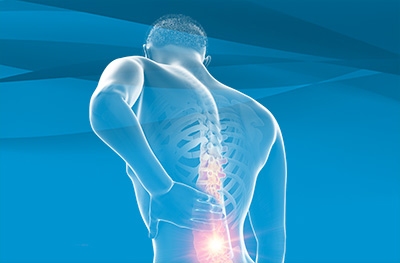
This episode of the IBJI Ortho Inform podcast features Dr. Amit Sharma, an interventional pain management physician, discussing non-surgical treatments for back and spine pain. Dr. Sharma explains the mechanics of common conditions like sciatica and spinal stenosis, detailing how they irritate nerves and limit a patient's mobility. The conversation explores a full spectrum of pain management strategies, ranging from conservative methods like physical therapy and medications to advanced interventions such as epidural steroid injections and radiofrequency ablation. Ultimately, Dr. Sharma emphasizes a collaborative approach to care, aiming to help patients avoid unnecessary surgery and maintain a healthy, active lifestyle.

Episode Transcript
Episode 46 - Pain Management for Back Pain
Cory Leman: [00:00:00] Welcome to IBJI's OrthoInform where we talk all things orthopedics to help you move better and live better. I'm your host, Cory Leman, and our goal is to provide you with an in-depth resource about common orthopedic conditions and treatments. Today, it's my pleasure to welcome Dr. Amit Sharma. He is a interventional pain management physician with IBJI, and will be speaking specifically about the spine today and back pain, and the wide array of non-surgical treatments available.
So Dr. Sharma, thank you so much for being here, and welcome to OrthoInform.
Dr. Amit Sharma: Thank you guys for having me.
Cory Leman: Let's start with what drew you to this specialization of interventional pain management, and in particular, your interest in the spine?
Dr. Amit Sharma: Yeah, I, I think that-- well, just to take a step back, I think it started when I was, uh, growing up initially as to like why medicine.
My [00:01:00] parents ran a restaurant in Baltimore for forty-five years, so growing up during the summers, that's where I worked, and I would often see a lot of back pain, like even my dad himself, 'cause he would make all the American food, so he's like over the grill, leaning forward. And so initially, that's how I was exposed to, back pain.
And then, uh, when I was in medical school and trying to figure out what I wanted to do I, uh, I sort of remembered that and, um, I, I did a, uh... basically I did a fellowship in, uh, interventional spine. And I think a lot of it had to do with me sort of growing up and in that environment. And then clearly as my dad got older and the pain got worse or like I could see what kind of conditions he was gonna develop I found that very interesting.
And so, uh, that's how I kinda went into interventional pain and then to learn what procedures I could do, what sort of therapies we could use, medications, things like that. And then, uh, spine because of, maybe because of what I saw growing up.
Cory Leman: In my experience [00:02:00] working with patients and clients, and I see a lot of them just in the exercise space, I tend to find that people are pretty clueless when it comes to spine.
Like they don't know where their pain's coming from, what's going on, what options are out there. And specifically as it relates to pain management, what is a common misconception or thing that you're finding you need to clear up for patients?
Dr. Amit Sharma: Yeah, I think, uh, I think when, whenever you hear about like back pain, it's, it's ve- it's a very scary topic for a lot of people because they don't know what it is, or maybe they know someone who's had surgery and they think that's what they're gonna need.
So most people that come into my clinic have back pain. It's my job to sort of figure out where that back pain is coming from. So they can have back symptoms alone, or they can have back and leg symptoms. And I use multiple different strategies to try to address people's pain, ranging from conservative [00:03:00] measures like physical therapy and as-needed medications to injections, including epidural steroid injections radiofrequency ablation, and all the way to advanced procedures, including basivertebral nerve ablation spinal cord stimulators.
And so it's my job when a patient comes in to sort of see what stage of their pain they're in and what's the most appropriate strategy for them. And I think what's helpful and what's really unique about Illinois Bone and Joint is that we have a close relationship with our spine surgery colleagues as well, so it's a collaborative approach to treat people's pain.
Cory Leman: What are the four to five main diagnoses, things that are going on with patients that you're seeing?
Dr. Amit Sharma: Yeah, I see, uh, so the-- probably the most common thing I see is the common term is sciatica or, um, what we say lumbar radiculopathy. That's usually when your nerves in your back that go down your leg or they're [00:04:00] irritated for whatever reason.
There's arthritic changes going on, so it could be a disc bulge or disc herniation. And, uh, just to kinda clarify what that is, so, so your-- the bones in your back are connected to each other, and one of the things that connects them is this disc, and it's filled with a fluid thick, viscous fluid. The best way I guess to describe it would be like a jelly-filled donut.
And so it's there as a cushion when you're jumping, walking, running. It provides support. But sometimes what happens is the pressure builds up or for whatever reason, you know, there's weakness in that disc, and it can bulge or herniate into the canal and touch on the areas where your nerves are.
So where your spinal cord is, um, where your spinal nerves are. And when that happens, uh, sometimes you can get symptoms that go down your limbs. So a lot of people are like, "Oh, I have sciatica, back and leg symptoms." So arthritic changes like a disc bulge or disc [00:05:00] herniation can result in that, and there's different things we do for it.
So a lotta times we try to have people do conservative things, including some physical therapy, trying some as-needed medications, and basically giving your body time to sorta reabsorb the disc herniation or disc bulge. And sometimes along the way, we can offer epidural steroid injections if, uh, you know, your pain is significant and it'll allow you to do more day to day or do more in physical therapy.
And then so those are-- An epidural steroid injection is, is one of the most common things I do. There's a couple different ways to do them, and I often go over that with patients, a couple different approaches. But basically you wanna bathe the nerve that's irritated with steroid to lower inflammation and hopefully help your symptoms.
So that's probably the most common thing I see is sciatica or lumbar radiculopathy in the low back. You can have something similar happen in your upper limbs as well, so the sciatica of, the [00:06:00] neck. But basically cervical radiculopathy where that impingement can happen anywhere along your spine, and it can result in symptoms, um, along any of those spinal nerve root pathways.
So your arm, you can feel pain in your neck with numbness, tingling sorta radiating down into your fingers. But you can also have that in your low back, and it's more common in the low back.
Cory Leman: So is sciatica, uh, just a, a universal term for, like, pain referring through a nerve?
Dr. Amit Sharma: Yeah. So there is a sciatic nerve.
It's a group of spinal nerves that get together and go into your legs. And I think somewhere along the path or somewhere along the way, uh, someone just said, "Oh, pain of the sciatic nerve, sciatica." But that can... it can really happen at different places. So s- if it's, if there is arthritic changes occurring in your low back, then it can irritate individual spinal nerve roots way- which may contribute to the sciatic nerve.
But in general, that term I think en- encapsulates back and [00:07:00] leg symptoms.
Cory Leman: Okay, so you mentioned sciatica, you mentioned disc bulges. What are some other reasons that people would see you?
Dr. Amit Sharma: Yeah. Some other reasons include stenosis. So stenosis just basically means narrowing. And there's a couple different areas in your body where you can have narrowing when it comes to spine, whether it's central stenosis or neuroforaminal stenosis, that basically refers to just narrowing either along the main spinal cord or the spinal nerves.
Cory Leman: And when you say narrowing, like the, the space in between the discs is getting less, and that's creating irritation? Or what do you mean by narrowing?
Dr. Amit Sharma: Yeah. So your spinal cord sits in, uh, basically is protected by the discs and the bones and the facet joints, and it basically allows you to sense things, move around, motor function, all these things.
And stenosis refers to when the spinal cord, the area that it sits in, is narrow. So [00:08:00] sometimes people can be born with congenital stenosis, and that happens. I've seen that. And other times it's often arthritic changes that happen along one's life that contribute to that area getting narrower for whatever reason, whether it's a disc bulge, whether it's, uh, a bone spur, whatever the cause may be.
And so when you get narrowing like that, you can have symptoms that make it difficult for you to walk, for example. You take-- try to walk a mile and your legs feel heavy, and you need to sit down, or you feel better when you bend forward because that opens up some of the space in your lumbar spine. So stenosis, the best way probably to think about stenosis is narrowing that's occurring along your spinal cord.
You can also get neuroforaminal narrowing, which is narrowing along the individual nerve roots that go in, into your legs or arms, and that can cause symptoms such as numbness, tingling, burning, electric sharp pain radiating down.
Cory Leman: And would you [00:09:00] need imaging to confirm this? Like, how would somebody know what's going on?
Dr. Amit Sharma: Yeah. So, I, I mean, a lot of times when you come into IBJI clinic or when I see you, we do get imaging, but also just clinically, like listening to the story, kinda hearing what happened. Sometimes it's a long car ride, long flight, or I lifted wrong at the gym. But not always. Uh, sometimes it just comes out of the blue.
So certainly we can use imaging to look at arthritic changes that are occurring initially when you come into the office. You know, you can get X-rays at IBJI locations same day, and so that's helpful to look at any structural pathology from a bone perspective and spacing. And clinically, if you're having signs of say, sciatica for example, then, it-- the history gives a lot of it.
Like when patients tell you, "This is what I'm experiencing, back pain, leg symptoms, and often it was started with this preceding event," then you sort of know that, these symptoms line up with something like sciatica. And then I-- you know, you do an exam as well. [00:10:00] You check reflexes, you check strength, you check sensation to see what the extent of it is.
And based on that, you try to guide the patient in the right direction, whether it's conservative care like PT or more urgent and needing an injection or having to see my spine surgery colleagues.
Cory Leman: When would someone know that it's time to come see you?
Dr. Amit Sharma: I guess it's just when you're ready , like when you're ready to see someone.
Because a lot of times when people have back pain, they try to do conservative things on their own. So you can go online, look at YouTube videos. You can most likely talk to someone who's had back pain, whether it's your parents, friend, whoever, and then go off, like, "What did you do?" But the spine is so unique because there's so many different structures there that can be pain generators.
I think you can come and see me at any point if you just want some education, information, more, uh, context into what's going on with my body. But I think you can also, especially if it's not debilitating [00:11:00] or you're not experiencing weakness or pain that's kinda interfering with your daily life and things you wanna do, Then maybe you can try some conservative things, like you can go to PT on your own, and they can sort of look at you as well.
You can try some over-the-counter analgesics or activity modifications. But if it really gets to the point where, like, an ibuprofen isn't doing the job, or you've tried some activity modifications, like, you know, you've tried rest and things like that, and it's still interfering with your daily life, then I would say come see me.
But you can come see me at any point.
Cory Leman: Well, and I'm s- I'm sort of wondering if seeing a physician like yourself should be more common practice in the preventative care space. You know, like, I think about we go, we see our dentist twice a year. You know, it's like if almost everybody is experiencing back pain at some level, it's like, it would probably be good, in my mind, to just have those [00:12:00] routine checkpoints.
"How's it going?" "Yeah, I'm having a little something down my, my, down my right leg," or, "It hurts when I bend over." So I'm wondering if you could speak to, like, do you see a world where maybe we get to a more commonplace of seeing a professional like yourself in more of a preventative fashion?
Dr. Amit Sharma: Yeah, I think that's a really, really interesting point because, uh, a large part of my job is to do, is to u- utilize therapies medications, and interventional procedures to hopefully prevent a patient from ever needing to get to the point where they need surgery. So I think that's a really, really interesting point you bring up, and I think something like that would be helpful, especially, as...
if people just have a better understanding, and they see a physician like myself, a better understanding of what's going on with their bodies, and how they can sort of, uh, delay arthritic changes, I think that'll go a long way. [00:13:00] This,
Cory Leman: the spine in particular seems to be a location that people have a lot of hesitation around surgery.
So I'm really curious for you to expand a bit more on what those different non-surgical treatment options are. Because, like, in my mind, I really... Like, oh, I guess you could, do a steroid pack. But then I'm like, I don't know what else you'd do, but I know there's a lot of different options, and I think our listeners would really benefit from knowing what are some of those different avenues and options they could take to help mitigate and prevent pain?
Dr. Amit Sharma: Yeah, I one thing we already touched on, like sciatica, doing epidural steroid injections for that. That's something I do. I also address axial low back pain, meaning pain that just mainly stays in your back, and that can be from a couple different reasons. One of the most common ones are facet degenerative changes for which we do test blocks, and if the test blocks are [00:14:00] successful, we do something called a radiofrequency ablation, where we go ahead and those tiny nerves that innervate your facet joints, we go ahead and heat them up.
So we do test blocks, and if the test blocks are providing significant relief, then we go ahead and do what's called a radiofrequency ablation. The best way I describe that to people is it's basically using heat to ablate these small nerves that innervate your facet joints to provide you at least hopefully nine to 18 months of relief before these nerves sort of grow back.
The nice thing is these nerves don't really have too much of a motor function, so these are more so to do with the facet joints. And so if the facet joints are arthritic, then we can cut off the signal that goes to your body picking up pain from that area with this ablation procedure I'd say overall I work in a collaborative environment with my spine surgery colleagues.
So there are definitely cases where preventative care or doing things like [00:15:00] therapies, injections and advanced interventional procedures such as basivertebral nerve ablation, even you know, some of these other things that are out there such as spinal cord stimulators, all those things.
I think there is a role for them, but there are also times where you know, surgery is the most appropriate option. And so I work very closely with our spine colleagues, spine surgery colleagues at IBJI to have that, um, knowledge of when it's more urgent or versus when we can sort of try more conservative things.
And so there are a lot of conservative things, but I think what's most important for like the listeners to know is when you go to an IBJI location or when you come see me all your options are kind of explained to you. And I think that's helpful because you kinda know at what stage of your arthritic changes your body is at in terms of your spine, and sort of when you may need to consider seeing a surgeon versus [00:16:00] when we can sort of keep doing conservative things.
And if I, if I have a concern for where your symptoms are severe to a point where I think, maybe you're not needing a s-surgery right at this moment, I would still have you see my surgical colleagues to sort of get them involved in case that's the route we need to go down the road. But I think it's a-- I think what you need to treat spine effectively is a collaborative environment with interventional pain, interventional spine doctors, and spine surgeons.
And I think you can learn a lot from each other and sort of, see what the best option moving forward for the patient is
Cory Leman: In your experience, how many different avenues before we get to surgery, like how many different options do you have at your disposal to help people mitigate pain? Like three, four?
I've heard a few, but like- Yeah ... how wide [00:17:00] is that gamut?
Dr. Amit Sharma: Yeah, that's a good way to put it, a gamut. So I would say on the conservative end of things, there are things like physical therapy, okay, as-needed medications like a muscle relaxer or, as you mentioned, a Medrol Dosepak for acute inflammation, NSAIDs, things like that.
The other end of the spectrum would be surgery, okay? Spine surgery. And kinda in the middle now, there's so many more things. So there's injections, like epidural steroid injections. There's ablation procedures. There-
Cory Leman: Not to cut you off, but on the epidural-
...
Cory Leman: Any downsides? Any... W- what's the risk here?
Dr. Amit Sharma: Yeah, so, uh, well, it depends where you're getting the epidural steroid injection, right? So when you're in the lower spine kinda your lumbar area, the main things there are basically any risks with introducing a needle into someone's body, so pain, bleeding, infection. But the way most of these are done, or all of them are done, are under sterile conditions, okay?
[00:18:00] And, uh, there are really no major blood vessels around the area we're going in the lumbar spine. And then inf- pain, but we numb you up before we go ahead and do the injection. I would say the major-- I guess when I consent a patient for this injection, I tell them, "You're getting steroid in your body, so transiently your blood sugars and blood pressure can be elevated, so please keep an eye on that."
Okay? But other than that, you know, you can have some discomfort where the injection is done as well, but that sort of dissipates, especially if you think about putting volume into an already narrow space. Okay? You're creating more of a pressure environment, but because it's fluid, it dissipates. But really the main, the main, downsides of an epidural steroid injection in my mind are it doesn't help you, but it's fairly low risk, easy way to try to address whatever's going on.
Cory Leman: What percent of people would you say it helps?
Dr. Amit Sharma: So you have to do a very good job [00:19:00] at making sure there's appropriate patient selection, right? And when that happens, so usually epidural steroid injections are indicated for either spinal stenosis with neural claudication, a neurogenic claudication, or lumbar radiculopathy.
And again, I'm just sticking to the low back to keep it simple, but you can have... Those are the two sort of main reasons for why a epidural steroid injection is indicated. So if you're having the sciatica symptoms or you're having symptoms of when you try to go for a walk and your legs feel heavy 'cause you have significant stenosis, those are the two times that you-- or those are the two, indications for an epidural steroid injection.
Yeah, if w- if we're deciding that we're moving forward with a lumbar epidural steroid injection the way that sort of works is we bring you into our procedure room, we lie you on your stomach on a procedure table, we bring an X-ray camera in to take pictures, I numb your skin with Novocaine just like a dentist would, and then I go ahead and give you your injection.
And then, [00:20:00] you know, we sort of see some people get three-plus months of relief, others it's so-so, but it's a fairly low-risk, easy way to try to address your symptoms.
Cory Leman: And how often could someone get a follow-up shot?
Dr. Amit Sharma: Yeah, so, uh, I would say at least three to four months. You wanna space them out, okay? If you're, if you find you're needing them more often and there's a structural problem that's just not improving with time, PT, medications, the shots then I would, I would loop in our surgical colleagues to see if there's anything they can offer that's more definitive
Cory Leman: What about from a lifestyle perspective?
Are there things that are contraindicated or things that people are doing in their everyday life that you would look at and you would say, "Oh, I don't know if I want you doing that. That's not gonna be good for your spine"?
Dr. Amit Sharma: Yeah, but, you know, that's a, that's an interesting point, [00:21:00] interesting point you bring up there because I- my job is not to restrict people in terms of what they wanna do in life, right?
So, certainly there are things that can contribute to worsening arthritis, like if you're a football player, you play rugby, things like that. But I also want you to live the life you wanna live, right? So I can make you aware of things that may be contributing to your arthritis and can tell you things that may make things worse down the road, but I'll also present you with the things we do to treat those opti- the symptoms that may arise from your activities.
So it's a fine balance because I do see people who are athletes or, um, doing activities that can worsen their symptoms, but sometimes it's not something they can avoid, like for work, they have to travel and take long flights, long car rides. So how do we allow them to do that in a manner that allows them to be effective at their job, but also doesn't cause them too much pain, right?
So I try to educate them in ways that I... [00:22:00] Or I try to educate them the best I can to help them avoid triggers that can make things worse. And then I try to help manage their pain with the therapies that we talked about, whether it be physical therapy, medications, or injections.
Cory Leman: Yeah, I like that because it, it doesn't put a restriction on people.
Maybe the flip side of that question is what should people be doing daily or weekly to keep their spine healthy?
Dr. Amit Sharma: Yeah. So it, I mean, it just depends, right? I would say certainly staying active, getting staying active, doing healthy workouts, not trying to max out on squatting or RDLs or things like that if you know you're not in the appropriate position.
Or if you are working out and you wanna do those things, maybe hire a trainer and, uh, have them do it in a safe way. But basically, spine, uh, you don't-- Spine injuries can happen for so [00:23:00] many different reasons. You could be doing everything correctly and still have back problems. So I would just say it's important to identify your triggers and hopefully avoid them or work with a professional, whether it's physical therapists, athletic trainers, to do those in a way where you're not making things worse.
But I would say in general, a healthy lifestyle would include working out or staying active, moving around, working with trainers or PTs. But it sorta just depends on what, what your ailment is.
Cory Leman: I wanna give you a few rapid fire questions-
Dr. Amit Sharma: Okay ...
Cory Leman: where you give me a, a one to two sentence feedback loop here because I think, a- again, from my perspective, I have a lot of these questions that rattle around, and I think it'd be helpful for people to hear.
So I've got a list here, I wanna take you through them, and the first of [00:24:00] those is most underrated conservative treatment for back pain, in your opinion.
Dr. Amit Sharma: Physical therapy.
Cory Leman: I like it. Most overrated habit or gadget that people buy for back pain.
Dr. Amit Sharma: All right. I think there's, like, a new f- I don't know if it's a gadget, but, like, people come and ask me about PRP in the spine all the time.
PRP works really well for intra-articular joints like knees, shoulders. The data's just really not there for the back, but I do get people asking me about PRP or regenerative things like that. I get a lot of, like, questions about stem cells, which there's not good data for out there. So, uh, I haven't seen any interventional spine doctors doing that.
So, the data's just not there to support stem cells or PRP at this time, but that is something I get asked a lot, and I tell them the standardized or the, the scientifically proven treatments, and we just go from there.
Cory Leman: Best sleeping [00:25:00] position for your spine.
Dr. Amit Sharma: Again, it depends on what is sort of causing you to have symptoms.
In general, if I had to pick one without knowing exactly what's going on with your back, I would say lying on your back and maybe putting a pillow under your legs. That's your neutral spine position. But sometimes, for example, for stenosis, it feels better when you're curled up a little bit, so on your side and curled.
But yeah, it really can be tailored to depending on what your ailment is.
Cory Leman: One daily habit that you wish everybody would implement to help preserve their discs.
Dr. Amit Sharma: Right. So I would say maybe incorporating some extension based exercises and core strengthening if you're having back and leg symptoms. But that's not gonna help you if you have facet degenerative changes.
It's gonna make things worse. So it's tough to answer that one, but I'd say something people should incorporate in their everyday life to delay degenerative [00:26:00] processes, I would say just maintain a healthy lifestyle. So keep a good weight, stay active. And I'm actually a big fan of, like, just some light, gentle yoga stretches.
I think that can go a long way.
Cory Leman: Yeah. As we wrap up, is there a patient success story that you could share with us? Uh, maybe a time where somebody came in with a lot of pain, and you saw a lot of success with one of the non-surgical approaches that you mentioned.
Dr. Amit Sharma: Yeah, actually, uh, I've been fortunate. I've had a few patients that have felt better after getting an injection, doing some therapy.
I had one that, uh, was so happy that she was able to go on a trip afterwards, which she hadn't been able to do or was very concerned. And it was like a daunting task to go on vacation, which we never want that, right? So, it's very rewarding when what I do or the interventions that I use end up allowing people to do things like that.
And so, uh, that sticks out because that's the most recent. But [00:27:00] I am fortunate that, like, I've ha- I've come across patients who have, uh, been able to do activities that they weren't able to do or they were scared to do to make things worse. Yeah, it, it makes my job fun and makes me wanna come in every day.
Cory Leman: Well, it's, it's exciting to hear because, you know, again, I think back pain can be debilitating, and it affects many of us. But to hear about all the different options, to me, it, it provides a, a level of hope, of curiosity honestly, of relief, where I think, "Okay, there are numerous pathways I can take." Yeah, may- maybe surgery is one of them, like you said, but there's also a lot of other pathways we can take on the non-surgical side to help mitigate and prevent pain, and I think that that's a message of hope for people that should really resonate.
Dr. Amit Sharma: I agree.
Cory Leman: So Dr. Sharma, where can people learn more [00:28:00] about your practice and where you are and where you treat out of?
Dr. Amit Sharma: Yeah. So I'm on the Illinois Bone and Joint website. I, I work at two locations. They're both in the Chicago area. One of our offices is located in Avondale, and the other one, we have a clinic at CERF location, um, at St.
Joe's Hospital. So that's where you'll find me. And then the best way is to go through the website. Um, you can look me up. Our numbers will come up on Google.
Cory Leman: Yeah. And if you go to ibji.com, there's a search feature on there where you can look up our physicians specifically. So you could type in Dr.
Sharma, and you will get all the details of his office location and phone numbers to reach out and contact for a consultation. So Dr. Sharma, thank you so much for being here with us. This has been super insightful, and I appreciate your time.
Dr. Amit Sharma: Thank you for having me.
Don't Miss an Episode
Subscribe to our monthly patient newsletter to get notification of new podcast episodes.