

Clubfoot is one of the most common congenital foot conditions, and hearing that word as a new parent can feel overwhelming. But there is so much hope. With early recognition and the right care, children with clubfoot grow up to walk, run, play sports, and live full, active lives.
Understanding the early signs of clubfoot helps parents seek care sooner, and early treatment offers the best outcomes for long-term mobility and healthy development. Here’s what to look for, why timing matters, and how pediatric orthopedic specialists partner with families every step of the way.
An Overview of Pediatric Clubfoot: What Parents Should Know
Clubfoot (talipes equinovarus) is a condition in which a baby is born with one or both feet turned inward and downward. It affects approximately 1 in every 1,000 births, making it one of the more frequent musculoskeletal conditions seen in children. While the exact cause is not always known, genetics, fetal positioning, and connective tissue development can all play a role.
The good news is that with early treatment, usually within the first few weeks of life, children with clubfoot can achieve excellent long-term mobility. Understanding what the condition looks like is the first step toward getting the right care.
Visible Signs Parents Can Notice Early
Clubfoot is usually identifiable at birth, but some features can be recognized even earlier through prenatal ultrasounds. After delivery, parents may observe:
- Foot Turning Inward or Downward: The foot may appear rotated, resembling a “C” shape when viewed from above.
- Limited Ability to Move the Foot: The ankle and foot may feel stiff or difficult to straighten.
- Smaller or Shorter Foot: The affected foot may appear smaller than the unaffected side. The foot may look wider as well.
- High Arch or Deep Crease: A pronounced arch or crease on the inside of the foot can be a distinguishing feature.
- Calf Muscle Underdevelopment: The calf on the affected leg may look smaller due to reduced muscle development.
These signs may look concerning, but prompt evaluation allows for effective treatment and healthy growth.
How Pediatric Orthopedic Specialists Support Your Child’s Recovery
Once clubfoot is diagnosed, a pediatric orthopedic surgeon guides your child’s care from infancy through early childhood. Their role includes:
Nonsurgical Treatment Options
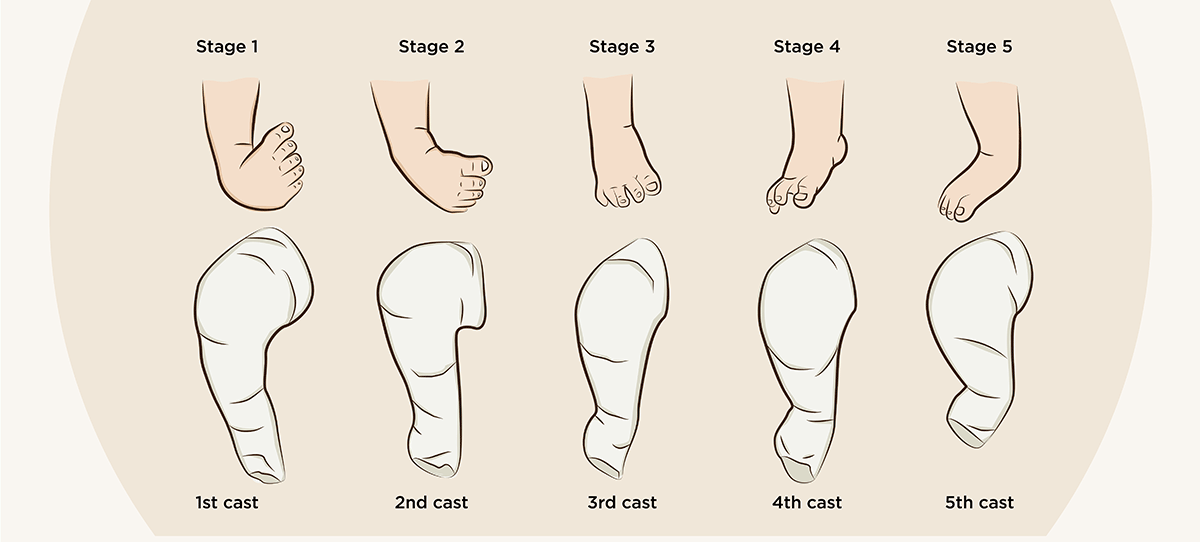
Most children respond extremely well to nonsurgical methods, especially the Ponseti method, which is considered the gold standard. It involves:
- Gentle weekly manipulation of the foot
- A series of casts that gradually improve alignment
- A minor Achilles tendon release (tenotomy), if needed
- Bracing to maintain correction as the child grows
Surgical Treatment Options
In more severe cases or when nonsurgical methods are not fully successful, surgical correction may be recommended. Procedures may include:
- Soft tissue release to improve flexibility
- Tendon lengthening or transfer
- Bony realignment procedures in older children
Surgery is tailored to each child’s needs and aims to create a functional, flexible, and pain-free foot.
Ongoing Monitoring and Support
Because children grow rapidly, pediatric orthopedic specialists track progress through regular follow-ups to ensure the foot stays in proper alignment. Families are given guidance on brace use, stretching, shoe wear, and activity recommendations.
With expert care and consistent support at home, children treated for clubfoot grow up to run, play, explore, and fully enjoy the activities they love.
Why Early Diagnosis Makes a Major Difference
Identifying clubfoot early, ideally within the first week or two after birth, allows treatment to begin when the foot is most flexible and responsive. Early diagnosis supports:
- Better correction of the foot’s position
- Improved long-term mobility and gait
- Reduced need for more extensive surgery later
- Faster adaptation to bracing and casting techniques
You Are Not Alone
Your child will be able to live a high-quality life. Athletics are possible. Many high level athletes have clubfoot!
- Troy Aikman, NFL Hall of Fame QB
- Kristi Yamaguchi, Olympic Gold Medalist Figure Skater
- Jon Rahm, PGA Tour Champion Golfer
- Mia Hamm, US Women’s Soccer Team record holder and World Cup Champion
If you’re concerned about your child’s foot or leg development, we’re here to help. A simple evaluation can provide clarity, reassurance, and a clear plan to support your child’s healthy growth every step of the way.
About the Author
Michael Burton, MD, is a fellowship-trained pediatric orthopedic surgeon at Illinois Bone & Joint Institute with expertise in the management of complex musculoskeletal conditions in children. He completed his orthopedic surgery residency at the University of Illinois College of Medicine in Chicago. Dr. Burton’s clinical interests include the treatment of fractures, scoliosis, hip disorders, clubfoot, and limb deformities. He has published research on pediatric fractures, limb deformities, and rare bone conditions in leading orthopedic journals.