

Minimally Invasive Spine & Back Surgery
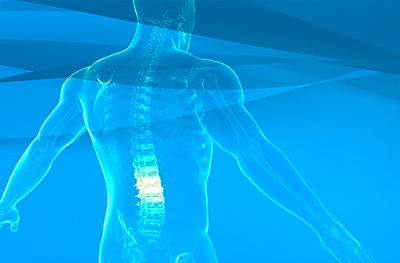
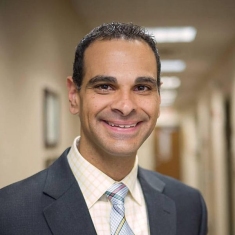
In this episode of IBJI’s OrthoInform, host Cory Leman sits down with orthopedic spine surgeon Dr. Mark Mikhael to demystify back pain and explore the rapidly evolving world of spine care. Dr. Mikhael pulls back the curtain on minimally invasive spine surgery, breaking down its four foundational pillars and explaining common degenerative conditions like disc herniations and spinal stenosis. Listeners will learn the structural anatomy behind why the lower back and neck bear the brunt of daily wear and tear, what a surgeon looks for when diagnosing spinal instability, and what actually happens during common procedures like microdiscectomies and fusions.
Hosted by Cory L., MS, CSCS
Episode Transcript
Episode 41 - Minimally Invasive Spine & Back Surgery
Cory Leman: [00:00:00] Welcome to IBJI's OrthoInform, where we talk all things orthopedics that help you move better and live better. I'm your host, Corey Lehman, with OrthoInform. Our goal is to provide you with an in-depth resource about common orthopedic procedures that we perform every day. It's my pleasure to welcome Dr.
Mark Mikhael We'll be speaking about the spine today and minimally invasive spine surgery. Dr. Michael, thank you so much for being here, and welcome to OrthoInform.
Mark Mikhael, MD: Thank you. Thank you for having me.
Cory Leman: So I've heard some stats out there, I, I don't know if they're true, but somewhere around 80% or more of people that have some type of spine issue or back pain throughout their life, and I'm just curious, what drew you to this highly specific field of orthopedics?
Mark Mikhael, MD: That's a great question. I've been around medicine and brain and spine pathology my whole life. My father was a neuroradiologist you know, he's always looking at brain [00:01:00] imaging, spine imaging, and that kind of stuff, so I had an interest in this early. Uh, when I went to medical school, I discovered early that I wanted to be a surgeon, so naturally, I was drawn to spine surgery.
And within orthopedics, I find that spine surgery is one of the most satisfying. You know, it's very delicate, and you really help people out, and I really enjoy the, the pathologies and the complexity of the surgeries.
Cory Leman: What keeps you excited about advancements in the spine today?
Mark Mikhael, MD: You know, there's-- it, it's how quickly things are changing.
You know, I, I did my training, you know, about 20 years ago, and, um, today, I'm not doing very many things the same as I was when I was in training. So things have evolved immensely, and it's exciting to see how quickly things change and how they actually impact and improve patient outcomes and the way we do surgeries and the way we make diagnosis.
So it's all exciting.
Cory Leman: That's awesome. Now, we hear a lot about [00:02:00] the term minimally invasive spine surgery, and you and I were talking a little bit before the podcast that this might be a little bit of a misnomer, but I'm curious, what does that actually mean in context, and can you give us the, uh, give us the truth or pull back the curtain for us?
Mark Mikhael, MD: That's a great question. And, uh, we need a little bit of history on that. But i-in, in general terms minimally invasive spine surgery are techniques to help, uh, perform the surgery you need to do, uh, with minimal collateral damage, as you would say. And, you know, to be honest with you, most spine surgeons today are doing things through these types of techniques, whether it be minimally invasive or less invasive mini open.
It-- the goals of the surgery is to minimize injury or damage to the soft tissues around the spine. Um, and this goes back decades. Um, minimally invasive spine surgery, that term, is based on four pillars four [00:03:00] concepts. Uh, number one being minimized access, getting to the spine through a narrow channel where you are using natural muscular planes.
You're avoiding damage to the, uh, vascular structures and the neurologic structures to the muscles around the spine, and you're really just gaining access in the least harmful way possible. The second pillar is imaging and navigation techniques. We've had a lot of advances in different ways to view the spine in surgery, whether it be with biplanar fluoroscopy, intraoperative CT scan, computer navigation, endoscopy.
Uh, all of these things are meant to help us visualize the spine through these very narrow channels. Uh, the third pillar is microsurgical techniques, and these aren't new, but you have now adapted them through these narrow channels using things like an operative microscope, using specialized instruments that are small and very delicate so that you can do the work you need to do [00:04:00] through a very small channel.
And then the last thing is we have specialized implants and instrumentation. So that's the fourth pillar, is that if you're gonna be working through narrow channels and narrow retractors and these kinds of things, you need specialized instruments that can help you achieve that through these small portals.
Uh, so these are implants that are specially designed to be either bayonetted or offset or tinier or longer or whatever it takes to get the job done.
Cory Leman: With that said, what are the most common conditions that you treat and that you see?
Mark Mikhael, MD: So in my practice, I generally do what we call adult degenerative spine.
It's the wear and tear of life stuff, disc herniations, arthritis, stenosis things that just living an active, healthy lifestyle, you wear your body out, and those are the kinds of things that I treat mainly.
Cory Leman: What is a disc herniation? I, I hear it all the time, but what's actually happening?
Mark Mikhael, MD: [00:05:00] So the discs are the shock absorbers in your spine.
They are the padding between the vertebrae or the spinal column. And the disc is made up of two components generally. The outside of it is a capsule that kind of holds in the jelly that's inside. Through just kind of life, the wear and tear of life, uh, that, that outer capsule can get little defects in it.
We call them fissures or tears. And, um, every once in a while, an inside piece of that gelatinous material will squirt out, and that's what we call a disc herniation. When it squirts out into a location where it's touching or pinching a nerve, that's when people complain about sciatica in the low back or what we call cervical radiculopathy, arm pain, when it happens in the neck.
Cory Leman: You mentioned spinal stenosis as well. What's that?
Mark Mikhael, MD: Spinal stenosis it means narrowing. Stenosis means narrowing, and it's narrowing either where the nerves run through the spine in the center we call [00:06:00] that central stenosis, in the canal, or where the nerves exit the spine out the holes on the side, which we call foraminal stenosis.
Stenosis can be caused by degeneration or arthritis, bone spurs, thickened tissues, um, just again, wear and tear. Uh, stenosis can also be caused by disc herniations when they are causing a lot of pressure centrally or where all the nerves run through.
Cory Leman: How old are people when they first start to incur some of these conditions?
Mark Mikhael, MD: That's a great, that's a great question. It h- can happen at all ages. The, uh, the most common ones, uh, occur in different age categories. So in the younger patients we know that discs start to degenerate or dehydrate actually in your 20s. Um, and so that's kind of when, you know, the natural process occurs.
True disc herniations, like the ones I described, that can happen at any age, um, as young as, you know, 15, 16, 17, up to [00:07:00] 100 really. Anyone can herniate a disc. The more degenerative stuff, the arthritis stuff, the stenosis that's patients that you start to see those things occurring, you know, mid-50s and beyond.
Cory Leman: Is there a particular location on the spine that you see most frequently with patients being affected by these conditions?
Mark Mikhael, MD: Yes. In the lumbar spine the most common spots for these conditions is either at the L4-5 and the L5-S1 levels, and the reason for that is those are the bottom two discs of the spinal column.
They are carrying the brunt of your entire body weight, and so it's only natural that those are the ones that kind of have wear and tear and are showing these problems the earliest. Uh, in the cervical spine, the most common spot is either C5-6 or C6-7, and that is actually in, right in the center of your neck, and the reason for that is with neck [00:08:00] mov-movement that's kind of the pivot point.
And so those two areas show the most motion. And so over a lifetime, if that area's moving the most, it'll eventually show the most wear and tear.
Cory Leman: Why is it that we tend to get things lumbar and cervical maybe more than the thoracic area?
Mark Mikhael, MD: P- patients ask me that all the time. It's interesting.
It's, it's really about our anatomy. The thoracic spine has the ribs connecting the back of the spine to the sternum. So in essence, it acts as kind of an internal brace or an internal cast. So there's not a lot of motion across the thoracic segments, and just as I was kind of discussing with the cervical spine and similarly in the lumbar, if you don't have a lot of motion, you don't get a lot of wear and tear.
And so having disc herniations and stenosis are far less common in the thoracic spine. There are some things that are more common in the thoracic spine, such as, uh, osteoporosis compression fractures, [00:09:00] uh, and that's more of an issue in the, uh, elderly patient.
Cory Leman: How does somebody know when it's time to see a surgeon like yourself?
Like, uh, I know a lot of us are going through life with, some level of back pain, neck pain, but when is it time to see a doctor?
Mark Mikhael, MD: Um, the vast majority of some of the spinal conditions we were just talking about can be treated conservatively and non-surgically. Um, and I guess the first part of your question is when should you seek, you know, a specialist or a doctor.
So a lot of the spinal conditions that we were talking about can be treated very conservatively and without sur-surgery. You know, it-- the key is when do you seek help and when do you see a physician? A lot of times these conditions that we were talking about, whether it be disc herniations or stenosis they don't cause a lot of pain necessarily in the neck or the back.
They cause pain in the extremities, so whether in the buttock or down [00:10:00] the leg, or in the shoulder or in the arm or in the hand. And if you start to develop those kind of nerve type symptoms, it is worth seeing a specialist so that they can help make the diagnosis and perform an exam. A lot of these are treated with physical therapy, anti-inflammatory treatments, activity modification and even different types of injections, and very successfully.
In fact, uh, a lot of surgeons will say that they end up operating on maybe 10% of these conditions. A- about 90% of them can be managed in a non-surgical way.
Cory Leman: So then, as the expert, when do you help patients collaboratively decide, "Hey, these non-surgical options, we've hit the end of the road"? What is that tipping point?
What are some of the signs? What are some of the things that you hear from patients?
Mark Mikhael, MD: So there's kind of two categories there. One is if you have reached a point where you feel-- where the patient feels that they've exhausted all [00:11:00] conservative measures and their quality of life is still greatly affected.
So let's take an example of a lumbar disc herniation causing sciatica, and they've tried anti-inflammatories, and they've tried activity modification and physical therapy and oral steroids, and they've tried various epidural steroid injections, and yet the symptoms have continued to persist for six weeks, eight weeks, whatever timeframe, and they're at a point where they just can't do the things they love and even sometimes can't even do just generalized things at home, you know, just clean the house, cook dinner, that kind of stuff.
Then you've reached a point where we can offer a solution surgically that can help a-alleviate their symptoms and improve their quality of life. There is another category of patients where we do move to surgery a little bit sooner in cases where there are potentially serious neurologic consequences.
So, those kind of things involve, progressive weakness. So if it's in the low back, you're starting to notice weakness in your [00:12:00] foot or weakness with your gait or going up and down steps, and it correlates with where the nerve compression is. You do want to address those things quickly so that you take the pressure off the nerve and you prevent any further neurologic decline.
Uh, in the cervical spine, too, um, you can have two types of conditions. You can have pressure on either the spinal cord or on the spinal nerves. The spinal-- Pressure on the spinal nerves causes pain down the arm, what we call cervical radiculopathy, and you do in general treat that the same as a lumbar disc herniation, but again, if they're starting to develop weakness in their grip and in their arm strength, those are things that you move to surgery a little bit quicker.
Uh, when you have pressure on the spinal cord, we have a term for that. We call that myelopathy, and that causes actually very vague symptoms for patients. Um, they come to you with complaints of balance issues, clumsiness, difficulty with fine motor skills, things that they actually never really thought were coming from their spine in general.
And when you id-identify a condition like [00:13:00] that it's one of those rare situations where surgery is usually pushed as the first option because you want to take the pressure off the spinal cord in those scenarios.
Cory Leman: So let's say I'm a patient, I'm, I come to you, and I've gotten to this point where I'm experiencing some of these symptoms.
We've exhausted all non-surgical options. What are you actually doing when you go in there and you create the incision? Walk me through that.
Mark Mikhael, MD: Yeah. Well, we have-- Let's take a, some kind of pathology, for example- Sure ... 'cause it's different for every patient. Let's start with just the most common thing, a disc herniation.
And a piece of the, the disc that we talked about has popped out and the jelly's pushing on a nerve, and you've tried everything and you're saying, "Mark, I wanna have surgery to fix this." Pretty much everything that we do these days are either minimally invasive or less invasive, or what we call mini open.
And so, [00:14:00] um, in order to retrieve that herniated disc and provide relief for the patient, it's done through a small incision on the back. So let's, for example, say at the L4-5 level. An incision's made, uh, maybe about an inch or so, a little bit less. And you find a plane, a natural plane through the muscle so that you do a kinda muscle-splitting approach to get to the spine.
You minimize what you're cutting to get in there. Once you get down to the spine the way I describe it to patients is your spine is by its nature very well-protected. Your body wants to protect the nerves and everything, so you have to create a channel, and that channel is called a laminotomy. We make a small hole in the bone, and once we gain access to the spine, we find the spinal nerves, and we gently move it to the side.
Uh, I personally do this under an operative-- operating microscope so that I can magnify the images several-fold, and I have superior lighting, and you get three-dimensional imaging [00:15:00] of what you're, what you're doing. You can see very clearly. Once you pull the nerve to the side, usually you find this disc herniation.
It's in a spot that it shouldn't be, and so it kind of erupts and, and reveals itself. And you just take little instruments, and you grab it, and you pull it out, and then you just make sure that the nerve root is free of pressure, and you get out of there. A surgery like that, it takes about an hour to perform.
Patients are outpatients, so they go home the same day. There's no bed rest. There's no brace. They're up and walking right away. When they get home, they-- I tell patients, "You don't have to lay around in bed with a bell and hire a butler. It's, it's okay to walk as much as you like and go up and down steps and eat your meals at the table and sit on the sofa and move around."
I just ask patients not to do any formal exercising other than walking or any lifting more than fifteen pounds for about four weeks. After about a month, we get them back to life with activity and physical therapy. Um, so that full recovery is [00:16:00] considered six weeks.
Cory Leman: And what are you seeing in terms of patient outcomes with a procedure like that?
Mark Mikhael, MD: Well, with anything in spine it's all about indications and the, um, the symptoms matching what you're seeing on the MRI. So if it's a disc herniation pinching a particular nerve, say L5, and the patient is presenting with a clear L5 radiculopathy and it matches when you treat those conditions that are very clearly indicated These patients do outstanding.
You know, you have-- you take pressure off of a nerve that's being compressed. They, they wake up, uh, with very little to no nerve pain almost immediately. And granted, you trade it for typical surgical pain, but that's, you know, a temporary situation that improves over time. Um, but those patients can do outstanding.
They do do outstanding.
Cory Leman: Walk me through another example, maybe the spinal stenosis. What does that procedure look like?
Mark Mikhael, MD: Yeah. So, that-- Yeah, I'm [00:17:00] happy to do that. It's just that spinal stenosis, it depends on the cause, and, you know, we were talking before we started about, fusion versus non-fusion, and that is a nice entry point to that.
If you have a patient that has stenosis and it is involving the central canal, it depends on what is causing that stenosis. Is it just disc herniation? Is it a combination of arthritis? Is it a combination of instability? And so, that does change the way you perform the procedure. A lot of patients will ask me: How do you know when you want to perform a fusion versus not?
And the answer to that is, if the spine is showing evidence of instability prior to surgery, so we get dynamic films of them doing flexion extension and just to make sure that the spine is moving in an appropriate way or if they are-- have the type of stenosis that's so severe that when you take the pressure off the nerves, you create instability, then those scenarios have to be combined [00:18:00] with a fusion.
And so that's how you approach a spinal stenosis patient. If it's a patient that has stenosis either from arthritis or a disc herniation, and there's no sign of instability, and there's no sign that you will have to perform something that will cause instability, uh, the procedure and the recovery is almost identical to exactly what I described for the just common disc herniation.
If it does involve fusion it does get a little bit more involved, but, you know, not incredibly so, not like people think of from twenty years ago. Um, fusions are also still done through minimally invasive techniques and mini open techniques. We employ the same type of strategies in terms of minimizing soft tissue trauma and minimizing the corridor in which we're working.
Um, although you are placing implants screws and connecting rods and that kind of thing it only adds about another, thirty, forty-five minutes to the surgery. So if the microdiscectomy is taking about an hour, you know, combine that with a fusion, we'll push it to about an hour and a half to two hours.
Same kind of [00:19:00] scenario. There's no bed rest. There's no brace. You're up and walking right away. There has been a trend now to move these to outpatient procedures and surgery centers. Uh, that's more patient-specific. It has to be a motivated patient who's very healthy and doesn't have medical comorbidities.
But even if you keep a patient in the hospital following a fusion, with these techniques it's a one or two-night stay. Uh, you know, I have a lot of patients that go home the following day or certainly no later than two days later. And then their recovery is about the same. You know, you keep them sedentary, light activity for about four to six weeks, and the
Don't Miss an Episode
Subscribe to our monthly patient newsletter to get notification of new podcast episodes.