

Pediatric Scoliosis
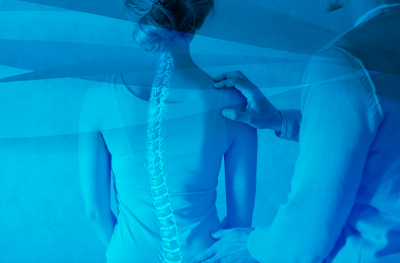
In this podcast episode, Dr. Eric Chehab and Dr. Steve Mardjetko discuss scoliosis, explaining it as a three-dimensional spinal curve most often identified in children over age 10. They talk about how treatment is based on the size of the curve and how much a child still has to grow, ranging from simply watching small curves to using a back brace for moderate ones. The doctors also describe how larger curves may require surgery to prevent long-term health issues in adulthood, noting that modern medical advancements now allow most kids to be up and walking the day after their procedure.
Hosted by Eric Chehab, MD
Episode Transcript
Episode 39 - Pediatric Scoliosis
Dr. Chehab: [00:00:00] Welcome to IBJI's Ortho Inform, where we talk all things orthopedics that help you move better, live better. I'm your host, Dr. Eric Chehab with Ortho Inform. Our goal is to provide you with an in-depth resource about common orthopedic procedures and conditions that we see every day today. It's my pleasure to welcome Dr.
Steve Mardjetko, who will be talking about. Pediatric scoliosis. So Steve, welcome to IBJI's Ortho Inform.
Dr. Mardjetko: Thank you Eric.
Dr. Chehab: We'd love to hear a little bit about your background and your training. Tell us where you did your undergraduate, your medical degree. Sure. Residency, fellowship.
Dr. Mardjetko: I'm, uh, born and raised here in.
The Midwest in Chicago and, uh, did all my my grew up on the southwest side of the city, actually, uh, went to Harold L. Richards High School, if anybody knows where that is in Oak Lawn. And then, uh, moved on to medical school at, uh, university of Illinois followed by my residency at University of Illinois as well, and then fellowships at [00:01:00] Rush.
One in or in spinal deformity surgery, and then a fellowship over at Shriners Hospital, in pediatric orthopedics. So I'm dually trained in deformity, in peds ortho.
Dr. Chehab: Yeah. And tell us a little about your experience with Shriners.
Dr. Mardjetko: So Shrine is a very unique place, , and I spent about 30 years of my career there.
And it's an opportunity where children could come from all parts of the country and the world for complex orthopedic care. And frequently that care included, uh, spinal deformity care, which is the umbrella terminology for scoliosis.
Dr. Chehab: Okay. And then, , your career at Illinois, born and joined, started in, you said 1997.
Dr. Mardjetko: Yeah, that is correct. So
Dr. Chehab: before it was Illinois born and joined.
Dr. Mardjetko: Correct. So I was down at the, at rush. Hospital and on their spinal deformity service there. And worked, uh, for worked there for five years and also, as I [00:02:00] said, trained there in the, uh, early nineties. At that point Dr. Goldstein approached me and asked me if I was interested in getting involved in a new suburban practice that he was forming.
And after much discussion, the move was made and, uh. It's been probably one of the best decisions of my life. Illinois Bone and Joint Institute has grown into a fantastic musculoskeletal, uh, health juggernaut, uh, in the northwest suburbs. Yeah. And, and now all the way down to kankakee. Yeah. So all over the city of Chicago, covering all the collar counties.
Dr. Chehab: Well, Steve, you've been my go-to referral for kids with. Pediatric spinal deformities for adults with sp spinal deformities. So it's great to have you here on the, on the podcast and so I appreciate your taking the time.
Dr. Mardjetko: Thank you. And keep those, uh, keep, keep 'em coming. Yeah.
Dr. Chehab: So in terms of spinal deformity, the common spinal deformities are.
Tell us scoliosis, [00:03:00] kyphosis.
Dr. Mardjetko: So, so, yes. So scoliosis is the one that uh, is most common. It's, what is frequently checked for by the pediatrician. Kyphosis is describes a, an abnormality in the lateral plane. Hunchback or Swayback, yeah. Would be these terms commonly used for KY kyphosis and lordosis, or what we call sagittal plane abnormalities.
The. Scoliosis represents a three-dimensional abnormality of the spine. Frequently the most common type is adolescent idiopathic scoliosis. That's usually discovered after age 10. Uh, so that's, the kids are in middle school. Girls predominate, , at least it. As the curves reach 20 degrees and, uh, that's what the pediatrician usually picks up on their yearly exam.
And then those kids are generally referred in to the pediatric orthopedist that the pediatrician [00:04:00] depends on.
Dr. Chehab: Okay. So the diagnosis is, is based on, you mentioned 20 degrees. So if someone has a. A case of scoliosis, what do they present with? What, what do you see? That's
Dr. Mardjetko: a great question. So, going all the way back to about 20 plus years ago, there was actually a website which taught parents how to make this diagnosis.
It was called ICE scoliosis., But all you really need to do is do what is called the Atoms Forward Bend test. Children put their hands together and bend and drop their. Arms vertically, and as you stand behind them, you will see the rotation associated with scoliosis. Once that reaches about five to seven degrees and you can use your own iPhone, the inclinometer to actually measure this.
Oh, that interesting. Then, then you, it's a good time to consider a referral.
Dr. Chehab: Okay. And um, well, there's a natural curvature to the spine, but this is an out of plane, three dimensional curvature that you mentioned. That is correct. You talked about. Idiopathic adolescent scoliosis. And what is the other main type of [00:05:00] scoliosis?
Dr. Mardjetko: So there are, so scoliosis is a, a very broad topic. Uh, you can have scoliosis as an infant and that's known if it's in, in deformity, can present in early an infancy. We also see scoliosis per. Presenting between ages five and 10, and that's called juvenile scoliosis. So infantile is zero to four juvenile, uh, five to 10, and then above 10 is called adolescent.
Anything above 20 or 25 is adult.
Dr. Chehab: Are there certain neuromuscular conditions that are associated with, with the early onset scoliosis that you don't necessarily see with the adolescents?
Dr. Mardjetko: Yes. So anytime we see a child with scoliosis, we work backwards. So to get to the diagnosis of idiopathic scoliosis, you need to make sure there are not other conditions that could be the etiology or cause for the scoliosis.
There are [00:06:00] neuromuscular causes. There are congenital abnormalities in the vertebra that can cause scoliosis, and there are inherited diseases that can pro produce sc deformities of the spine. So it is critical to make sure that those things do not exist before you label a child idiopathic, uh, which is still the most common type.
So
Dr. Mardjetko: there's
Dr. Chehab: a processor, you, a child is identified with scoliosis that. Whatever age they may present most commonly after 10 years old. But there's the infant and juvenile scoliosis, you identify it, but then you wanna make sure they're not other associated conditions or genetic abnormalities. So that are presented as scoliosis, but there's actually something underlying that.
Dr. Mardjetko: Exactly.
Dr. Chehab: And if you eliminate those, you can come to this. Point of saying, Hey, this is a case of idiopathic scoliosis, which is by far the most common type of scoliosis,
Dr. Mardjetko: or, well, it is the most common in the United States now. When we talk about neuromuscular [00:07:00] scoliosis there are centers where that may be the most common.
Dr. Chehab: Got
Dr. Mardjetko: it. Type treated Shriners would be one of those examples. Yep. But in the average. Pediatric orthopedic practice and definitely in the IBGI environment, we deal mostly with adolescent idiopathic
Dr. Chehab: scoliosis. Okay. So we, we recognize scoliosis maybe through the parents or the primary care physician.
We, uh, it's brought to your attention. You make a diagnosis of, of either. Congenital or neuromuscular or idiopathic scoliosis, and then you start getting into treatment options. So what are the treatment options for scoliosis in general?
Dr. Mardjetko: First off, we, we need to characterize the curve based on its magnitude, the size of the curve.
Yeah. And that's measured via a radiographic measurement known as cob angle. And so the. Data and natural history is based on radiographic cob angle measurements.
Dr. Chehab: So plane x-rays of the spine.
Dr. Mardjetko: So yes, so plane x-rays, uh, have been what we've used for [00:08:00] decades. But with an eye toward minimizing radiation exposure to children.
We prefer to use lower radiation techniques. We have explored it at IBJI topographical, uh, methods of EV of evaluating and tracking scoliosis. And we also, I have embraced, uh, the use of low dose radiation techniques such as the eos imaging system, which allows us to image the entire spine at about one 10th of radiation associated with digital radio radiographics.
Dr. Chehab: Oh, that's terrific. Okay. And so, so the x-ray is one of the main diag or diagnostic and tools used to also guide treatment.
Dr. Mardjetko: Yes.
Dr. Chehab: And you mentioned that the magnitude of the deformity is what will determine. Different types of treatment.
Dr. Mardjetko: Yes.
Dr. Chehab: And then is there also a rate of progression that you're looking at over time?
Dr. Mardjetko: Yes. So it's really a combination of the curve [00:09:00] magnitude and the ma skeletal maturity of the patient.
Dr. Chehab: Okay.
Dr. Mardjetko: That's what's gonna determine the trajectory or natural history of the deformity. For example, a 16-year-old girl who's two years post monarchal, meaning she's. Probably skeletally mature and has radiographic characteristics that suggest skeletal maturity.
The risk of progression of that 20 degree curve is exceedingly low. So the natural history of that curve is favorable. Take that same 20 degree curve in a 10-year-old.
Dr. Chehab: Yeah.
Dr. Mardjetko: Who is, who remains precal and is Skelly immature? The risk of progression can be variable and can be high.
Dr. Chehab: Yeah. Okay. And then, um, once we've diagnosed a a, a scoliosis case and.
Risk of progression and worsening. What are some of the treatment options that you have in front of you?
Dr. Mardjetko: Yes. So the first is to identify as best you can, what you project a [00:10:00] natural history to be for that child's curve. As stated, if it's curve that's 20 degrees or less, generally we are going to observe that curve an observation.
Usually involves two to three visits a year and may involve one of the radiographic imaging techniques or topographic evaluations to see if there, so you can objectively identify any progression of the curve. Okay. Even physical exam can servee as a wonderful technique for evaluating progression by looking at the angle of trunk rotation.
On the Adams Forward Bend test and looking for changes over time, that may lead you to think that the curve is progressing.
Dr. Chehab: Okay?
Dr. Mardjetko: Generally the rate of progression is under a degree a month until you hit your peak growth velocity, which is usually in girls just before they have their first menstrual cycle.
Dr. Chehab: Okay?
Dr. Mardjetko: And at that point the risk of. [00:11:00] Progression can be higher, and the rate of progression can be even two or even three degrees a month. So that is the critical time to be watching these children.
Dr. Chehab: Okay. And if, if you, well, you mentioned natural history. What is the. Problems that are associated with scoliosis.
So if you have someone who's untreated, unchecked with scoliosis, what are some of the issues that they can have as they progress through their adolescence and into adulthood?
Dr. Mardjetko: Eric, that's a great question. That's actually the crux of managing scoliosis. The, uh. The number one thing is we wanna stop the progression of any scoliosis beyond 50 degrees.
And that is a number which has been determined based on natural history studies, mostly done at University of Iowa. There's so many natural history studies are done. People don't move in Iowa. They stay and they're, and they come to the same doctor decade after decade. And thanks to the Dr.
Weinstein and Dr. Ponseti, uh, we have [00:12:00] a. Very good 50 year natural history of scoliosis. These were children who were followed from adolescence to late adulthood, and what was found was, if. They entered adulthood with curves of 30 degrees or less. The risk of significant progression in adulthood was low if they entered
Dr. Chehab: progression of deformity.
Dr. Mardjetko: The progression of the curve?
Dr. Chehab: Yeah.
Dr. Mardjetko: If they entered adulthood with a curve of over 50 degrees. The risk of progression was high. 75% of those patients progressed and the average rate of progression was a degree a month, which means a 50 degree curve could be an 80 degree curve at age 50.
Dr. Chehab: So they're, they're almost bent at a right angle
Dr. Mardjetko: through the spine.
Exactly. It is exactly a right angle. So that is to be prevented. The other thing that scoliosis can do, and and it's more impactful. The earlier the deformity starts, the greater impact it has on the heart [00:13:00] and the lungs. So the most. The most dangerous scoliosis is the scoliosis we see in children between ages birth and 10.
Dr. Chehab: Yeah.
Dr. Mardjetko: After age 10, the risk of cardiac and pulmonary pathology drops off significantly, but curves that do. Progress into the 90 degree range, do impact pulmonary function and secondarily can impact heart function and it can result in shortening the life of children as they become adults.
Dr. Chehab: And what about just the back itself?
Do they have more pain? Do they have more problems in the back?
Dr. Mardjetko: Great. Great question. And yes, so as a curve. And each curve has its own characteristics as far as pain production, thoracic curves. Interestingly, a big focus in adolescence generally don't cause a lot of pain.
Dr. Chehab: Okay?
Dr. Mardjetko: It's the tho lumbar and lumbar curves that progress as we degenerate decade by decade [00:14:00] and cause significant adult.
Pain syndromes associated with spinal deformity in adulthood.
Dr. Chehab: Okay boy, that's a lot to, to sift through, but, um. It sounds like you wanna present, you wanna prevent scoliosis from progressing to a point where patients will have cardiopulmonary issues. You wanna prevent it so that patients can have less back pain, and particularly in the lower curves in the thora, lumbar and lumbar spine that are lower down in the spine.
The good news, I guess, is the thoracic curves tend to not be. Producing a lot of pain in the adolescents who then progress into adulthood. So that's a good thing for them. And um, and then again, this comes to treatment. What are those prevention measurements?
Dr. Mardjetko: Great question. So the best way to look at this is we start off with observation.
And so a child comes in, we do our exam, uh, we work through our diagnostic possibilities, and, um, let's say [00:15:00] it's a standard, . Scoliosis curve, right. Thoracic, left lumber, both 30 degrees. We have a child who has at least two years of growth remaining. So in that case, girls under 12. Boys under 14.
Dr. Chehab: Yeah.
Dr. Mardjetko: And and we decide that, and we know that the natural history of a 30 degree curve in a child who has significant growth left is very high.
The risk of progression is high.
Dr. Chehab: Yeah.
Dr. Mardjetko: So we. Neat. We believe that it's appropriate to intervene in that situation. If the curve is less than 25 degrees, these children fall into just observation. And I see them regularly, like we stated, every four to six months and obtain, uh, imaging studies to document the curve is not progressing over, uh, throughout that period until they're mature.
In the kids who do progress or have a high risk of progression, then we utilize bracing Now. Bracing is, uh, just as you would [00:16:00] ex expect, it's, uh, similar to bracing a tomato plant. We literally apply pressure onto the curves to improve the curves and allow for the. Intrinsic growth of the spine to stabilize the curve and stop it from getting worse.
So our goal is to prevent progression of the curve and as stated, if we can keep the curve under 30 degrees, the risk of. Problems in adulthood is very low. And if we can keep the curve under 50 degrees we can avoid surgery at least in the adolescent period.
Dr. Chehab: Yeah. So how well does bracing work?
Dr. Mardjetko: So, that's a great question.
So, once again,
Dr. Chehab: I'm asking a bunch of great questions today, which I love.
Dr. Mardjetko: Once again, once again, we have to go to the University of Iowa where, the braced B-R-A-I-S. T study was performed or was headed up, and, uh, it was headed up by an orthopedist named Lori Dolan. , Stuart Weinstein's name, he's the anchor author of this paper.[00:17:00]
And the importance of this study was it clearly documented that braces were efficacious, that they changed the natural history of a progressive scoliosis. Now. A standard brace wear program involved wearing the brace, a minimum of 16 hours a day, um, and up to 18 hours a day. So that, that is the brace study is based on that brace wear program.
Dr. Chehab: Are they not wearing it during sleep? Is that essentially what's happening?
Dr. Mardjetko: So you wear it eight hours at sleep? Then you need to wear it at least another eight to 10 hours a day.
Dr. Chehab: Oh, so you actually preferentially wear it overnight?
Dr. Mardjetko: Yeah, yeah. It's, that's the free eight hours. That's their free eight hours.
Okay. Because no one has to even to brace. Yeah. The hardest thing is bracing does have, it's been proven to change the natural history of progressive scoliosis in growing children. But it does have an effect on the child's life. Um, it does impact their psychology. [00:18:00] Can affect sleep habits may interfere at times with sporting events though, generally we take the children outta the braces for sports.
. They sometimes will wear them to school, some prefer not to, just so they get their 16 hours a day. I don't really care how they get it.
Dr. Chehab: Yeah.
Dr. Mardjetko: So it's up to them to decide their schedule with their parents.
Dr. Chehab: Got it. Okay. And then so that's, that's great information that bracing works. It's 16 hours a day, thankfully not 24 hours a day.
You can pick you and choose your times and like you mentioned overnight, I would've thought that's the time not to wear it. But to your point, that's a free eight hours. You're gonna, you're gonna wear it, not notice it 'cause you're asleep most of that time
Dr. Mardjetko: and you grow at night.
Dr. Chehab: Yeah. Okay. So
Dr. Mardjetko: it's a great time to have your spine straight and let the vertebra auto correct.
Dr. Chehab: Oh, great. And so obviously you, you. Brace people all the time. Is there someone who helps you fit the brace? Is there an orthotist or someone who manufactures these braces for you?
Dr. Mardjetko: Y yes. So, or orthotics is a field, um, [00:19:00] that is closely wedded to orthopedics. Sure. Clearly all of us in orthopedics, every sub specialty use , orthotic care and in, pediatric spine care. It's, critical. So the key is to find good orthotists Yeah. Who are interested in managing pediatric spine deformity? We have,, luckily in Chicago a number of very skilled orthotists and, uh, who serve IB BJ's pediatric orthopedist. I would like to comment that all of the pediatric orthopedists in IBJI are, um.
Masters at managing pediatric scoliosis non-operatively. Yeah. When we get inoperative, then it's a, it's a selection. The individual orthopedist decides if they're interested in managing these surgically.
Dr. Chehab: Sure. Well, let's switch gears then into surgery. You mentioned that there's some curves that continue to progress when you're starting to get into that 50 degree mark, or if the trajectory is, you're gonna be beyond the 50 degree [00:20:00] mark, at some point you intervene.
So what does that intervention look like? What's the, what's the technique for surgery to prevent curve progression and to correct some of the progression that's already happened?
Dr. Mardjetko: So there are a number of of ways we can manage curve surgically now. The old fashioned. Technique that has worked for well over a hundred years is the posterior spinal fusion.
And it was the first instrumented spinal fusion was done by Dr. Paul Harrington in the sixties. Uh, and
Dr. Chehab: so, so prior to the sixties, a spinal fusion was done just by bone grafting and,
Dr. Mardjetko: and casting.
Dr. Chehab: And casting. Oh
Dr. Mardjetko: god. Yeah. They put people in, cast and so for putting metal, and I still use that every rarely.
Maybe once every five years I use a cast, but not very often.
Dr. Chehab: And then the instrumented spinal fusion is putting metal into the spine and basically, I guess like the tomato plant as well, but from the inside using those rods of metal to, [00:21:00] to brace the spine internally or, or even make correction to the spine internal.
Dr. Mardjetko: Exactly. It is. It is, uh, the orthopedic terminology internal fixation, which we use for fixing all of our long bones. And it's the same concept. Yep. So you literally fix the spine now because the spine is multis, segmental meaning from T two to T. For, let's say T one to T 12, you have 12 vertebra. You need you the concept of segmental fixation fixing each vertebra has, uh, developed through the years.
Yeah. Starting first with wires, then hooks, then screws.
Dr. Chehab: Okay. And, and so a child or adolescent undergoing, uh. Posterior spinal fusion, uh, take us through their first week of surgery their first month after surgery, their first six months. Just walk us through that.
Dr. Mardjetko: I'd be glad to. So it all starts with the first visit, uh, when you decide you're gonna operate.
Some of these children have already been braces and they've [00:22:00] failed bracing. Mm-hmm. Their growth potential was greater than the brace could overcome, or non-compliance does come into play here. Some children just refuse to wear braces, whatever the reason. Try not to make it about the child. You just say, unfortunately, this curve has progressed.
And the risk now to your child is that this curve will cause problems in adulthood and should be dealt with now to eliminate those risks. So that's how it would be expressed to the pat patient's parents. I. Als frequently, we'll sit down with them and show them examples of how we've corrected other curves, because by this time, the child has a visible deformity.
Dr. Chehab: Yeah.
Dr. Mardjetko: And the child is aware of it, the parents are aware of it. And another thing which isn't really discussed that often is a significant number of adolescent children have pain with their scoliosis. So they've. The phenomenon of [00:23:00] pain, uh, has already started. Sometimes it's muscular based, but it's often related to precocious arthritis in the facet joints of the spine themselves.
So individuals can start to have pain even in. Adolescents. So by this time we, we have now decided they need surgery. We look at the x-rays. We I always I recommend screening MRI scan to make sure the spinal cord is healthy. Yeah. Um, underlying abnormalities of the spinal cord can be hidden explanations for scoliosis and its progression.
So we make sure that's not on the table. Once we know that, then we sit down and have a frank discussion about surgical procedure. The key to managing adolescent idiopathic scoliosis is determining what curve to correct and how much to correct it.
Dr. Chehab: Yeah,
Dr. Mardjetko: so you have to decide which curves are structural and which curves are non-structural.[00:24:00]
Then you have to decide. Where you wanna start your instrumentation and where you wanna end your instrumentation to achieve the best radiographic outcome, which is a balanced spine in both x-ray views, AP and lateral.
Dr. Chehab: Yeah. Yeah.
Dr. Mardjetko: So once we, um, have determined that, then we explain to the parents this is the operative procedure, and the way the procedure works is the child is brought to the operating suite.
We have, well, let's start at the beginning. Prior to this, the preoperative meeting involves discussing the surgical procedure, showing them examples, discussing the risks of surgery, surgery, scoliosis, surgery specifically, and and then going over the perioperative management plan.
Dr. Chehab: Yep.
Dr. Mardjetko: And the and the, time to final healing. So this is done in the office usually with my nurse there, and she also does significant [00:25:00] teaching. It's good to have. A nurse or an MA or a PA who is versed in scoliosis as well because they can be great, um, intermediaries and deal help with par parent, parental and patient needs.
Dr. Chehab: Yeah, I can imagine It's quite anxiety producing from. The parents and the children. Undergrad, scoliosis,
Dr. Mardjetko: correction. There were always tears. Always tears. Yeah. Yeah. And, um, so you always have to give, you always have to give as much emotional support to the parents and child as you can. Yeah. But once you've decided to do surgery, then we, the process is complete.
The workup. I like to get pulmonary function tests just to know where we're at. It's interesting, we pick up a lot of cases of undiagnosed asthma. Mm-hmm. As opposed to any restrictive effect from the scoliosis. We also obtain imaging that allows us to know how to apply our implants to the spine. Yeah. I use CT for this.
And then the patient is prepared for [00:26:00] surgery. The surgical procedure generally takes between. Four and five hours for a standard T two to L one scoliosis. That usually covers the thoracic spine.
Dr. Chehab: Yeah.
Dr. Mardjetko: And in the after all the preoperative planning and teaching, the child comes to the operating room.
They're met in a holding area. Our child life team comes and meets with them and tries to allay. Their anxiety, our pediatric pain team we have a standard pediatric pain order set for our scoliosis patients. Yeah. Um, at that stage we utilize things like trans hemic acid to cut down blood loss.
Uh, we also use intraoperative neuromonitoring the most, concerning risk of scoliosis surgery is related to injury to the spinal cord. Sure. While this risk is exceedingly low, about one in 1000 operations, it is not [00:27:00] zero. It has gotten safer through my career, thanks to the introduction of intraoperative neuromonitoring, as well as our better understanding of what spinal cord can tolerate.
Dr. Chehab: Yeah.
Dr. Mardjetko: Because. To operate on the spine and corrected deformity, you are impacting the spinal cord, which lives in the spine.
Dr. Chehab: So if you are neuromonitoring and you have a issue intraoperatively, can you then reverse that intraoperatively? Of course. So that's the benefit of having that. Oh my goodness.
Dr. Mardjetko: It's, it's real time feedback,
Dr. Chehab: right?
Dr. Mardjetko: Um, they're monitoring every nerve. They're monitoring the. Mo motor part of the spinal cord, which is the anterior part. They're monitoring the feeling part of the spinal cord, which is the posterior part. And these are all monitored simultaneously. Uh, we always have a neurologist online as well.
Yeah. Who's reviewing the data real time. And I'm in c direct communication. The other thing that has really made surgery safer is the anesthetic techniques have improved so much. Yeah. [00:28:00] And so the combination of intraoperative neuromonitoring. Excellent anesthesia techniques. Phenomenal or multimodality pain management.
Dr. Chehab: Yes.
Dr. Mardjetko: For scoliosis, patients have made these otherwise very difficult operations. Much more tolerable.
Dr. Chehab: Yeah. That's terrific.
Dr. Mardjetko: Yeah.
Dr. Chehab: And then, because I just remember from. My residency training 20 plus years ago it was hard on the kids and it's hard on the families and to have this type of, I, I remember as a medical student a patient having an outcome where they had a neurologic deficit that would've been picked up at the time.
There were neuro neuromonitoring happening, and the result was all the instrumentation had to come out and the patient was casted, and the long-term outcome was fine, and the result was good. But boy, it was a lot for the patient and the family.
Dr. Mardjetko: Yes, it's, that's a really, I mean, it, unfortunately, every spinal surgeon has suffered through that at one point in their career.
Yeah. That being said, there's no doubt. I grew up without intraoperative [00:29:00] neuromonitoring, I wouldn't think of doing a surgery without it today.
Dr. Chehab: Yeah. And then, so then the patients had the procedure and walk us through their recovery.
Dr. Mardjetko: Sure. So in my ca, and not everybody does this, but I like to put every child in the PICU pediatric intensive care unit.
I do that specifically for pain management and just overall one-on-one nursing care.
Dr. Chehab: Sure.
Dr. Mardjetko: Some of the earth things we do to help with pain management. We like to use bupivacaine pain pumps, which are inserted at time of surgery and usually run for about a hundred hours.
Dr. Chehab: So it's a numbing anesthetic.
Dr. Mardjetko: Oh yeah. Right into the incision. Yeah. Helps enormously short shortens the hospital stay by at least one day. Other thing, there are other techniques such as epidural catheters and so forth that can be used. That being said, most of these kids. Within 24 hours, the next day they're outta bed.
Dr. Chehab: Amazing.
Dr. Mardjetko: So they get up, they're outta bed. Physical therapy comes to the room, they're walking to and from the bathroom. The key in all orthopedic procedures [00:30:00] is get up and move early. Yeah. And it's the same in pediatrics. Yeah. So to get these children up and get 'em moving gives them control, uh, and also makes them feel more normal.
Good. So it's really important to do that. Once again, multimodality pain management throughout the acute care phase. Yeah. Is what drives this.
Dr. Chehab: And then they leave the hospital. And how many days on average?
Dr. Mardjetko: So it's, you know, when I started my career, we were keeping kids seven, 10 days. Sure. Pretty typical.
Then it went down to five to seven. We're now. Really looking at three to four days in the hospital.
Dr. Chehab: Great.
Dr. Mardjetko: Um, and there were early discharge protocols in the United States where kids are going home the next day. I am, I'm not sure I'm brave enough to take that on. Sure. But most, uh, a three day stay would be pretty typical.
Dr. Chehab: Yeah.
Dr. Mardjetko: Yeah.
Dr. Chehab: And then for their physical therapy are they working on their walking, their gait? Are they working on core strength [00:31:00] and what are they doing to protect the work that you've done? So thankfully in children, we don't have all the
Dr. Mardjetko: Deconditioning effects we have in. Adults. Right.
Dr. Chehab: Their, their hips
Dr. Mardjetko: are generally
Dr. Chehab: good.
Dr. Mardjetko: Their knees, their hips are good, their knees are good. Right. They're, you know, they're athletic. Right. Um, they're not obese in any, uh, they're in good shape. So generally speaking, at least in the adolescent idiopathic group, we're dealing with very healthy Yeah.
Individuals. Yeah. So they, they really don't need much. They get up, they get going. The only thing I need to do is restrict them from. Competitive athletics for about six months.
Dr. Chehab: Do you brace after surgery
Dr. Mardjetko: at all? No, almost never anymore. The imp, the implants, the techniques we're using, the amount of correction we're getting is so, uh.
Far above what we were getting even 10 years ago that it's just unnecessary to brace.
Dr. Chehab: That's great.
Dr. Mardjetko: Yeah. So
Dr. Chehab: that obviously is a, a
Dr. Mardjetko: big bonus. They're so happy to get out of the brace. Yeah,
Dr. Chehab: I can only
Dr. Mardjetko: imagine. And many of them will say, I want surgery. I wanna get out of the [00:32:00] brace. That is not an uncommon thing to hear from children.
Okay. And then what are some potential. Short term and long term complications of, of scoliosis, correction of co not necessarily bracing, but of surgery. Yeah. Obviously all the usuals, so you worry about infection and the risk of infection is the 10 to 20 day range for an acute infection, chronic or late infection is really quite uncommon.
In the, uh, with the newer in instrument systems we're using.
Dr. Chehab: Yeah.
Dr. Mardjetko: So infection is always the thing we're we focus on. As far as other things that can go wrong, the implants themselves can fail. That's pretty unusual. Yeah. Children only have about a 2% risk of developing a pseudoarthrosis. Or a non-union of their fusion that could result in a rod or screw failure.
And even and even given that complication, only about 50% of those ever cause pain
Dr. Chehab: symptoms. So,
Dr. Mardjetko: so they may not be symptomatic. Anyways. Okay. [00:33:00]
Dr. Chehab: So it's very rare for the hardware to fail.
Dr. Mardjetko: Yeah, it's pretty rare.
Dr. Chehab: And in general, in orthopedics, I'd like to explain to patients that hardware failure, it's always a race between the bone healing or the fusion taking and the hardware failing.
And it sounds like the race is won almost every single time by the bone healing and fusion taken.
Dr. Mardjetko: Yes. And tha again, thanks to the youth and the health of these children. Yeah. Um, I think the other thing is return to sport. When can we get 'em back to sports? 'cause you know, every. Probably 75% of children are involved in organized sports.
Uh, my, and every once in a while I'll get a theater kid who says I don't do sports, and then I don't have to worry about it. But usually I use six months. Yeah. And, um, and I get them swimming earlier and I will get them doing some aerobic. Work earlier. Uh, but by six months if, if I'm pretty convinced, I'm happy with what I'm seeing, I will release them back to active
Dr. Chehab: sports.
Okay. So low impact activity pretty early on?
Dr. Mardjetko: Yes.
Dr. Chehab: In the recovery and then full activity at six months,
Dr. Mardjetko: [00:34:00] full activity.
Dr. Chehab: Okay. That's amazing. And, um, when they become adults and they've had a spinal fusion. Is this generally sort of a one and done procedure? You have a scoliosis correction, you'll never need anything done in your back again.
Or can it lead to other issues as an adult?
Dr. Mardjetko: That's a great long-term question that I've witnessed throughout my career. Sure. Being a. Pediatric orthopedist who does adult deformity as well. I've had the opportunity to take care of my children children with scoliosis and seen them grow into adults and manage their adult the adult complications of scoliosis.
Now, what are those complications? First of all, um, as the, in the. Fusion we mentioned a T two to L one Fusion,
Dr. Chehab: right.
Dr. Mardjetko: There are almost no complications with that operation long term. I see patients 50 years later who had those operations by my mentor down at Rush. Yep. And they're. Their spine, their scoliosis is remains solid, [00:35:00] causes them no problems, and is not why they come to see me.
What generally happens though, is as we have to fuse into the lumbar spine, the tho lumbar and the lumbar scoliosis curves, then there are secondary effects from the fusion. On the remaining open segments of the spine
Dr. Chehab: and more frequent than what you would see in the general population?
Dr. Mardjetko: Yes, it is. It is thought that it is more frequent and there's biomechanical explanations for that.
Okay. Yeah. So it is a. Not a uncommon problem to have to deal with degeneration below these fusions in the lumbar spine.
Dr. Chehab: But these are not the bulk of the fusions, you're saying that Right. The typical one is T 12 to L or T two to L one.
Dr. Mardjetko: T two to L one would be typical
Dr. Chehab: and that doesn't really result in this.
But as you have to go lower down in the spine. Then those fusions can lead to other problems as an adult.
Dr. Mardjetko: Correct. Just like
they
Dr. Chehab: could at anybody though.
Dr. Mardjetko: Correct. Right. And so therefore new strategies have been devised to [00:36:00] get around this.
Dr. Chehab: Okay,
Dr. Mardjetko: so what are we doing now? Well, we're utilizing a combination of different techniques.
There is a a technique known as vertebral body tethering. It's generally used in children who are in the right growth phase where we can literally. Modulate the growth of the spine so you can apply these implants through with polyester bands, generally screws done in the vertebra body, and then the vertebra can grow and, and correct the scoliosis.
Okay, so. When we hit, when we're confronted with a right thoracic, left lumbar curve, we may choose to do the posterior spinal fusion, T two to L one, and then the lumbar curve can be managed with tethering, with the vertebral body tethering. Oh, that's really good. And that's a really nice way to do it if you have the.
The right child at the right age.
Dr. Chehab: So that tethering allows for a little bit more motion. Yeah. Flexibility in the spine. So when they get older, they have more motion in that portion of their spine to prevent [00:37:00] increased pressures in certain areas of the
Dr. Mardjetko: spine. Absolutely. The motion is preserved and the discs remain healthy.
Dr. Chehab: That's
Dr. Mardjetko: right. So it's uh, it's a nice technique. It's one of the new fusion lists. Techniques of managing scoliosis.
Dr. Chehab: Yeah. And so finally, you know, before we, we started recording, you were mentioning what you're very proud of here at Illinois Bone and Joint which is the Spinal Deformity service that you've founded.
So tell us a little bit about the history of that.
Dr. Mardjetko: I,
Dr. Chehab: I,
Dr. Mardjetko: I, I don't think I should say I founded it, but I've been part of it since. Okay, fair enough. Since I got here. Yeah. , I joined in 1997. I came from Rush. I have been doing spine deformity around the city at multiple institutions. So when I came here,
at that time there was not a lot of spine deformity being done. We were lucky in that we have a very good, I work at Lutheran General Hospital where we have a very good pediatric intensive care team. And I've been fortunate that at least two of the nurses that I used to work with at Shrine Hospital [00:38:00] moved out to.
Lutheran General, and we were able to initiate a more comprehensive pediatric spine program. This really started in around 97 and it's been ongoing ever since. I, we partnered with Advocate in, uh, the early two thousands to kind of memorialize it and create the entity. So.
Dr. Chehab: Well
Dr. Mardjetko: good for
Dr. Chehab: you.
Dr. Mardjetko: , It's ongoing. We have. Like I stated, we have a number of pediatric orthopedists who are performing scoliosis, surgeries of all types. And we have a number of pediatric orthopedists who are masters in, uh, managing. Scoliosis, non-operatively with bracing and the Schroth Physical Therapy, which we have on onsite at IBJI as well.
Uh, Schroth is a scoliosis specific exercise program for adolescent idiopathic scoliosis, but it works in our adult patients as well.
Dr. Chehab: Yeah. [00:39:00] Steve, thanks so much for being here. Um, again, my guest today is Dr. Steve Jeko talking about pediatric scoliosis. I can't thank you enough for your time, rich.
Thank you. It's always enlightening to have these conversations, so thank you.
Dr. Mardjetko: My pleasure. Thank you.
Don't Miss an Episode
Subscribe to our monthly patient newsletter to get notification of new podcast episodes.