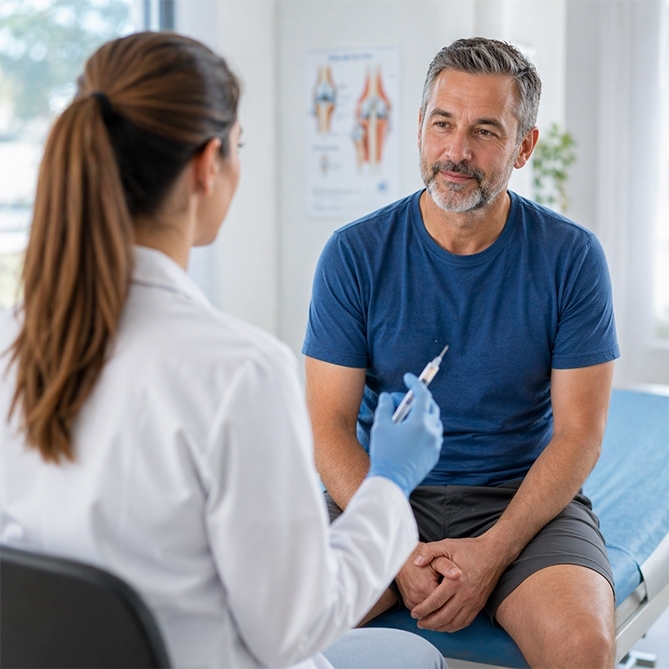
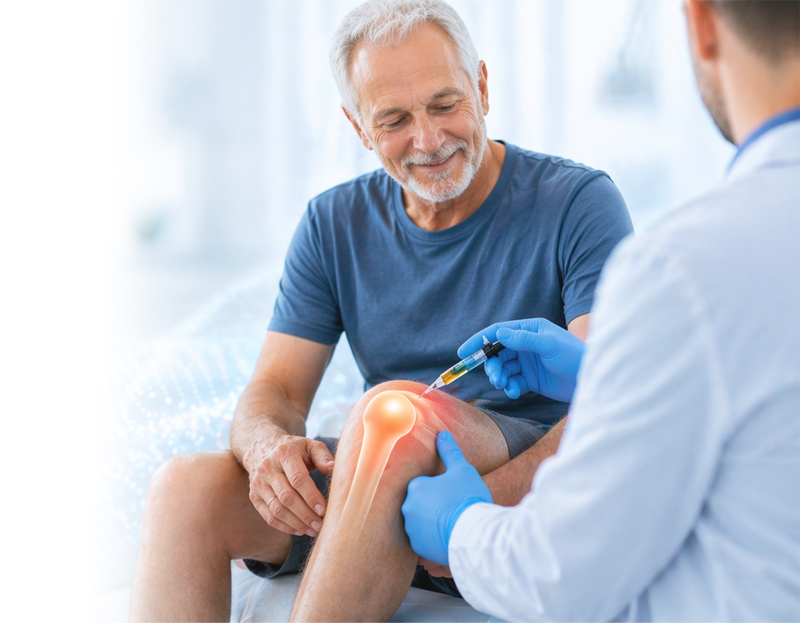
 A non-surgical option for managing joint and tendon conditions If you’re dealing with joint or tendon pain that hasn’t improved with rest, physical therapy, or other treatments, PRP (platelet-rich plasma) injections may be a non-surgical option to consider. At IBJI, our orthopedic specialists use PRP as part of a comprehensive approach to help patients manage pain, improve function, and return to their daily activities.
 What Conditions May Be Treated with PRP?
PRP injections are used for a variety of musculoskeletal conditions involving joints, tendons, and soft tissue.

| 
| 
|

| 
|
How PRP Injections Work
PRP (platelet-rich plasma) is created using a sample of your own blood. It is spun around in a centrifuge that separates it into platelets, plasma, and red and white blood cells. It is then processed to concentrate platelets and growth factors.
- A blood draw
- Processing the sample to concentrate platelets
- Injection of PRP into the affected area under guidance
- A period of recovery as your body responds to treatment
The procedure is typically performed in an outpatient setting and takes about 30–60 minutes.
What to Expect
Recovery experiences can differ, but common expectations include:
- Temporary soreness or discomfort at the injection site
- Gradual change in symptoms over several weeks
- Activity modifications for a short period after treatment
- Follow-up care based on your provider’s recommendations
Your IBJI physician will review a personalized recovery plan with you.
PRP Compared to Other Treatments
PRP vs. Cortisone Injections
- PRP is intended to support tissue response
- Cortisone is used primarily to reduce inflammation and symptoms
PRP vs. Surgery
- PRP is minimally invasive and performed in-office
- Surgery may be considered for more advanced or structural conditions
Your provider will help determine the most appropriate option based on your diagnosis.
Am I a Candidate for PRP?
You may be a candidate for PRP if you:
- Have ongoing joint or tendon pain
- Have not improved with physical therapy or conservative care
- Are looking for non-surgical treatment options
- Want to explore alternatives before considering surgery
An appointment with an IBJI specialist is required to determine whether PRP is appropriate for your condition.
Potential Benefits of PRP Injections
PRP is designed to support the body’s natural response to injury and may help:
- Reduce pain related to certain musculoskeletal conditions
- Improve joint or tendon function in some patients
- Provide a non-surgical treatment option
- Delay or reduce the need for surgical intervention in select cases
- Complement physical therapy and rehabilitation programs
Individual results vary based on condition and patient factors.
Why Choose IBJI?

IBJI provides comprehensive orthopedic care across Chicagoland, with specialists experienced in both surgical and non-surgical treatment options.
- ☆ Board-certified orthopedic and sports medicine physicians
- ☆ Access to advanced musculoskeletal treatments
- ☆ Coordinated care including imaging, therapy, and follow-up
- ☆ Convenient locations throughout the region
- ☆ Personalized treatment planning based on your goals
Frequently Asked Questions
Does PRP hurt?
Some patients experience mild discomfort during or after the injection, which typically improves within a few days.
How long does it take to see results?
Changes in symptoms vary by patient and condition and may take several weeks.
How many injections are needed?
Treatment plans vary. Some patients may benefit from a single injection, while others may require additional treatment.
Is PRP covered by insurance?
Coverage varies depending on the plan and indication. Our team can help review options.
When can I return to normal activity?
Return to activity depends on your condition and your physician’s guidance.