Every fall and spring, high school athletes across Illinois push their bodies to compete, improve, and win, and most of them do so without serious consequence. But for adolescent athletes, one category of injury carries risks that adult athletes simply do not face: growth plate injuries. Understanding what they are, why young athletes are uniquely vulnerable, and when to seek evaluation can make the difference between a full recovery and a lasting complication.
What Are Growth Plates and Why Do They Matter in Young Athletes?
Growth plates, also called physes, are areas of developing cartilage tissue near the ends of long bones in children and adolescents. They are the regions where new bone tissue is produced, driving the lengthening and shaping of the skeleton through adolescence. Because growth plate cartilage is softer and more vulnerable than mature bone, it is the weakest point in a young athlete's musculoskeletal system, weaker, in fact, than the surrounding ligaments and tendons that would be the injury site in an adult facing the same force.
This is a critical distinction. A force that produces a ligament sprain in an adult may produce a growth plate fracture in an adolescent, and a growth plate injury that goes unrecognized or is improperly managed can disrupt normal bone development, leading to limb length discrepancy, angular deformity, or chronic joint problems that persist into adulthood.
The High School Sports Most Associated With Growth Plate Injuries
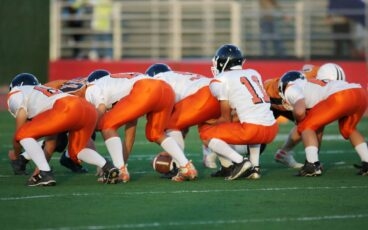
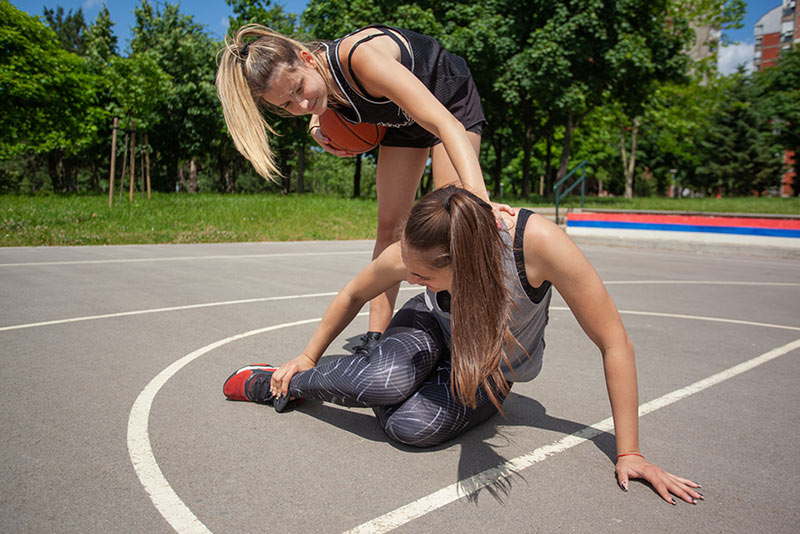
Growth plate injuries are most common in contact and collision sports, but they occur across virtually every high school athletic program. Football, basketball, soccer, gymnastics, and baseball and softball pitching all generate the forces, acute impact, repetitive stress, and torsional load, most likely to injure the physis in a skeletally immature athlete.
The most frequently affected sites include the distal radius (wrist) in gymnasts and skaters, the proximal humerus (shoulder) in overhead throwing athletes, the distal femur and proximal tibia (knee) in contact sport athletes, and the calcaneal apophysis (heel) in running athletes, a condition known as Sever's disease. Older adolescents and even young adults can have open growth plates in the hip and pelvis that eventually close in their early 20’s, therefore growth injuries in this older age group is also possible. Each location carries its own presentation, diagnostic challenges, and treatment considerations.
Recognizing the Warning Signs That Warrant Immediate Evaluation
Growth plate injuries do not always present dramatically. Persistent joint pain in an adolescent athlete, particularly pain that is localized directly over a bone rather than a ligament, worsens with activity, and does not resolve with standard rest, should be treated as a potential physeal injury until imaging demonstrates otherwise.
Swelling directly over a growth plate, pain with axial loading of a limb, and any deformity following acute trauma are presentations that require same-day orthopedic evaluation. In the acute setting, OrthoAccess® Immediate Care at IBJI provides walk-in orthopedic assessment specifically designed to evaluate and manage fractures, growth plate injuries, and acute sports trauma, without the wait time or cost of an emergency room visit.
How Growth Plate Injuries Are Diagnosed and Classified
Diagnosis begins with plain X-rays, which can identify displaced physeal fractures and most Salter-Harris Type II injuries, the most common growth plate fracture pattern. However, non-displaced fractures and cartilaginous injuries may require advanced MRI imaging for visualization. The Salter-Harris classification system guides both prognosis and treatment: Type I and II injuries carry an excellent prognosis when managed appropriately, while Type III, IV, and V injuries involve the joint surface or the germinal layer of the physis and carry greater risk of growth disturbance.
Treatment: Protecting Development While Restoring Function
The treatment goal for growth plate injuries is twofold: restore function and protect the integrity of the physis during the remainder of the athlete's growth period. Non-displaced injuries are typically managed with immobilization and activity restriction, followed by a structured return-to-sport protocol through physical and occupational therapy that restores strength and movement before full athletic participation resumes.
Displaced fractures, particularly those involving the joint surface, often require surgical reduction and fixation to restore anatomical alignment and minimize the risk of growth disruption. Pediatric orthopedic services at IBJI provide the subspecialty expertise required for managing these injuries in a skeletally immature patient, where the surgical approach must account for the growth plate's ongoing developmental role
Do Not Wait on a Young Athlete's Joint Pain.
Growth plate injuries are time-sensitive. The younger the athlete, the greater the remaining growth potential, and the greater the consequence of a physeal injury that is mismanaged or left untreated. If your high school athlete is reporting joint pain that has not resolved within a week of rest, or if pain followed a specific traumatic event during practice or competition, a formal orthopedic evaluation is the right next step, not another week of watching and waiting.
The pediatric orthopedic team at IBJI specialize in the evaluation and treatment of growth plate injuries and sports-related conditions in young athletes. With 100+ locations across Chicagoland and OrthoAccess® walk-in care available for same-day injury assessment, getting your athlete evaluated quickly has never been more accessible. Schedule an appointment online today or walk into your nearest OrthoAccess® location, because protecting your child's development cannot wait for the next available opening.
Reference Links:
About the Author
Raman P. Singh, DO is a highly experienced primary care sports medicine physician, double board-certified in pediatrics and sports medicine. Dr. Singh cares for athletes and active individuals of all ages at IBJI’s Western Springs and Westmont clinics and oversees IBJI’s OrthoAccess after-hours clinics. His current practice focuses on sports injuries, fracture care, concussion management, non-operative regenerative techniques, and non-operative pediatric orthopedic conditions.
*This content is for information only and is not intended to replace the diagnosis, treatment, or medical advice from your treating healthcare professionals. The content does not provide medical advice, does not constitute the practice of medicine or other healthcare professional services, and does not create a doctor-patient relationship. You should not rely on this information as a substitute, nor does it replace professional medical advice, diagnosis, or treatment. If you have concerns or questions, seek the advice of your healthcare professionals. If you think you may have a medical emergency, call your doctor or 911 immediately. Do not rely on electronic communications or communicate through this website for immediate, urgent medical needs. This website is not designed to facilitate medical emergencies. The use of the information is at the reader’s own risk. The links are provided for information and convenience only. We cannot accept responsibility for the sites linked or the information found here. A link does not imply an endorsement of a site.