Hearing that you have a SLAP tear can be confusing, whether your shoulder pain appeared gradually or after a single injury. Simple movements such as lifting, throwing, or reaching overhead may suddenly feel unstable or weak and cause pain. Understanding your diagnosis and the recovery process can help you move forward with confidence. Here is what patients should know after being diagnosed with a SLAP tear.
SLAP Tear Explained: What Happens When the Shoulder Labrum Is Injured
A SLAP tear stands for Superior Labrum Anterior to Posterior, referring to an injury to the ring of cartilage that surrounds the shoulder socket. The labrum helps stabilize the shoulder joint and provides an attachment point for the biceps tendon.
SLAP tears most often occur from repetitive overhead motions such as throwing or lifting but can also occur from sudden traction injuries, or falls onto an outstretched arm. Baseball players, overhead throwers, weightlifters, and swimmers are particularly susceptible, but the injury can affect anyone.
Diagnosis typically involves a physical examination along with imaging studies such as an MRI or MR arthrogram. Your orthopedic specialist will evaluate shoulder stability, strength, and range of motion to determine the severity of the tear and the most appropriate treatment plan.
How Rehabilitation Helps Heal a SLAP Tear
In many cases, the first step in treatment is a structured physical therapy program. The goal of therapy is to restore shoulder stability, improve mobility, and strengthen the muscles that support the joint.
Physical therapy often focuses on:
- Strengthening the rotator cuff and shoulder blade muscles
- Improving posture and shoulder mechanics
- Gradually restoring range of motion
- Reducing inflammation and irritation within the joint
Most therapy programs progress gradually over several weeks. Patients typically begin with controlled movements and stabilization exercises before advancing to more demanding strengthening activities.
Strengthening the Shoulder Without Re-Injuring Your Labrum
As your shoulder begins to recover, strengthening exercises become an important part of rehabilitation.
Your physician or therapist may recommend:
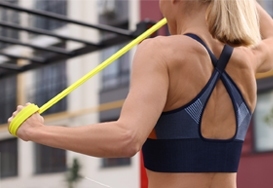
- Resistance band exercises for controlled strengthening
- Scapular stabilization exercises
- Light weight training with proper form
- Gradual return to overhead activities
Consistency is more important than intensity. Slow, progressive strengthening allows the shoulder to regain stability while minimizing the risk of reinjury.
At-Home Care Tips for Managing a SLAP Tear
Alongside therapy, certain at-home strategies can help manage symptoms during recovery. Ice therapy may help reduce inflammation after activity, while activity modification can prevent movements that aggravate the shoulder.
Some patients may benefit from a shoulder brace or supportive sling, particularly during the early stages of healing or when returning to specific activities. Bracing may provide temporary stability and remind patients to limit certain movements that strain the joint.
When Surgery May Be the Right Step
Not all SLAP tears require surgery, but it may become an option if symptoms persist despite conservative treatment. Continued shoulder pain, ongoing weakness, or limited function may indicate that labrum surgery may be necessary.
Minimally invasive arthroscopic procedures can repair the torn labrum and restore shoulder function when conservative measures alone are not enough. Recovery typically includes a structured rehabilitation program to gradually rebuild strength and function and ultimately, allow the patient to return to activities.
If you have been diagnosed with a SLAP tear and are unsure about your next steps, we can help. At Illinois Bone & Joint Institute, our shoulder specialists bring advanced orthopedic expertise and a personalized, patient-first approach to every case. From your diagnosis through your final step of recovery, we're here to help you understand your options, make confident decisions, and get back to doing what you love.
Reference Links
- SLAP Tear - Cleveland Clinic
- The diagnosis, classification, and treatment of SLAP lesions - ScienceDirect
About the Author
Vishal S. Desai, MD, MBA is an orthopedic surgeon specializing in sports medicine, arthroscopic surgery, and minimally invasive joint procedures of the shoulder, knee, hip, and ankle. He treats a wide range of athletic and orthopedic conditions including rotator cuff tears, ACL injuries, labral tears, meniscus injuries, shoulder arthritis, fractures, and ligament injuries. Dr. Desai is also credentialed in robotic-arm assisted knee arthroplasty using the Mako® system, performing both total and partial knee replacements. He attended medical school at the University of Cincinnati, and underwent specialty training at Emory University in Atlanta, Georgia, where he trained with the most modern and advanced techniques.